Downloads
 Login
Login
 Register


Tags
Rice Imports: EU Rejects Pakistani Rice, Bangladesh Accepts – Here’s Why?
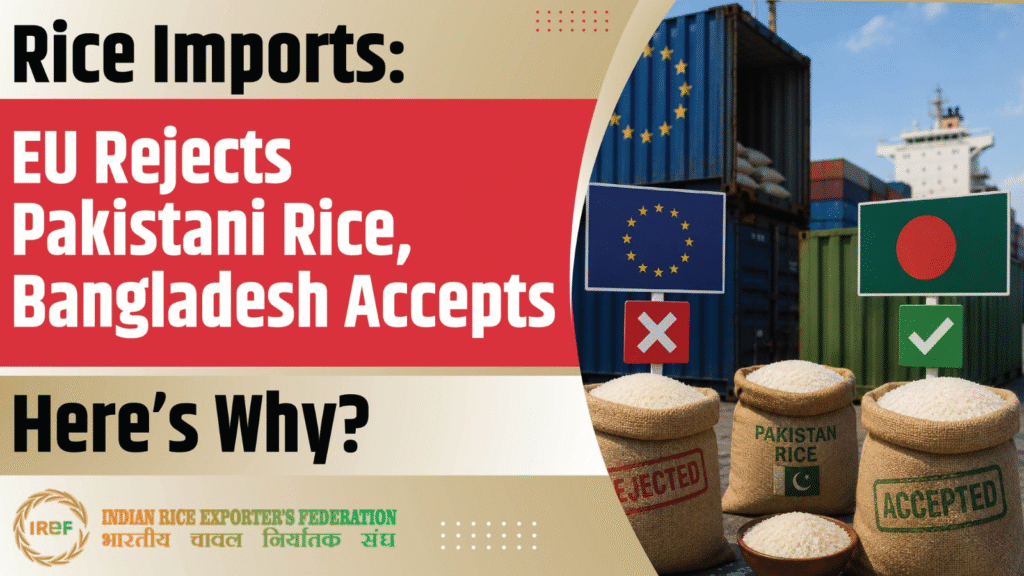
Bangladesh is preparing to do rice imports of 50,000 metric tonnes from Pakistan through a government-to-government (G2G) agreement, as the officials expect to sign the deal during the first week of July. The deal will be carried out to build public food stocks and stabilise domestic prices. Shockingly, the planned rice imports deal has sparked a massive debate since the European Union (EU) has previously rejected multiple consignments of Pakistani rice over food safety concerns. The prominent reason behind these rejections has been the detection of pesticide residues which is above the EU’s Maximum Residue Limits (MRLs). The EU maintains some of the strictest pesticide regulations in the world to protect its rice consumers from prolonged exposure to agricultural chemicals. As every imported food product is subject to laboratory testing, shipments surpassing these legal limits can be refused entry, returned to the exporting country, or destroyed.
What is aflatoxin contamination? Do they matter for the rejection of rice imports?
Moreover, another major concern has been aflatoxin contamination. Notably, Aflatoxins are naturally occurring toxins produced by fungi that may develop during poor storage, transportation, or processing of grains. Not only this, but the scientific research has shown that prolonged exposure to excessive aflatoxin can damage the liver and increase the risk of liver cancer. The European Union enforces strict maximum limits on aflatoxin levels in imported rice and other food commodities, due to these health risks.
Documentation problems & traceability failures behind the rejection of rice imports
In addition, European authorities have rejected some Pakistani rice shipments due to documentation problems, traceability failures, improper labelling, or non-compliance with sanitary and phytosanitary regulations. Under EU law, exporters must clearly demonstrate the origin of food products, maintain detailed production records, and certify compliance with food safety requirements. Unable to satisfy these administrative requirements can result in shipments being blocked even if laboratory results do not reveal this contamination.
What did the Food Safety experts say?
On the other hand, food safety experts stress that price should not be the only consideration when importing a staple food consumed daily by millions of Bangladeshis. They said that every shipment entering Bangladesh should undergo comprehensive laboratory testing for pesticide residues, aflatoxins, heavy metals, and other contaminants before being released into the local market. Additionally, Independent quality verification is significant whenever imported food originates from consignments or supply chains that have faced international scrutiny earlier.
When Bangladesh Turns To India For Cheaper Rice Imports Amid Diplomatic Strain
An article by IREF dated December 24, 2025, stated that Bangladesh has chosen India for cheaper rice imports amid visible political unease and diplomatic strain between India and Bangladesh. The country’s interim government noted that ignoring cheaper Indian supplies in favour of costlier alternatives would be economically unwise, particularly in the midst of mounting domestic pressures.
Bangladesh decided to do rice imports of 50,000 tonnes from India
Recently, Bangladesh has decided to do rice imports of 50,000 tonnes from India at around $355 per tonne rice price, whereas at the same time buying an equal quantity from Pakistan at a higher price of $395 per tonne. The price gap turned into a saving of around $40 per tonne on Indian rice imports. For the Full consignment, the savings amount to approximately $2 million, or about 17.9 crore at the exchange rate. According to officials, rice imports from countries such as Vietnam would have further raised costs per kilogram, boosting India’s position as the most economical supplier.
https://iref.net/news/eu-rejects-pakistani-rice-bangladesh-importsPublished Date: July 3, 2026


 READ
READ