Downloads
 Login
Login
 Register


Tags
EU-banned pesticides found in rice, tea and spices
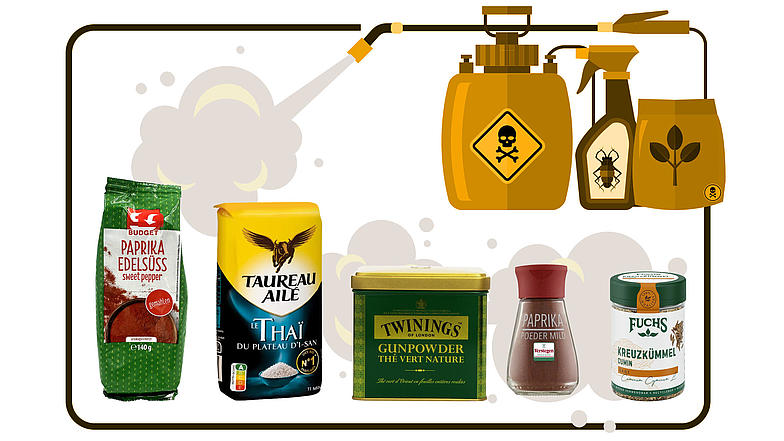
foodwatch laboratory tests reveal the presence of pesticide residues in everyday foods — including substances not approved in the EU. The European Commission must stop the “toxic pesticides boomerang”.
Pesticides that are not approved for use or sale in the EU have been found in everyday food products such as rice, tea and spices. New laboratory tests on 64 products from the Netherlands, France, Austria and Germany detected residues of multiple pesticides — including substances no longer approved in the EU.
Although these chemicals are not allowed on the EU market, they can still be exported from European Member States to third countries. From there, they can return to Europe as residues in imported food — a “toxic pesticides boomerang” that puts consumers at risk.
64 products tested — 45 contained non-approved pesticide residues
The laboratory tests covered rice grain, paprika powder, different types of tea, cumin seeds and curry powder.
The results are alarming:
- 49 products contained residues of one or more pesticides.
- 45 products contained residues of pesticides not approved in the EU.
- 14 samples contained residues above the legally allowed limit and should therefore not be on the market.
- All tested paprika powder, chili and cumin samples contained residues of non-approved pesticides.
- One paprika powder sample contained 22 different pesticides, including six not approved in the EU.
Frequently detected non-approved pesticides included Chlorfenapyr, Bifenthrin, Spirotetramat, Clothianidin, Thiametoxam, Imadacloprid and Isoprothiolane.
According to official data from the European Chemicals Agency, six of these pesticides were exported from European Member States to third countries in 2024–2025.
https://www.foodwatch.org/en/eu-banned-pesticides-found-in-rice-tea-and-spicesPublished Date: May 21, 2026


 READ
READ