Downloads
 Login
Login
 Register


Tags
Is Malaysia heading for a rice crisis?
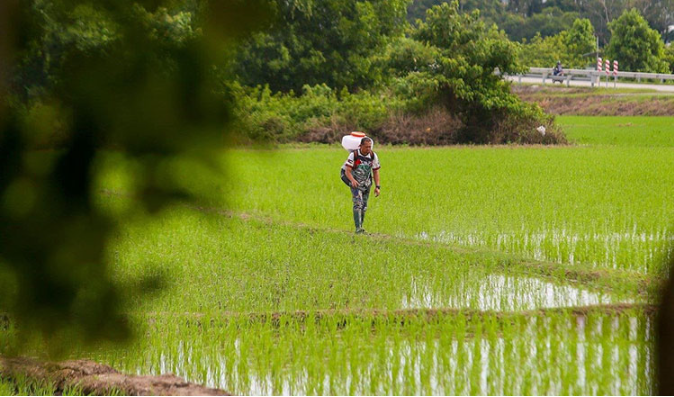
Rice has been a staple for the people of Asia, including Malaysia, for thousands of years. The growth of the tin mining and plantation industries in British Malaya then drove its consumption.
Unfortunately, the British neglected rice cultivation in favour of tin and rubber production, resulting in complacent production that continues to this day. Colonial laws ensured rice cultivation was done exclusively by the Malays until 1939. Post-Independence, rice production surged following the Green Revolution and infrastructural modernisation through the Muda Irrigation Project (1966–1970).
The adoption of new technologies enabled Kedah and Perlis to double-crop annually and become the nation’s rice bowl. Indigenous tribes believe in the “rice soul”, a “spirit” that’s reverently treated, especially during harvest celebrations.
Transcending calories and nutrients, rice is now a civilisational engine that organises human life, thought, and essential governance administering and retailing 9,000 tonnes daily and more than 3.25 million tonnes annually. Driven by rapid urbanisation, rice consumption grew 2% on a year-over-year basis, consistent with Malaysia’s population growth of 7.18 million in 1957 to 35 million in 2025.
The country produces 60–70% of its needs and imports the rest from Vietnam, Thailand, Pakistan, India, and Cambodia. Imports are set to spike further when the population grows to 43 million in 2059.
The implication now is that while imports rise, local production continually lags. Added to this dire mix are ageing farmers, reduced cultivation land, drought and other climate change-induced water supply issues, high production costs, seed availability, and rising diesel prices.
All of these aggravate massive land idleness, not helped by a rice supply monopoly that makes farming unattractive and non-viable.
Lately, paddy farmers have been worried by the Muda Agricultural Development Authority’s push for dry direct seeding for the upcoming planting season. The method reduces water use, but without farmer training, soil management, and mechanisation support, it risks depressing yields and farmer confidence. Yields, the farmers warn, may drop by 80%.
In response, the government has pledged to increase the national rice buffer stock to 300,000 tonnes, supervised by the National Padi and Rice Industry Consultative Committee, to maintain staple security. While these initiatives cushion short-term shocks, they are unsustainable if domestic production weakens.
In the meantime, rice authorities could look to India, China and Japan for modern sustainable farming techniques. Investments should go to drought and heat-resistant rice varieties and planting calendars should be based on climate data. Large-scale padi projects should also be expanded and five seasons in two years should be introduced.
The alternative option is to simply increase imports, a huge strain on the national coffers. The unsettling economic and culinary repercussions? Prices of nasi lemak, nasi ayam, and nasi kandar will only continue to soar.
First published in New Straits Times
https://www.khmertimeskh.com/501872926/is-malaysia-heading-for-a-rice-crisis/Published Date: April 2, 2026


 READ
READ