Downloads
 Login
Login
 Register


Tags
Thai rice export prices soften amid stronger baht, weak seasonal demand
- Currency appreciation erodes price competitiveness in USD terms
- Buyers delay purchases as importing countries boost domestic output
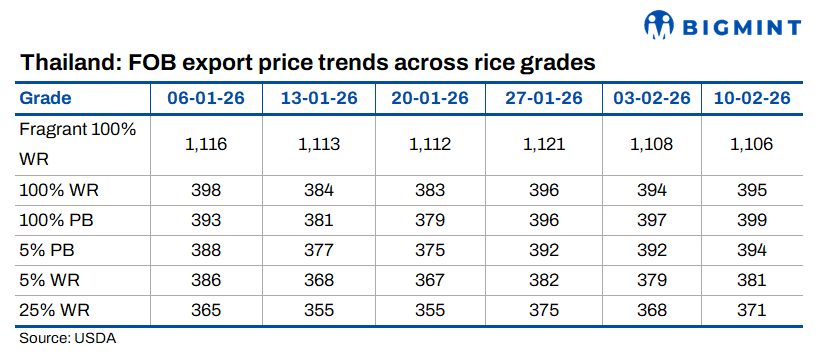
Thailand’s rice export market started 2026 on a softer footing as currency strength, heightened competition, and muted seasonal demand weighed on prices and trading activity. Export quotations for Thai 5% broken white rice averaged around $370/t between January and early February, reflecting a cautious tone in the global rice market.
A key factor behind the pressure on Thai prices has been the appreciation of the Thai baht, which strengthened to around 30-31 per US dollar during the period. The firmer currency raised Thailand’s dollar-denominated export prices, narrowing its price competitiveness against rival suppliers such as India and Vietnam. With Indian and Vietnamese origins offering comparatively cheaper cargoes, several buyers shifted procurement to these markets.
Import demand slows across key destinations
Demand-side dynamics have also contributed to the subdued market environment. Major importing countries, including Indonesia and the Philippines, reported improved domestic rice production, reducing near-term import requirements. Seasonal factors added to the slowdown, as trading activity across Asian markets typically eases around the Lunar New Year holidays. Importers have largely adopted a wait-and-see approach, delaying purchases in anticipation of further softening in international rice prices.
Export statistics reflect the slowdown in demand. Thailand’s cumulative rice shipments, excluding fragrant varieties, were significantly lower in early 2026 compared with the same period last year, with year-to-date exports declining between roughly 31% and 45% in several reporting weeks.
Supply outlook remains steady
Despite weaker exports, Thailand’s supply outlook remains stable. Off-season rice planting for the 2025/26 marketing year reached about 11.4 million rai, or 1.82 million hectares, by early February, slightly exceeding last year’s level. While production prospects appear adequate, the pace of export recovery will depend largely on currency movements, global price direction and competition from other major Asian suppliers.
https://www.bigmint.co/insights/detail/thai-rice-export-prices-soften-amid-stronger-baht-weak-seasonal-demand-729913Published Date: March 11, 2026



 READ
READ