Downloads
 Login
Login
 Register


Tags
Philippine demand drives surge in China’s rice seed exports, USDA says
By Dexter Barro II
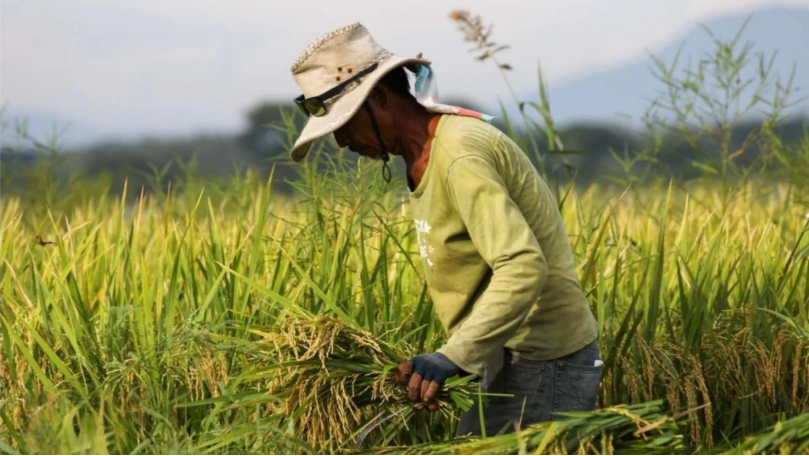
China is projected to export more rice seeds this year, largely due to increased demand from the Philippines and its efforts to boost local production of the household staple, according to the United States Department of Agriculture (USDA).
In a report, USDA said it expects China’s rice seed exports to increase by 10 percent to around 38,000 metric tons (MT) for marketing year (MY) 2025-2026 because of strong demand from the Philippines and Pakistan.
The foreign agency said the bulk, or 85 percent, of last year’s shipments of around 34,000 MT of rice seeds was secured by the two countries.
For the Philippines, higher purchases of hybrid rice seeds are fueling increased demand from China, in line with the government’s efforts to encourage local production and cut reliance on foreign shipments of milled rice.
“The Philippine government continues to provide subsidies for high-quality hybrid rice seeds to boost rice production and strengthen food security, which has generated strong demand for China’s hybrid rice seeds,” USDA said.
In a project briefer, the Agricultural Training Institute (ATI) of the Department of Agriculture (DA) said hybrid rice seeds, which are developed from two genetically dissimilar varieties with superior quality, yield 15 to 20 percent more than traditional inbred rice genotypes.
ATI said such seeds have shown their ability to perform better under adverse conditions such as drought and salinity, which are common threats to rice-growing areas across the country.
In recent years, the country has primarily resorted to importation as demand for rice continues to outpace domestic production.
But, as USDA noted, initiatives such as the government’s Rice Competitiveness Enhancement Fund (RCEF) are expected to improve farm productivity.
RCEF, which was crafted to improve the competitiveness and income of farmers amid the liberalization of the country’s rice trade policy, earlier saw its funding increase from ₱10 billion to ₱30 billion.
Under this year’s ₱6.793-trillion national budget, the allocation for RCEF’s rice seed program has doubled to ₱6 billion.
To maximize the efficiency of the program, the DA earlier urged farmers to plant only one to two rice varieties if they are being served by rice processing systems (RPS), which are part of RCEF’s mechanization program.
Agriculture Secretary Francisco Tiu Laurel said that if too many varieties are planted at the same time, the facility has to wait for one batch to finish before starting another, slowing down operations.
“In Vietnam, farmers focus on one or two varieties per region. This allows mills to operate continuously, reduces production costs, and ensures that both farmers and rice millers earn more. We can adopt the same approach here to make our rice sector more profitable and sustainable,” he said.
For the year, USDA expects the Philippines to produce around 19.52 million MT of unmilled rice for MY 2025-2026, lower than the DA’s projection of 20.3 million MT.
Meanwhile, USDA expects Pakistan to increase purchases from China as higher-yielding hybrid rice varieties have largely replaced older non-hybrid types.
Last month, the Philippines signaled openness to expanding rice imports from Pakistan as part of efforts to widen the country’s sourcing partners for the staple and avoid overdependence on a single supplier.
The South Asian nation delivered 76,522 MT of rice to the Philippines in 2025, or about two percent of the total volume of 3.39 million MT. Vietnam was the top supplier last year, accounting for 2.76 million MT, or 81 percent of total.
https://mb.com.ph/2026/02/16/offshore-winds-curtailments-and-cybersecurity-risksPublished Date: February 16, 2026


 READ
READ