Downloads
 Login
Login
 Register


Tags
Uganda nears release of new aromatic rice varieties to reduce import dependence
The project seeks to meet surging demand for locally grown aromatic rice that can compete on quality, aroma and yield.
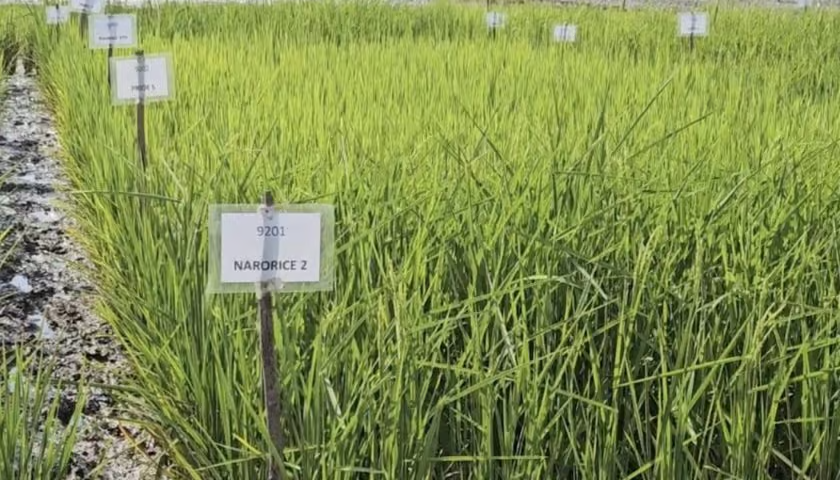
UGANDA – Ugandan agricultural researchers are finalising advanced trials for new aromatic rice varieties that aim to reduce the country’s reliance on imported basmati and other aromatic varieties.
These varieties, developed through collaborative efforts between the National Agricultural Research Organisation (NARO) and the Japan International Cooperation Agency (JICA), represent a strategic advancement under the Promotion of Sustainable Rice Development (ECO-PRiDe) Project.
The initiative addresses key challenges faced by Ugandan rice farmers, including the need for domestically produced grains that rival imported varieties in quality, aroma, and yield.
Uganda spends billions of shillings annually on rice imports, with aromatic varieties often sourced from Asian and East African markets. Introducing competitive domestic varieties could retain value within the agricultural economy, strengthen food security and enhance farmer incomes.
Rice remains a key staple and cash crop in Uganda, with established irrigation schemes such as Doho playing a major role in production.
However, most local output has lacked the aroma and grain characteristics preferred in urban markets, sustaining demand for imports. If trials conclude successfully, the new varieties are expected to be made available to seed companies and farmers ahead of the next planting season.
Dr Jimmy Lamo, rice breeder and Cereals Programme Leader at NARO, said the varieties are being tested across six locations, including the Doho Irrigation Scheme in Butaleja District.
The aim is to ensure adaptability to diverse agro-ecological conditions, strong yield performance and market acceptance before formal release.
The initiative specifically targets quality gaps that have historically compelled Ugandan millers and consumers to import aromatic rice at significant cost.
URA seizes smuggled Kenyan rice hidden in cement shipment
Meanwhile, the Uganda Revenue Authority (URA) has intercepted 3.2 metric tons of smuggled Kenyan rice concealed inside a cement shipment on the Tororo-Jinja Highway, underscoring ongoing challenges with illicit trade.
URA officers, acting on intelligence, stopped a truck en route from Kenya to Kampala and discovered the concealed rice during inspection.
Mr Moses Wanjala Owino, Manager of Enforcement and Border Control for the Eastern Region, said smugglers have increasingly resorted to hiding rice within legitimate cargo to evade detection.
He warned that transporting food alongside cement poses health risks because the chemical components of cement can be hazardous, including potential respiratory effects.
The seized consignment has been handed to the National Bureau of Standards for testing to determine whether it is fit for human consumption.
Over the past three months, URA has recovered roughly 70 metric tons of smuggled rice during routine inspections of cargo entering from neighbouring Kenya, valued at millions of shillings. The eastern Uganda–Kenya border, stretching more than 800 kilometres, includes numerous informal crossing points that facilitate the illicit movement of goods such as wheat flour, tyres, cooking oil, and electronics.
Market participants report mixed impacts from smuggling. Some traders say they can buy Kenyan rice at about 75,000 shillings per 25-kilogram bag (approximately US$ 20) and resell it in Uganda for more than 100,000 shillings (about US$ 26), capturing wide margins.
However, licensed traders argue that undercutting by tax-evading smugglers weakens the competitiveness of genuine businesses and destabilises local markets.
URA continues to urge traders to source rice and other consumables through authorised suppliers that clear goods through standard channels, emphasising that combating smuggling is essential to protecting consumers and maintaining orderly market conditions.
https://millingmea.com/uganda-nears-release-of-new-aromatic-rice-varieties-to-reduce-import-dependence/Published Date: December 18, 2025



 READ
READ