Downloads
 Login
 Register


Yeoju Develops New Rice Variety to Replace Chucheong, Targets 100 Hectares in 2027
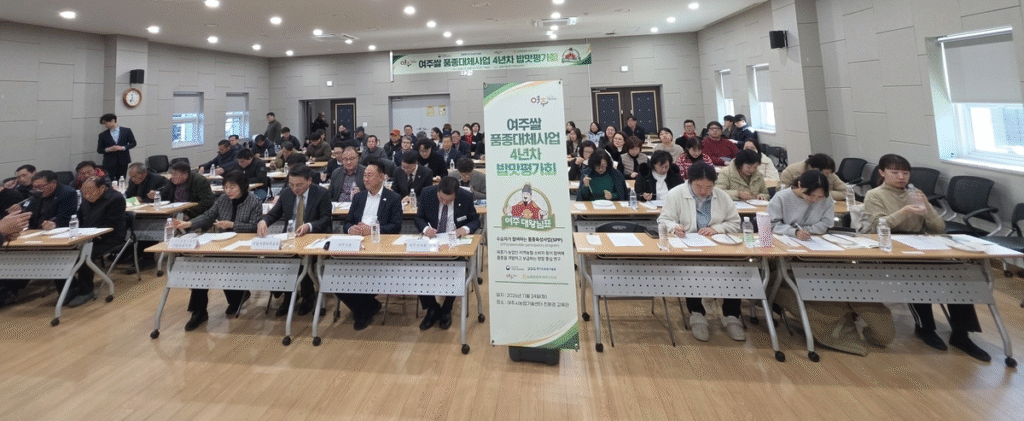
South Korea’s Yeoju City is advancing the development of a locally adapted rice variety, Suwon 693, to replace Chucheong and strengthen the quality, cultivation stability, and competitiveness of its flagship Yeoju rice brand. Following years of field trials and quality assessments, the new variety is expected to enter expanded commercial cultivation in 2027, with the city targeting more than 100 hectares.
The Rural Development Administration (RDA) and Yeoju City held a consumer taste evaluation on November 24 to assess the eating quality and market potential of Suwon 693. The assessment brought together consumer evaluators, rice farmers, local agricultural officials, and representatives of rice processing facilities, who examined the variety’s taste, aroma, and texture.
South Korea Accelerates Chucheong Replacement
Chucheong has been the primary rice variety used for Yeoju’s branded rice for more than 50 years. However, its susceptibility to lodging and major rice diseases has raised concerns over cultivation stability, prompting farmers and local authorities to seek a more suitable domestic alternative.
The replacement initiative began in 2023 through cooperation between the RDA, Gyeonggi Agricultural Research and Extension Services, and Yeoju City Agricultural Technology Center. The project follows a participatory breeding approach, incorporating feedback from farmers, consumers, breeders, and local stakeholders to develop a variety suited to regional growing conditions and market preferences.
The transition has become more urgent as the production of Chucheong distribution seed is scheduled to be discontinued from 2028, increasing the need for a reliable replacement variety.
Suwon 693 Shows Improved Agronomic Characteristics
Suwon 693 has emerged as a promising candidate following regional adaptation trials and field evaluations. Compared with Chucheong, the variety has a shorter plant height, making it less susceptible to lodging, while also demonstrating stronger resistance to major diseases, including rice blast and bakanae disease.
The line has also shown favorable yield potential and eating quality. Results from taste evaluations conducted over the past two years have been encouraging, supporting its potential to combine consumer acceptance with improved production stability.
During the ongoing trials, researchers have examined growth performance, yield, and grain quality under different transplanting schedules and nitrogen application rates. Test cultivation has also been expanded across 10 townships and districts in Yeoju to establish cultivation practices suited to local conditions.
Cultivation Area to Expand Beyond 100 Hectares in 2027
Yeoju City plans to expand cultivation of the new variety to more than 100 hectares in 2027, using seeds produced through pilot cultivation and supplies from the Rural Development Administration. Authorities will also provide cultivation guidance to farmers and support the establishment of a stable seed supply and production system.
The city is reviewing field trial results, crop performance data, and consumer taste evaluation findings before finalizing the variety’s development and rollout. A public naming contest is also underway, with the new rice variety’s official name expected to be selected by December 2026.
Strengthening the Competitiveness of Yeoju Rice
The development of Suwon 693 represents a broader effort to strengthen the quality, reliability, and market competitiveness of Yeoju’s locally branded rice. By replacing a variety with greater cultivation risks with a locally adapted line offering improved disease resistance, lodging tolerance, and consumer appeal, the city aims to secure a more stable foundation for rice production.
As the project moves toward wider cultivation in 2027, its success will depend on consistent field performance, seed availability, farmer adoption, and the ability to maintain the eating quality expected by consumers of Yeoju rice.
By RiceNewsToday | Sources: Seoul Economic Daily; Rural Development Administration (RDA), Republic of Korea.
Published Date: November 26, 2026


 READ