Downloads
 Login
Login
 Register


Tags
West Asia Conflict Disrupts Basmati Trade, Raises Costs For Indian Exporters
West Asia conflict and disruptions to key shipping routes are squeezing India’s basmati rice trade, raising freight and storage costs, writes Munish Turan.
By ETV Bharat English Team
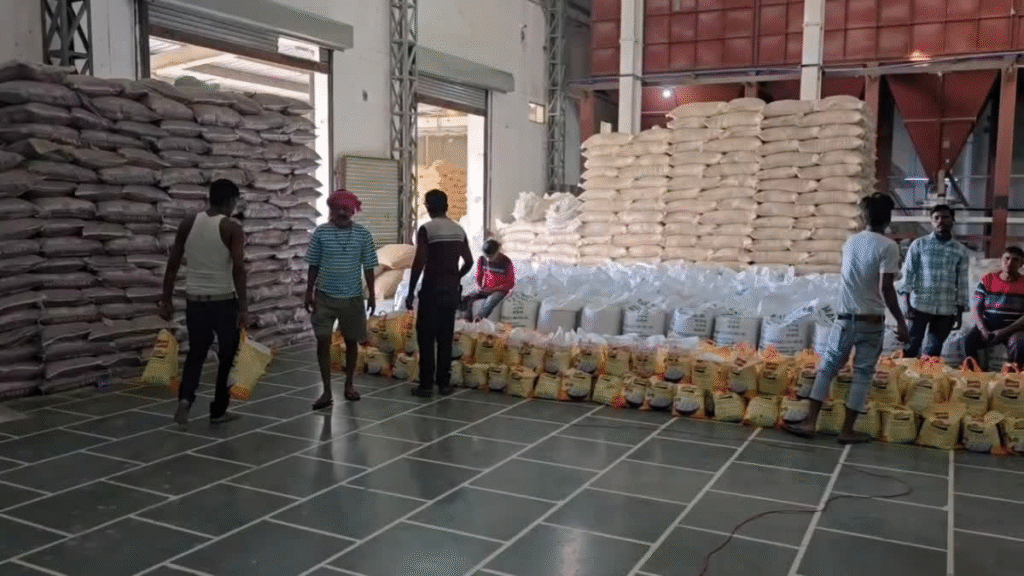
Srinagar/Chandigarh/Moga/Karnal:For Dinesh Gupta, a rice miller and rice trader from Karnal in Haryana, the Iran conflict is slowly eating into his already thin profit margins. His consignment of basmati rice destined for Iran and the Middle East is taking longer to reach its destination, pushing up costs.
“Ships are taking much longer to reach their destinations than before. Overall, the production cycle has been significantly disrupted, leading to significant losses,” said Gupta.
“We used to earn a two to three per cent profit, but now we have to spend even more on the rice stuck there. Expenses have increased by 25 to 30 per cent,” he added.
Prime Minister Narendra Modi has signalled that India wants to boost trade with Iran “in times to come” during a meeting on Monday with Iranian President Masoud Pezeshkian. But the more immediate problem is Operation Economic Outcast, launched by the US to cut the Iranian regime’s economic lifelines.
This has added another layer of uncertainty to the basmati rice trade already facing pressure from disruptions to shipping and growing transportation costs.
While the actual impact of Operation Economic Outcast is yet unknown, as Iran has faced and survived US economic sanctions for years, its ripples are nevertheless being felt far and wide in the farmlands of Punjab, Haryana and Jammu and Kashmir.
A cross-section of farmers, millers and exporters that ETV Bharat spoke to expressed concern that the shock from the conflict in Iran, already moving down the supply chain, could actually worsen if US sanctions widen to target payment systems and third-country transactions.
West Asia crucial for basmati rice exports
For basmati rice exporters, the developments in the Middle East, which account for nearly 70 to 72 per cent of India’s total basmati rice exports, are already having a direct impact on their livelihood. The disruptions to the Strait of Hormuz since the outbreak of the Iran conflict and now the Red Sea due to attacks by Houthis on Saudi Arabia have impacted ship movement.
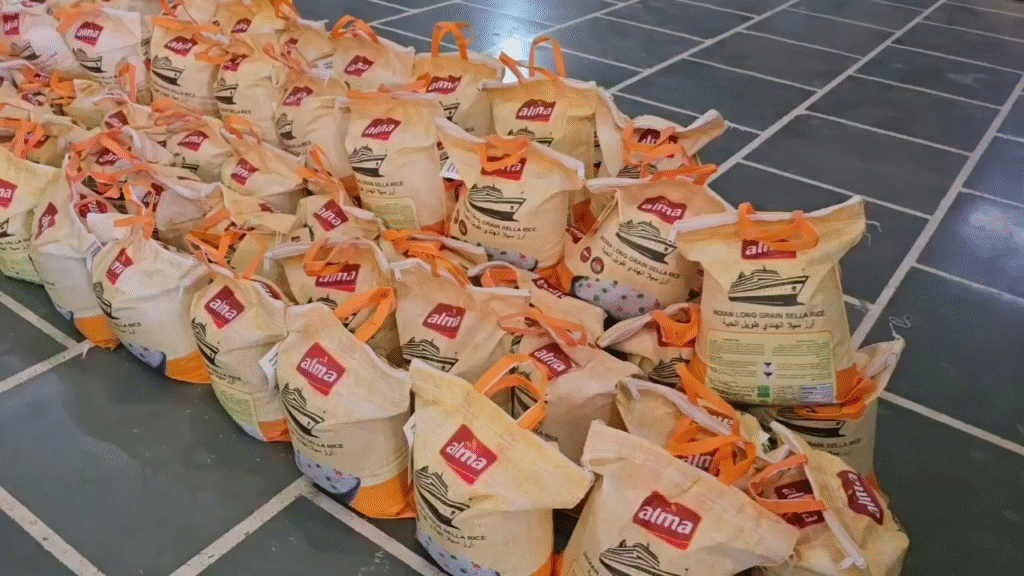
In Haryana, Hansi rice exporter Ashir Jain pointed out that freight costs had gone up over ten times since the beginning of the Iran conflict. Haryana, followed by Punjab, is the largest producer of basmati rice grown across 780,000 to 800,000 hectares.
“Due to shipping route changes and difficulties obtaining insurance, exporters’ costs have increased exponentially. The shipping cost of a container, which was previously around $400, has risen to $5,000 or more,” said Jain. Haryana’s exporters alone contribute 40 per cent of India’s rice exports to the Gulf and West Asian countries.
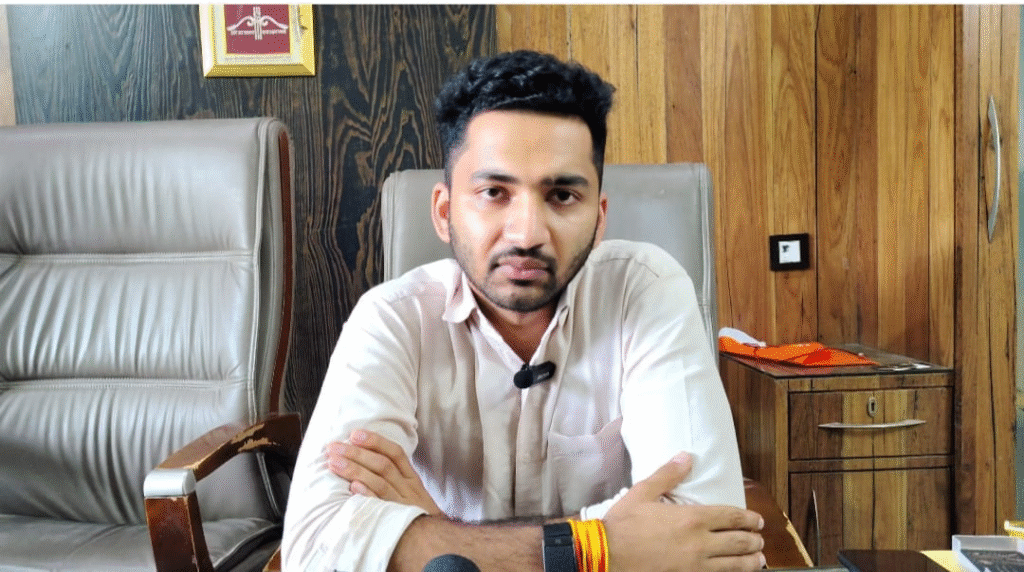
Now shipments destined for Iran and the Gulf are stuck at various ports, while new orders have stopped coming in, said those in the trade. Stockpiles are piling up at ports, and in-transit shipments are being delayed, driving up costs and impacting exports.
Government data released in May showed a sharp decline in India’s basmati exports during March and April; exports fell by 27.4 per cent in March and 20.9 per cent in April, resulting in an overall drop of approximately 24 per cent in export value across the two months.
In the 2025-26 fiscal year, India exported 6.52 million tonnes of basmati rice, valued at approximately Rs 50,138 crore. Iran was the second-largest buyer, accounting for 18-20 per cent of India’s total basmati exports.
Saudi Arabia was India’s largest market, receiving 16.6 per cent of total basmati exports, followed by Iran at 13.9 per cent, Iraq at 11.2 per cent, the United Arab Emirates at 8.2 per cent, and Yemen at 5.7 per cent. Collectively, these five countries account for about 55.6 per cent of India’s total basmati exports.
The millers and exporters
Disruptions in UAE-Iran trade have created uncertainty regarding business transactions and payments routed through Dubai. It is not just the farmers who are at risk; rice millers also face significant exposure. After purchasing expensive basmati, they risk having their capital tied up in inventory if export prices drop or payments get delayed.
The burden of storage costs, bank interest, and working capital requirements could further compound the difficulties faced by millers. If existing rice stocks do not clear while the arrival of the new basmati crop increases, millers might exercise caution regarding fresh purchases.
Punjab’s rice industry already faces a major challenge due to a combination of factors: low basmati yields on one hand, and mounting logistical hurdles in the international market alongside instability in West Asia on the other. “Basmati production is projected to be lower this season compared to previous years, whereas the yield of certain non-basmati paddy varieties is expected to rise,” said Vikas Gupta in Punjab.
A major factor attributed to this trend is the uncertainty regarding basmati prices and payment schedules that has persisted among farmers over the last two years. Apart from a weak monsoon, forecasts regarding fertiliser shortages and export difficulties stemming from the conflict involving Iran have led to a reduction in the area under basmati cultivation; consequently, many farmers prioritised other paddy varieties over basmati.
The farmer’s greatest limitation is the inability to control international market dynamics, freight rates, or foreign payment processes. The government needs to consider how the impact of international market shocks is distributed among farmers, millers, and exporters, said Azad Malik, associated with a Punjab-Haryana trade union.
He noted that the area under paddy cultivation in Punjab has reached 32.76 lakh hectares; consequently, the primary concern currently lies with market conditions and the prices farmers receive, rather than production volume. Basmati accounts for 6.86 lakh hectares of this total, representing approximately 21 per cent of the overall paddy area.
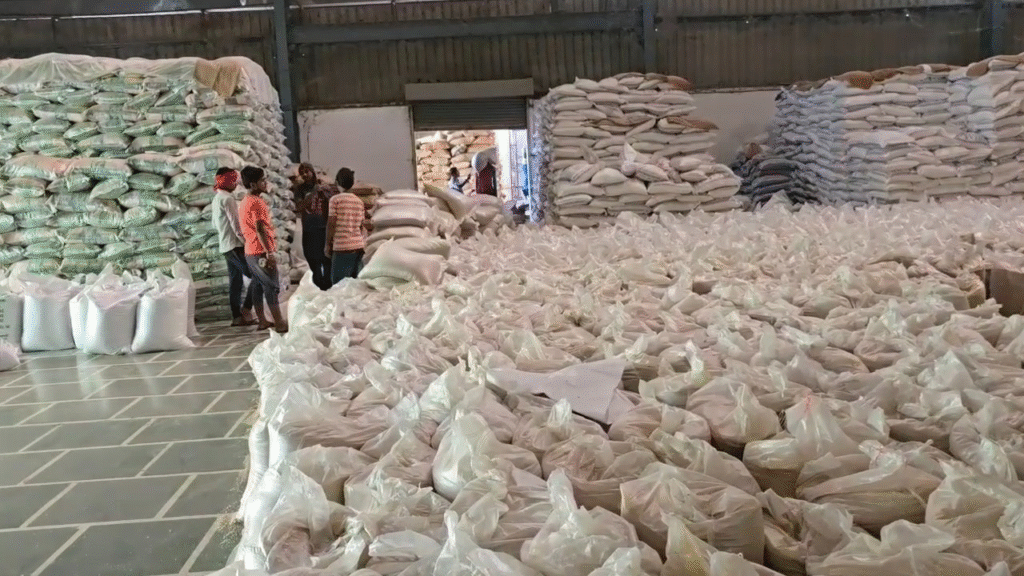
Basmati production in Punjab is estimated at around 26 lakh tonnes this year. Meanwhile, Punjab’s rice milling industry is already grappling with pressure regarding existing stocks and storage; reportedly, about 15 lakh tonnes of rice are yet to be transferred to the central pool.
If trade, shipping, and payment-related issues in West Asia persist, the purchasing capacity of millers and exporters could be strained, potentially impacting the prices farmers receive for their basmati crop.
All is not lost
Markets such as Saudi Arabia, Iraq, the UAE, the USA, and Europe remain open, and sustained demand from these destinations could cushion the impact. “We can’t comment on what will happen after the US issued threats of stopping business. But our trade is currently going on with most of the Gulf countries,” said Balwinder Singh, owner of Kashmir Rice Mills, R S Pura.
“As far as mode of payments are concerned, the money is received in advance as bank guarantee,” he added.
As per government officials, Jammu and Kashmir produces approximately 1.35 lakh MT of basmati and that around 85 per cent is exported annually to both domestic and international markets. About 50 per cent of total basmati rice exports go to Gulf and West Asian countries such as Saudi Arabia, the UAE, Iran and Iraq, while the US accounts for only 5 per cent of the demand.

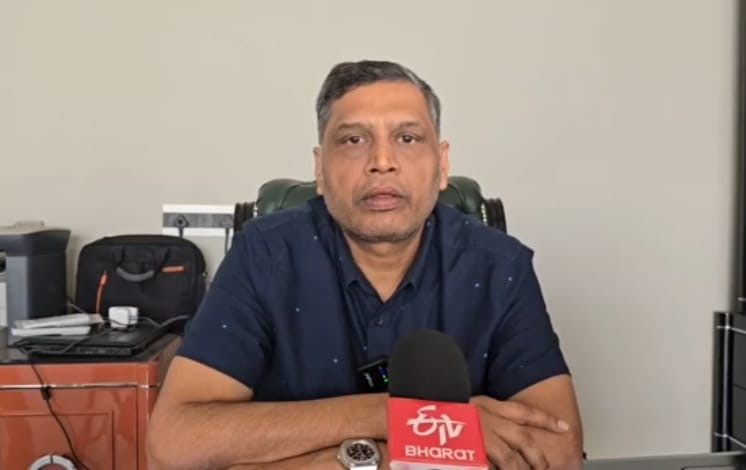
Atul Khanna, Spokesman of Ware House Traders’ Association in Jammu and Kashmir (ETV Bharat)
Still, future prices will not be determined solely by the conflict; factors such as crop arrivals, quality, export orders, miller liquidity, storage costs, and freight charges will also play crucial roles. As Atul Khanna, spokesman of Ware House Traders’ Association in Jammu and Kashmir, noted, “Things have become complicated.”
(Raja Amir Tantray, Kawaljeet Kaur and Saurav Arora contributed to this report)
https://www.etvbharat.com/amp/en/bharat/us-iran-middle-east-conflict-disrupts-basmati-trade-raises-costs-for-indian-exporters-enn26090102764Published Date: September 2, 2026


 READ
READ