Downloads
 Login
Login
 Register


Tags
Water Management May Help Reduce Arsenic Levels In Rice, Study Finds
by Institute for the Advancement of Food and Nutrition Sciences
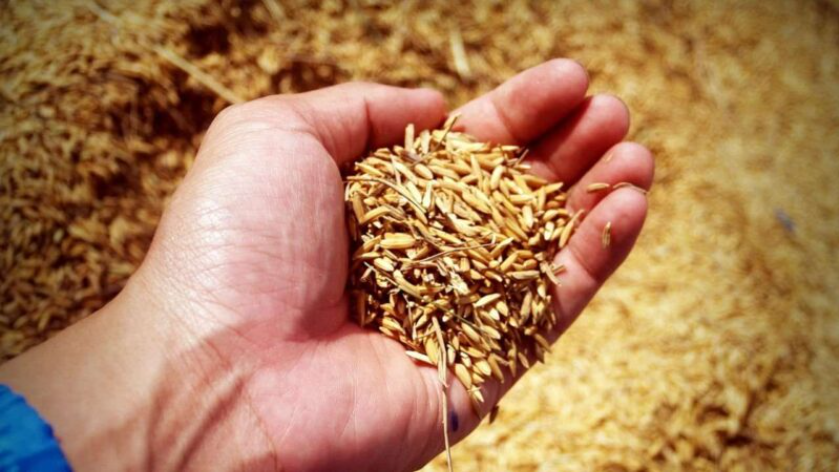
Arsenic Levels In Rice Vary Depending On Water Management
Alternating wetting and drying rice fields appears to reduce concentrations of heavy metals like arsenic in rice once harvested, according to new research.
A new study examined 412 white rice samples from Arkansas – a major rice producing state – under different water management conditions and evaluated them for the metals arsenic and cadmium. Reductions in arsenic were achieved through aerating soils but water distribution must be managed carefully to avoid simultaneously increasing concentrations of cadmium. According to the paper, “there is often a trade-off between arsenic and cadmium in rice under different water management that must be understood to minimize health risks.”
The findings appear in a peer-reviewed paper in the journal Agricultural & Environmental Letters and were supported by IAFNS Food Chemical Safety Committee.
In addition to water management, the authors say that factors such as soil pH, soil organic carbon, and texture also played a significant role in grain total arsenic concentrations. Soil pH and clay content were negatively correlated with grain arsenic.
The study is one of the first to provide field-scale validation of water management across different soils as a control on grain arsenic, although multiple aerations were necessary. The more aerations, the more arsenic reductions in rice, but cadmium concentrations remained low, according to the paper.
The researchers found that regardless of water management, grain cadmium was lower than the Codex limit for cadmium in white rice. All samples were also below the Codex limit for inorganic arsenic in white rice, but 30% were above the US Food and Drug Administration action level for inorganic arsenic in infant cereals.
More on-farm trials are needed to validate findings and to see when and where mitigation strategies can succeed, the paper concludes.
According to author Angelia Seyfferth with Arizona State University, “Arkansas growers can substantially lower grain Arsenic levels without increasing Cadmium to levels of concern by using alternative water management practices that are already being implemented. Our data suggest that this would be most important to implement in coarser-textured rice soils that tend to lead to higher grain Arsenic levels than finer-textured soils.”
https://wherethefoodcomesfrom.com/water-management-may-help-reduce-arsenic-levels-in-rice-study-finds/Published Date: July 22, 2026



 READ
READ