Downloads
 Login
Login
 Register

Tags
There is a deadly truth behind Pakistan’s growing rice exports
The increase in exports is led majorly by non-Basmati varieties as Pakistan pivots towards selling cheaper rice to low-value markets. Behind the increase is a major water crisis waiting to happen.
By Abdullah Niazi
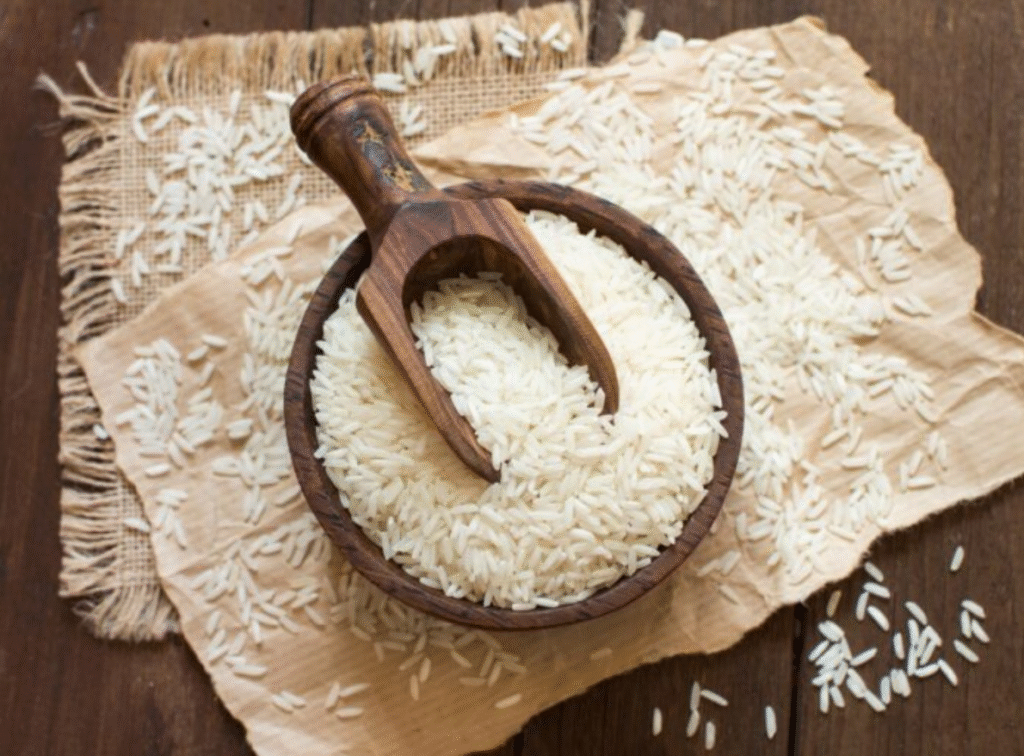
Last week, Pakistan’s rice exports surged past Vietnam to make Pakistan the third largest rice exporter in the world behind only Thailand and India. Pakistan exported 4.89 lakh tonnes of rice to the world compared to Vietnam’s 3.87 lakh tonnes in December 2025.
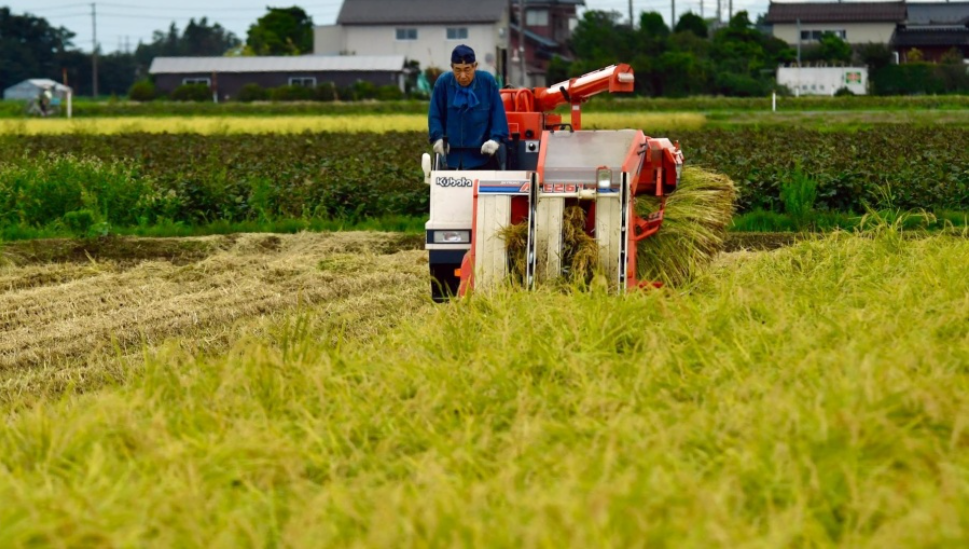
The increase is the result of a number of factors. On the international market, increased production in India has brought prices down and increased the demand for rice. Domestically, Pakistani farmers are turning towards rice production in greater numbers. Areas that are not traditionally rice growing regions have started growing high-yield non-Basmati variants. As a result, Pakistan’s exports to regions like Central Asia are growing significantly. While these are new markets for Pakistan and can contribute significantly to our exports and easing the trade deficit, there is a massive cost to these exports.
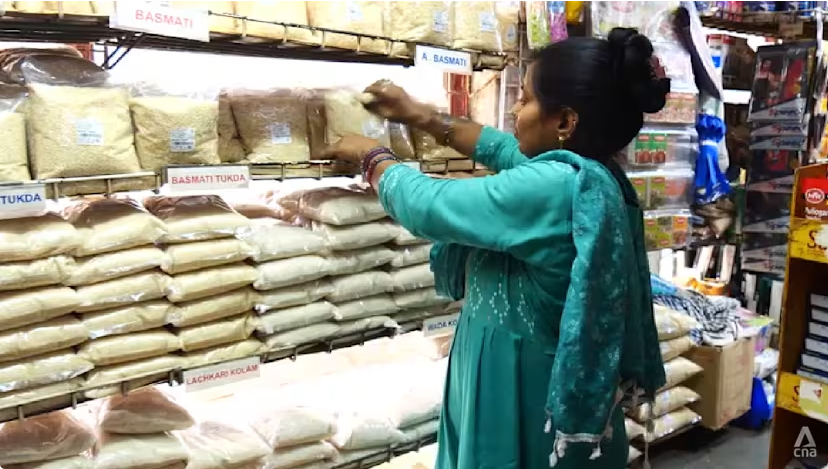
A major reason for farmers turning towards rice is the availability of cheap solar panels. They have allowed farmers to run their tubewells at near-zero cost during the day to get the water needed to feed what is a water guzzling crop. This increased water consumption is fast depleting the water table in agricultural districts and will cause a massive strain on Pakistan’s water resources in the coming years. On top of this, farmers are also turning towards different varieties such as Kainta, which is branded and sold as Basmati in markets like Central Asia and Africa. This means Pakistani farmers are fast abandoning traditional Basmati, which can be a designer high-value export if marketed properly.
More rice, more exports, less water
Pakistan has been growing more rice in recent years. According to Faisal Jahangir, Chairman of the Rice Exporters Association of Pakistan (REAP), the overall rice cultivation area has increased by 20% compared to last year. The increase in area has even allowed rice farmers to avoid the worst of the damage caused by last year’s floods.
The total expected production of rice this year is around 1.1 crore metric tons. With the Pakistan Bureau of Statistics estimating domestic consumption at 20-25 lakh metric tonnes, that leaves Pakistan with a surplus of around 80 lakh metric tons that can be exported. This would be a significant increase from exports in FY 2024-25, which totaled 58 lakh mt, a 3.5% decline compared to FY 2023-24.
But the increase in rice exports has come at the expense of Pakistan’s traditional Basmati variety. According to a report of the United States Department of Agriculture (USDA), this shift is causing serious strain on Pakistan’s water resource. “Higher yielding hybrid varieties, especially in non-Basmati, have replaced the older non-hybrid varieties. However, growth is modest in basmati production as the basmati area is limited to a few districts in Punjab and few new high yielding varieties have been introduced in recent years,” reads the report.
The report goes on to specify the ongoing increase in rice cultivation is depleting available irrigation water, which is already diminished due to dam sedimentation. “To obtain more water, farmers have relied more on digging wells, resulting in a drop in the water table. Future growth in rice area and production will depend on the increased availability of irrigation water.”
The digging of wells and usage of groundwater through tubewells has become financially feasible for farmers because of the glut of solar panels in the country. According to a Reuters report from October 2025, farmers are increasingly ditching diesel and grid power for sun-powered tube wells. “There are no recent official estimates on the number of tube wells in Pakistan, which doesn’t require their registration. But so widespread is their use that farmers choosing to power the devices with solar are set to drive a 45% collapse in the amount of grid electricity consumed by the agriculture sector in the three years through 2025, said energy economist Ammar Habib, who serves as an advisor to Pakistan’s power minister. His estimate was based on consumption data published by the national energy authority,” reads the report.
According to the data, some 400,000 tube wells that once relied on grid electricity have switched to solar. Farmers using solar panels have likely purchased an additional 250,000 tube wells since 2023, signalling that the sun now powers roughly 650,000 such devices across Pakistan.
“When you export crops like rice and sugarcane, you are not exporting the crops, you are exporting water,” says Khalid Khokhar, the Chairman of the Kissan Ittehad, which is Pakistan’s largest advocacy collective for farmers. Mr Khokhar, who is a cotton farmer from South Punjab, claims the increase in sugarcane and rice production is very burdensome on water resources and will have serious consequences in the future. “We are giving up on cotton, which we once called White Gold, and are replacing it with white poison.
Faisal Hassan, a traditional Basmati farmer from Hafizabad, says that Basmati farmers of Central Punjab have had their livelihoods decimated in the recent floods. “Pests and weather conditions have had a deep effect. I was estimating production of 50-60 mounds but we are barely getting 10 mounds,” he says. Mr Hassan is a second generation Basmati farmer and his father developed the famous “Kernal Basmati” variant back in the 1960s. However, since then the development of Basmati varieties has all but stopped, and farmers have turned towards varieties like Japonica and Kainat.
The Kainat variety is actually similar in some respects to Basmati and has been branded and sold as Basmati in many parts of the world.
New markets
Another factor in the growing exports is Pakistan’s pivot towards new markets. Last month, the UAE remained the top destination for Pakistani rice, importing 74,897 tonnes, including 16,850 tonnes of Basmati. China followed closely with 74,685 tonnes, while other major destinations included African countries. Saudi Arabia imported 16,032 tonnes, including 5,350 tonnes of Basmati, the EU and UK combined imported 21,100 tonnes, including 15,600 tonnes of Basmati.
However, exports to Kazakhstan exceeded 17,000 tonnes, including 10,300 tonnes of Basmati, while shipments to Uzbekistan stood at 10,382 tonnes. The growing exports to Central Asia are significant, but exporters remained cautious of the reporters.
One major exporter from Karachi speaking on the condition of anonymity told Profit the increasing exports were a function of selling “fragrant” rice varieties and branding them as Basmati. “There is a big difference. Fragrant rice is varieties like Kainat which are not Basmati, but Central Asian markets and other regions do not know the difference. Traditional Basmati can only be grown in certain districts and if branded correctly can be sold at a premium in the EU and American markets,” he claims. “But because it is easier to grow the other varieties, the government and export associations often collude to sell new non-Basmati varieties that also use up more water.”
Pakistan was once a bigger rice exporter than India. However, the failure to brand its rice led to Indian exporters in the 1980s buying Basmati rice from Pakistan and selling it in Europe and America as Basmati where it became famous. Today, Pakistani Basmati does not have anywhere near the branding that Indian Basmati has, which has led us to focus on exporting non-Basmati varieties.
The potential of premium Basmati is massive, but traditional growers claim it will require seed research, proper categorisation and definition of what is Basmati, and a concentrated effort to market Pakistan’s superior Basmati rice in high value markets such as the EU, United Kingdom, USA, and Canada where there is a great demand for Basmati.
https://profit.pakistantoday.com.pk/2026/01/20/there-is-a-deadly-truth-behind-pakistans-growing-rice-exports/Published Date: January 20, 2026


 READ
READ