Downloads
 Login
Login
 Register


Tags
Texas rice production costs demand efficiency
Texas rice acreage has dropped 75% since 1980. See what’s reducing acres and what industry challenges are ahead.
Ron Smith, Contributing Writer, Farm Progress
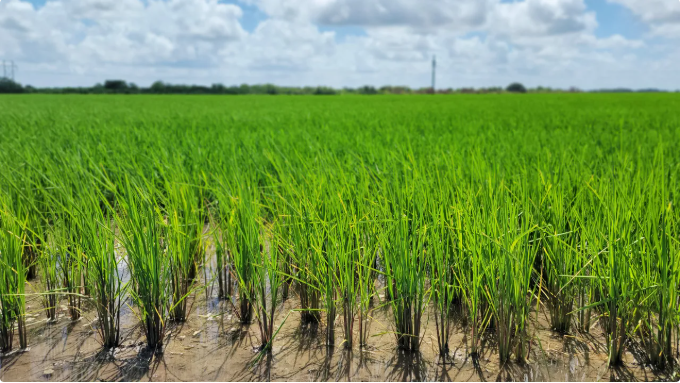
Texas rice production, expected to cover about 120,000 acres in 2026, would be down from approximately 142,000 acres in 2025.
Sam Rustom, Texas A&M AgriLife professor and Extension agronomist, Eagle Lake, said rice acreage has declined by 75% since 1980, primarily from population growth and water demand issues. “But we have increased yields by 187%,” he said.
Rustom also noted that production costs are higher than in other rice-producing states.
“Our growers are spending about $400 to $500 more per acre to grow rice,” he said. “That is primarily a function of increased water costs and increased land costs.”
With reduced acreage and higher costs, Texas rice producers must be as efficient as possible, a big chore considering multiple challenges with resistant weeds, insect pests and plant diseases.
Extension specialists discussed some of those issues during the Texas Plant Protection Association’s rice session during the annual conference Dec. 10 in Bryan.
Rice delphacid
The rice delphacid has become a recurring pest of ratoon rice in Texas’ Upper Gulf Coast region, said Simeon Ross, Extension program specialist, Wharton.
Ross discussed findings from 2025 insecticide efficacy and scouting field trials evaluating management and monitoring.
Treatments included Centric, Indigo ZCX, Dimilin, Tenchu 20SG, Courier and several tank mixes.
“Pretreatment populations exceeded 400 delphacids per 10 sweeps, confirming heavy delphacid pressure,” Ross said.
“Integrating effective insecticide programs with timely scouting, via vacuum or sweep nets, enhances [integrated pest management] strategies for managing rice delphacid in Texas.”
Ross said next steps include submitting Section 18 Emergency Exemptions for Courier and Centric. “If we can get the Section 18 for Centric, we will withdraw the Section 18 Emergency Exemption for Indigo, which is not good on beneficials,” he said.
Resistant barnyardgrass
Rustom said the barnyardgrass complex “represents one of the most challenging genera of weeds to control in rice worldwide. In Texas, herbicide-resistant barnyardgrass populations have expanded exponentially in recent years.”
Recent surveys suggest that around 50,000 acres of Texas rice fields contain barnyardgrass with resistance to one or more modes of action, he noted.
Follow-up applications don’t work well either. “That’s something we will investigate in the future,” Rustom said.
The Texas A&M AgriLife Rice Extension program initiated trials in 2025 to screen most of the herbicides labeled for barnyardgrass control in rice. The study was conducted near Nada, Texas, where a farmer reported poor barnyardgrass control when treated with ALS, photosystem II or synthetic auxin inhibitors in the previous year.
“Results from the study suggest that all the postemergence products labeled for use on barnyardgrass in rice were ineffective,” Rustom said. “Control was less than 20% when treated with imazethapyr (ALS), bispyribac (ALS), quinclorac (auxin) and propanil (photosystem II). The only herbicides with effective levels of control were clomazone, pendimethalin and thiobencarb, products with only preemergence activity.”
He said ACCase herbicide activity was poor when barnyardgrass was treated with quizalofop, cyhalofop or fenoxaprop. Quizalofop herbicide was recently labeled for use in Provisia rice, which is a relatively new herbicide-tolerant system designed specifically to control barnyardgrass and weedy rice.
Rustom said new products coming in the next few years “will change the way we control weeds in rice. In the meantime, we will have to go back to things like residual overlays,” he said.
Rice diseases
Rice kernel smut, once considered only a minor disease in rice, “has emerged as a major rice disease in the U.S.,” said Xin-Gen “Shane” Zhou, Texas A&M AgriLife Extension professor and plant pathologist, Beaumont. “Kernel smut causes significant economic losses due to our limited knowledge of its biology and lack of effective management tools.”
Zhou reported on a study of the pathogen’s genetic diversity, fungicide resistance, fertility effects and varietal resistance across the U.S.
He said the pathogen’s diversity was highest in Mississippi and Louisiana populations. Arkansas and California populations exhibited the least diversity, and Missouri and Texas populations were intermediate. “Propiconazole resistance was detected in 83% of the isolates, which was linked to mutations in the CYP51 gene,” Zhou said.
He explained that fungicide trials identified Amistar Top as more effective than Tilt. The mid-boot stage is the optimal application timing.
“Increasing nitrogen from 160 to 220 pounds per acre significantly intensified disease severity,” he added. “Among 39 rice varieties screened, AddiJo and DGL274 showed resistance, while CLGemini214, Presidio and PVL03 were among the highly susceptible. “These results improve our understanding of kernel smut biology and provide practical guidance for managing kernel smut in rice production,” Zhou said.
https://www.farmprogress.com/rice/texas-rice-production-costs-demand-efficiencyPublished Date: February 9, 2026


 READ
READ