Downloads
 Login
Login
 Register


Tags
Telangana’s rice boom turns into surplus challenge as crop diversification gains focus
Telangana Agricultural University has submitted a set of policy recommendations to the state government to address the growing rice surplus and promote crop diversification.
By KV Kurmanath
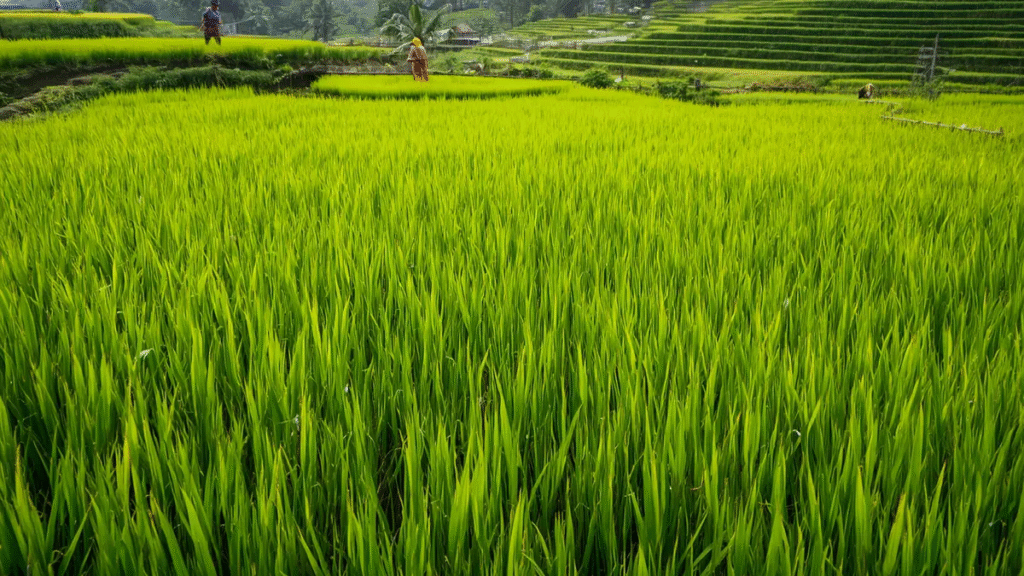
Since its formation as a State in 2014, Telangana’s rice story has been phenomenal. And this has become a challenge now, as it is finding it difficult to manage its rice surplus season after season. This poses another serious challenge – monocropping. Barring cotton, which competes with the paddy area in the kharif season, most of the other crops barely cross the two-digit percentage acreage area.
Over the past decade, rice output in the State has nearly tripled, from about 66 lakh tonnes in 2013-14 to 1.70 crore tonnes in 2024-25. The State, which was predominantly rainfed, emerged as one of the top-3 rice-producing regions in the country, contributing nearly 12 per cent to the national output.
The paddy area expanded from 19.95 lakh hectares to 47 lakh ha during the period. The entire rice area is irrigated, thanks to new projects and favourable monsoon rains, which have increased water availability. Yield growth, however, has remained stagnant.
Policy paper suggests crop diversification, export push
Prof. Jayashankar Telangana Agricultural University (PJTAU)’s Centre for Sustainable Agriculture and Development Studies (C-SAS) has released a set of recommendations to address the rice situation in the State.
The paper, Managing Telangana’s Rice Surplus: Opportunities for Export Earnings, Sustainability and Crop Diversification, was prepared by Samarendu Mohanty (Professor of Practice & Founding Director, C-SAS, PJTAU) and Aldas Janaiah, Vice-Chancellor of PJTAU.
The paper, submitted to the State government recently, outlined short- and long-term measures to transition the State from a procurement-driven, surplus-accumulating system to a market-aligned, diversified, and fiscally resilient agricultural model.
“This production surge reflects successful irrigation expansion through groundwater exploitation, tanks, and continuous favourable monsoons over the past nine years. Further, the procurement policies have generated persistent structural surpluses under India’s Minimum Support Price (MSP)-based procurement system,” they said.
Rising procurement leaves State with surplus stocks
In 2024-25, the State procured 1.28 crore tonnes of paddy. After contributing 1.08 crore tonnes to the Central pool and allocating some of it for local schemes, the State was left with more than 15 lakh tonnes.
In 2025-26, procurement has increased to a record 71.8 lakh tonnes in the kharif season, up from 70.8 lakh tonnes in the previous kharif season. With a central allotment of 53 lakh tonnes, the State will be left with about 20 lakh tonnes.
“Going forward, the surplus situation is likely to worsen during Rabi 2025-26 with an expected increase in rice production under current policy settings. Under current policy settings, production growth is expected to continue, implying an increase in annual surplus accumulation unless procurement or cropping patterns are adjusted,” they pointed out.
“The State is in a Catch-22 situation because of India’s MSP-based procurement system. Since the MSP effectively sets the purchase price for rice in the state, and this price is generally higher than global rice prices, it is inevitable that the State will incur losses when exporting to foreign markets,” the authors noted in the policy paper.
Export opportunities and sustainability concerns
Stating that global rice prices, which fell by nearly 50% over the past year, are expected to stabilise and may even rise in the coming months, depending on the monsoon in other rice-producing countries.
Holding stocks leads to losses over time due to storage costs, quality deterioration, bank interest, and price risk. In contrast, disposing of surplus rice minimises fiscal losses and frees up short-term storage capacity.
The policy paper called for procurement rationalisation to prevent recurring overstocking and the development of an export ecosystem to enhance market access and competitiveness.
It asked the government to consider offering an incentive-based crop diversification to encourage the adoption of high-value, less water-intensive crops.
“The State should also consider offering deficiency payment mechanisms for perishable crops to ensure income stability without logistical burden,” the paper said.
https://www.thehindubusinessline.com/economy/agri-business/telanganas-rice-boom-turns-into-surplus-challenge-as-crop-diversification-gains-focus/article71112068.ecePublished Date: June 17, 2026


 READ
READ