Downloads
 Login
Login
 Register


Tags
Rs15 billion assistance for rice exporters: govt vows to ensure there is no misuse
Ministry of Commerce says it is putting stringent mechanism in place.
Mushtaq Ghumman
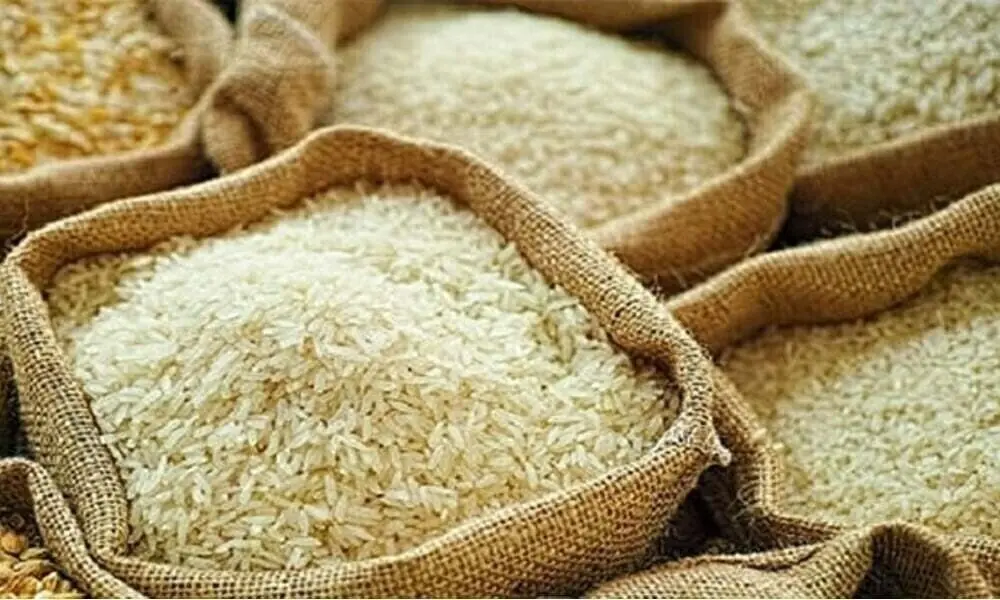
ISLAMABAD: The Ministry of Commerce (MoC), in consultation with the State Bank of Pakistan (SBP), Pakistan Single Window (PSW), and Customs, is framing a stringent mechanism to prevent misuse of the Rs15 billion financial assistance approved for rice exporters for a three-month period, sources close to the Secretary Commerce told Business Recorder.
The Export Development Board (EDF), chaired by the commerce minister, approved the financial assistance for the rice sector despite opposition from several board members.
Chairman of the Rice Exporters Association of Pakistan (REAP), Faisal Jahangir, said rice is Pakistan’s second-largest export after textiles and a critical source of foreign exchange, rural employment, and agri-industrial activity.
He noted that rice exports rose from USD 2.04 billion in FY2021 to USD 3.93 billion in FY2024 due to temporary global supply disruptions, but eased to USD 3.35 billion in FY2025 as major suppliers re-entered the market.
The decline has intensified in the current financial year, with exports during July–December falling by approximately USD 854 million year-on-year. Of this, non-basmati rice accounted for USD 716 million, while basmati exports declined by USD 138 million, reflecting a broad-based loss of competitiveness across both premium and volume segments.
Global oversupply, led by India’s return to the export market with heavy subsidies, has depressed prices and widened the price gap. Indian basmati is priced at around USD 850–900 per metric ton, compared to USD 1,150–1,275 per metric ton for Pakistani basmati.
At the same time, elevated domestic paddy prices, high financing costs, stock accumulation in importing countries, and regional trade frictions have further constrained exports, creating liquidity stress across the value chain.
Jahangir emphasized that production is not the constraint, as Pakistan has an exportable surplus of about 4.1 million metric tons, translating into near-term export potential of around USD 2 billion if short-term competitiveness issues are addressed. He requested financial support until June 30, 2026, at the rate of 9 percent for basmati and 3 percent for non-basmati rice exports.
Chief Executive of TDAP, Faiz Ahmad Chadhar, observed that last year’s export increase was primarily due to India’s export ban, which benefited Pakistani exporters. With India’s return, the decline in global share was not unexpected. He added that farmers have already sold their crops, raising concerns that the subsidy may benefit only a few supply-chain participants.
Chairman of PHMA, Babar Khan, stressed that DLTL is a federal policy initiative under the Ministry of Commerce and not an EDF matter. He opposed the proposal, arguing that similar challenges are faced by the value-added apparel and textile sectors.
PHMA called for a uniform and equitable policy framework for all export sectors and recommended returning EDS collections to exporters rather than cross-subsidizing a single sector. He also pointed out that the meeting was convened at short notice and no detailed proposal had been shared in advance.
Bilal Shahid Tata, CEO of Tata Best Food Ltd, also opposed the proposal, stating that such subsidies contradict the mandate of the EDF. He warned that approving the scheme could trigger similar demands from other sectors and noted that subsidies are not a long-term solution.
Instead, he emphasized EDF’s role in addressing structural issues such as R&D, branding, technology upgradation, and skill development.
Board members suggested that REAP submit proposals focused on improved crop management, water-efficient farming techniques, and higher per-hectare yields, warning that short-term subsidies could distort domestic markets and fail to address long-term competitiveness.
Chairman of the Fruit and Vegetable Exporters, Importers & Merchants Association, Waheed Ahmed, said similar challenges are faced by fruit and vegetable exporters and stressed the need for long-term planning and unbiased support across all exporting sectors.
Secretary Commerce, who is also Vice Chairman of the Board, informed members that in November 2025 the Prime Minister directed the MoC and relevant ministries to engage with chambers and associations to identify export challenges.
He noted that Pakistan’s exports have declined during the current year, with the rice sector being the most affected. Rice exports have dropped by nearly 50 percent, accounting for almost 60 percent of the total export decline of USD 1.4 billion.
He added that the Prime Minister has directed the Finance Division to provide a Rs20 billion federal grant to EDF in the next financial year, addressing concerns over EDF replenishment.
Executive Director General (EDG) MoC, Muhammad Ashraf, said REAP had shared data with the ministry’s Agro Wing, based on which a presentation was developed. He stated that rice production increased from 9.02 million MT to 9.34 million MT, with an export surplus of 0.6 million MT of basmati and 3.5 million MT of non-basmati rice.
Export volumes declined from 2.9 million MT to 1.8 million MT during the first six months of the current year, while the average price gap of USD 100–150 per MT continues to hurt competitiveness.
He estimated that Rs30 billion would be required for a six-month scheme.
The Commerce Minister, as Chairman of the Board, recommended approval of the proposal in light of the Prime Minister’s directives and assured that EDF’s financial strength would not be compromised.
The Secretary Commerce proposed approval of the scheme with a 90-day review to assess its impact on supply, demand, and pricing trends. He also directed that SBP, PSW, and Customs be consulted to launch the scheme through a digital payment system within a week to prevent mis-declaration and misuse.
Following detailed deliberations, the Board approved funding of Rs15 billion at 3 percent for non-basmati and 9 percent for basmati rice on FOB value until June 30, 2026.
The Board also approved increasing EDF’s annual budget to Rs27.3 billion and outlined strict monitoring, digital disbursement, and a mandatory 90-day performance review.
Copyright Business Recorder, 2026
https://www.brecorder.com/news/40403790Published Date: January 24, 2026


 READ
READ