Downloads
 Login
Login
 Register


Tags
Rising fertilizer costs threaten rice output
By Javier Joe Ismael , Bernadette E. Tamayo , Chynna Grace Ong and Giselle P. Jordan
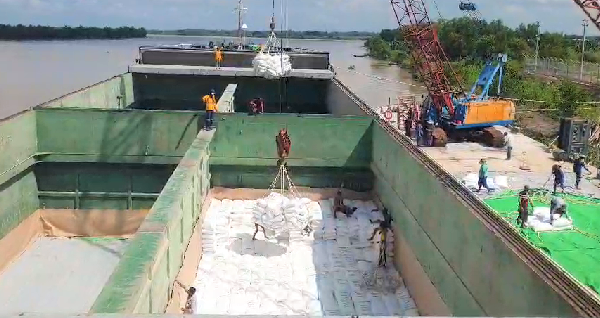
THE Department of Agriculture (DA) has raised concerns over a potential sharp decline in the country’s rice production, warning that output could drop by 20 to 50 percent if urgent government intervention is not implemented.
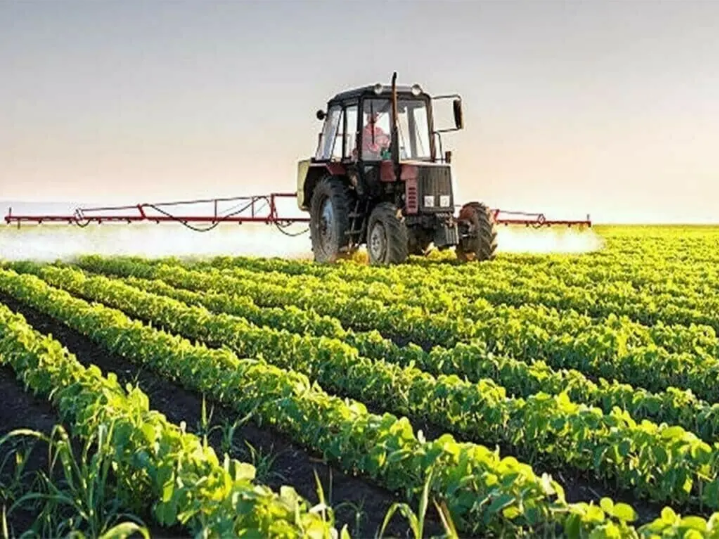
The anticipated reduction is mainly due to the rising cost of fertilizer, which has been driven up by the war in the Middle East. These price hikes have significantly increased production costs for Filipino farmers, threatening planting activities in the coming months.
During a hearing of the Senate Committee on Agriculture, Food and Agrarian Reform on Wednesday, Agriculture Undersecretary Asis Perez raised concern over the vulnerability of crops scheduled for planting in May and June. He highlighted the critical issue of insufficient access to affordable agricultural inputs and emphasized the urgent need for support to ensure that farmers are equipped with the necessary resources during this essential planting period.
“If no concrete solution is put in place, the decline in rice production will inevitably impact the projected 10 million metric tons of supply expected between August and September,” Perez said.
Initial estimates from the DA indicate a possible production loss of at least 20 percent, equivalent to around 2 million metric tons. However, in a worst-case scenario, losses could escalate to as much as 50 percent, posing a serious threat to national food security.
Sen. Francis Pangilinan, meanwhile, urged the government and the private sector to prepare for a possible “food shock” amid the unabated oil price hikes that affected agricultural and fisheries production.
He said that the closure of the Strait of Hormuz can affect the supply and cost of farm inputs since 30 percent of the world’s urea fertilizer and 40 percent of ammonia, a raw material for fertilizer, pass through the area.
“We can face this crisis but we have to prepare. We will be able to get over this crisis but we have to be ready and that’s why we have this committee hearing,” Pangilinan said.
“The only way we can move forward is if we work together — the government and the private sector,” he said during a public hearing of the Senate Committee on Agriculture, Food and Agrarian Reform on the government’s readiness to address the crisis.
Pangilinan said he would recommend the inclusion of private sector representatives in the recently created Crisis Committee for Food Security composed of himself, Agriculture Secretary Francisco Tiu Laurel Jr., Agrarian Reform Secretary Conrado Estrella III, and Representatives Mark Enverga, Leah Bulut and Adrian Salceda.
Pangilinan earlier said the proposed P10 billion in financial aid is not enough since it would only benefit 4 million farmers and 400,000 fishermen.
The Senate Committee on Agriculture chairman said there are over 10 million farmers and 2.5 million fishermen affected by the mounting economic pressures caused by the Middle East war.
No price increases
Trade Secretary Cristina Roque on Wednesday said there will be no price increases on 205 basic necessities and prime commodities, including canned sardines, corned beef, meatloaf, Pinoy Pandesal and Tasty, bottled water and soap, until April 30.
Speaking at the Kapihan sa Manila Bay, Roque said the decision was made after she met with manufacturers on Monday.
Manufacturers and retailers pledged to keep prices of goods stable until April 16, but some have committed not to raise prices until the end of the month.
The Trade chief said that manufacturers remain supportive of the government’s directive to keep prices of goods stable and steady as part of the department’s efforts to ease the impact brought by the war in the Middle East to consumers.
Roque said the Department of Trade and Industry is closely monitoring the supply and prices of goods.
Price cap
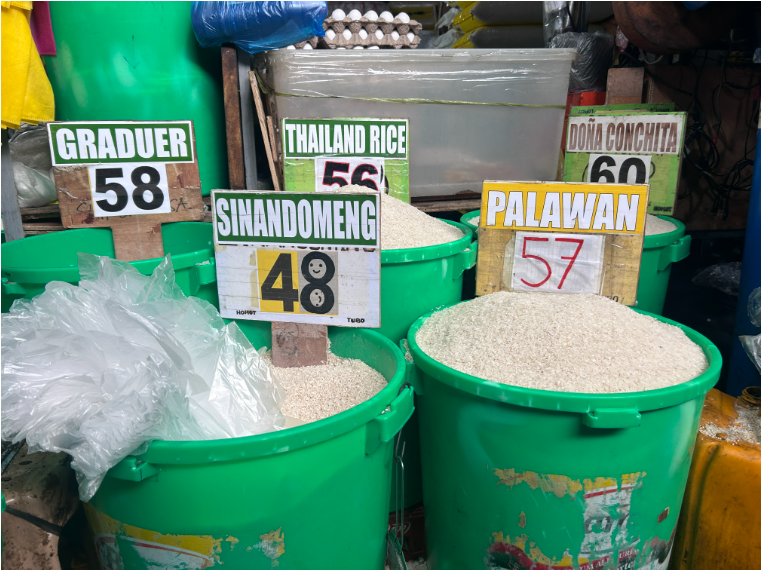
Also on Wednesday, Tiu Laurel said he is hopeful that the order declaring a P50-per-kilogram (kg) price cap on imported rice will be issued before the end of this month.
According to reports, imported rice was sold for as high as P60/kg in some areas in the country early last month. Tiu Laurel previously said this increase was partly due to the war in the Middle East, which affects fuel prices, and therefore, freight.
However, he noted that this was not reasonable, as 5 percent broken imported rice should retail at a maximum range of P48 to P50/kg.
Two weeks ago, the National Price Coordinating Council (NPCC) issued a statement saying it has adopted the DA’s proposal for the imposition of a price ceiling for imported rice for 30 days.
The NPCC said the measure seeks to curb unreasonable price increases and prevent market abuse.
https://www.manilatimes.net/2026/04/09/news/rising-fertilizer-costs-threaten-rice-output/2316618Published Date: April 9, 2026


 READ
READ