Downloads
 Login
Login
 Register

Tags
Qatar wants to buy more rice from Pakistan. It might cost us in the long run.
Armed with solar-powered tubewells, Pakistani farmers are growing rice indiscriminately with export prices in mind. A more level-headed strategy is desperately needed.
By Profit Report
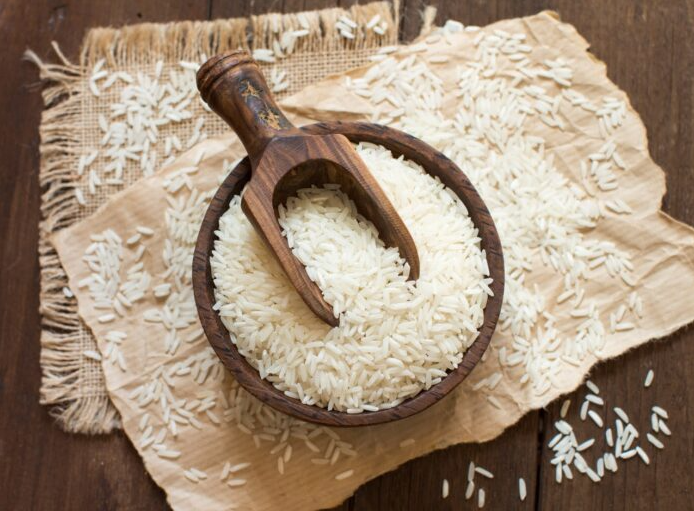
Qatar is interested in importing more Pakistani rice. The expression of interest was made by Qatar’s Minister of State for Foreign Trade Affairs, Dr Ahmad bin Mohammed Al Sayed, during a meeting with Commerce Minister Jam Kamal.
The Qatari Minister said that rice remains an important part of Qatar’s national food strategy and food security programme, and therefore more rice from Pakistan would contribute positively to their national aims.
Qatar’s desire to buy rice from Pakistan is part of growing demand from the Gulf, Africa, and Central Asia for Pakistani grain. The demand for Pakistani rice has been increasing on the back of Indian rice flooding international markets which has brought rice prices down. To supply this international (as well as growing local) demand, farmers have been growing more non-Basmati varieties..
In order to cultivate more rice, farmers have been planting rice on lands traditionally reserved for other crops such as cotton. This shift is bolstered by the increased availability of solar energy, whereby farmers can pull water from tubewells much more than before, and can easily grow more rice.
In the short term this might bring in more revenue from exports, but it is not a sustainable strategy and might have potentially difficult consequences down the line, given what we know about Pakistan’s vulnerability to the climate change crises.
More Rice Going Out
In January 2026, it was reported that Pakistan had crossed Vietnam to become the third largest exporter of rice in the world, behind India and Thailand. In December 2025, Pakistan had exported 4.89 lakh tonnes of rice whereas Vietnam had exported a lower 3.87 lakh tonnes.
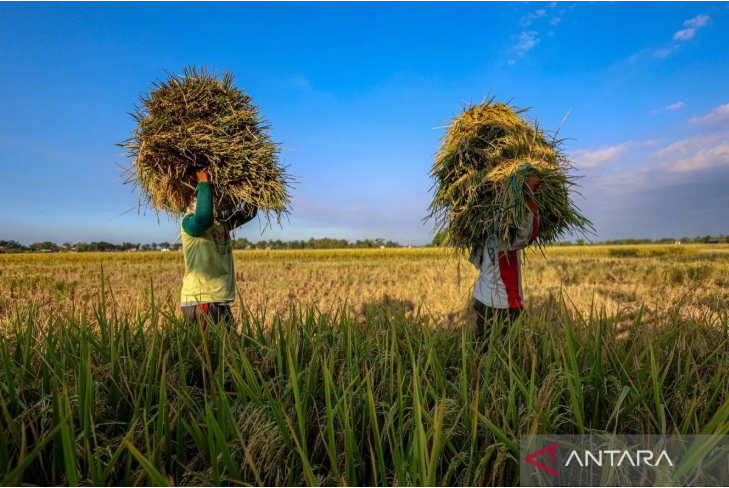
The apparent reason behind this is the fact that rice is being grown on more land. According to Faisal Jahangir, Chairman of the Rice Exporters Association of Pakistan (REAP), the overall rice cultivation area has increased by 20% compared to last year. This has enabled rice farmers to offset losses from the floods last year, ensuring the production numbers continue to rise.
Yet this increase is really the increase in the production of non-Basmati varieties of rice. The reason is that traditional Basmati quality is dependent on certain ecological and climatic conditions, which is available only in certain areas of Punjab and India. In Punjab, this region is referred to as the ‘kallar tract,’ an expanse of land between the Ravi and Chenab rivers which includes centres such as Gujranwala, Sialkot, Sheikhupura, and Hafizabad.
Growth in production of rice, therefore, is powered by bringing more land traditionally reserved for other crops under rice cultivation. The problem with this is that non-Basmati varieties consume more water than Basmati. This demand is satisfied through increased tapping into irrigation water, which itself has seen a decrease owing to sedimentation within dams.
A big source of this water is through tubewells, and tubewells require electricity to pull the water up and out. Traditionally, farmers had relied upon diesel and grid power to make these tubewells work. However, recently with the increased availability and access to solar panels and installations, farmers have been ditching traditional sources of power for solar, with the result being that cultivating rice has become much more feasible for farmers.
According to one estimate, some 4 lakh tube wells that once relied on grid electricity have switched to solar. Farmers using solar panels have likely purchased an additional 250,000 tube wells since 2023, signalling that the sun now powers roughly 6.5 lakh such devices across Pakistan. So, they can grow – and have been growing – more of it. And exporting more of it too.
A big factor in the rising rice exports has also been Pakistan’s pivot to more markets, including the Middle East and Central Asia. Dubai remains the top destination of Pakistani rice, with the UAE importing 74,897 tonnes, including 16,850 tonnes of Basmati, from Pakistan in December 2025. Saudi Arabia, too, was a major importer of Pakistani rice, importing 16,032 tonnes in the same month, of which 5,350 was Banaspati. The recent understanding between Pakistan and Qatar for more imports of Pakistani rice falls squarely into this category.
Central Asia has also emerged as a rising market for Pakistani exports of rice with shipments to Kazakhstan totalling more than 17,000 tonnes, and to Uzbekistan over 10,000 tonnes. Although exporters remain wary of such reports, a major exporter from Karachi revealed to Profit that the reason behind this is that such markets cannot usually tell the difference between Basmati and Basmati-seeming non-Basmati rice.
What’s the Issue, then?
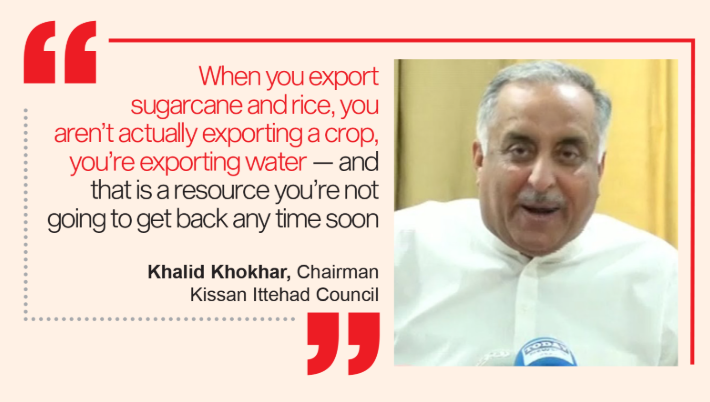
If the increase in rice cultivation area is viewed in conjunction with the increased usage of water, this becomes a more concerning situation. Cotton farmers especially take great exception to this trend, with reasonable reasons. As Khalid Khokhar, the Chairman of the Kissan Ittehad, which is Pakistan’s largest advocacy collective for farmers, put it, “When you export crops like rice and sugarcane, you are not exporting the crops, you are exporting water.”
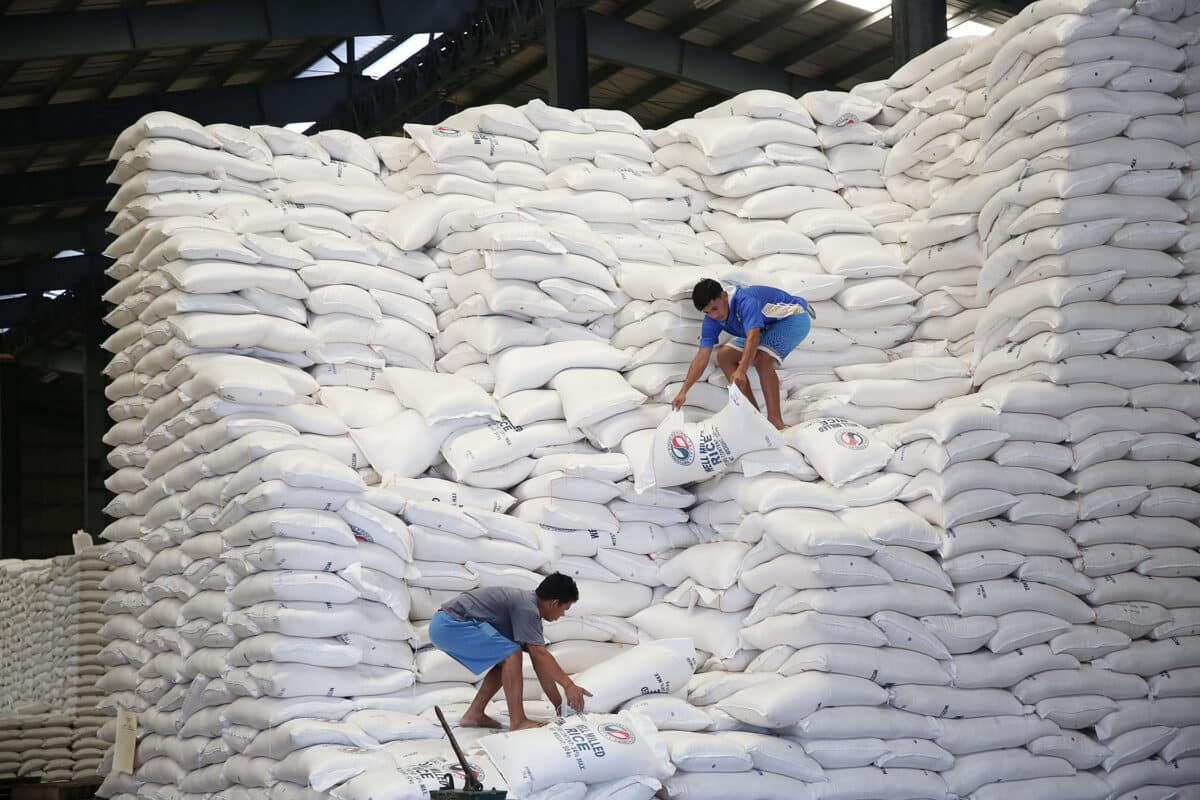
The total expected production of rice this year is around 1.1 crore metric tons. With the Pakistan Bureau of Statistics estimating domestic consumption at 20-25 lakh metric tonnes, that leaves Pakistan with a surplus of around 80 lakh metric tons that can be exported. This would be a significant increase from exports in FY 2024-25, which totalled 58 lakh mt, a 3.5% decline compared to FY 2023-24. If we take Khalid Khokhar’s word for it, it is just so much water that’s going out that won’t be coming back in.
Another issue is that the issue is caused, as it often happens, by other issues. Basmati seed has not seen as much government investment in research and development as have the seeds of other varieties. Since the 1960s, when the Kernal Basmati was developed, the development of newer Basmati strains has not seen much advance, with varieties of non-Basmati seeds like Japonica and Kainat taking up more of the farmers’ interest. Although Basmati is more expensive, and can therefore fetch higher prices, farmers turn towards these other varieties because producing them is easier and less time-consuming. This means that they have time for another crop before the next season starts.
This situation can continue as it is, sure. There will be revenue from exports, true, and probably an increase in that. Our point, however, is that there is much more potential in Pakistani rice that this current situation permits one to capitalise on. India, in this regard, offers a positive model. Its Basmati varieties, led by widespread integrated marketing campaigns, have taken the American and European markets by the storm. These are premium markets with high demand for Basmati rice, which means that one can earn more value by adding comparatively little.
Branding, quality control, and supply chain strengthening would be required, and this is where the government can play a part. For instance, marketing Pakistani basmati in international trade fairs and instituting government-level trade agreements. This must, however, be supplemented by greater investment in the development of newer strains of the Basmati rice. Ideally, this would lead to the creation of Basmati strains that aren’t bound by certain ecological conditions to grow meaningfully. At the same time, if such varieties are promoted by the government, farmers who had abandoned Basmati for other crops – even in the ‘kallar tract’ would have incentive enough to turn back to Basmati.
In that context, an agreement to supply more rice, for instance, to Qatar would be a greater grounds for celebration. As it is, however, the varieties likely to be exported would include Basmati-seeming varieties, which, for reasons explained above, would allow for less value addition, eroding margins, and also adversely affect Pakistan’s exposure to the looming climate crisis.
https://profit.pakistantoday.com.pk/2026/03/13/qatar-wants-to-buy-more-rice-from-pakistan-it-might-cost-us-in-the-long-run/#google_vignettePublished Date: March 14, 2026


 READ
READ