Downloads
 Login
Login
 Register


Tags
Paper by Ateneo researchers identifies factors bugging PH rice production
FILIPINOS consumed 2.3 million metric tons more rice than the country produced in 2023 an 18-percent deficit that has locked the Philippines in a deepening reliance on imports.
While demand from a growing population continues to climb, domestic production has largely plateaued since 2017, hampered by high costs, geographic disadvantages, and chronic vulnerability to climate shocks.
New research published in PLOS One by a team from Ateneo de Manila University confirms the stagnation. In the decade leading up to 2023, total production of palay (unmilled rice) grew just 9 percent from 18.4 to 20.1 million metric tons while harvest areas expanded by a mere 1 percent.
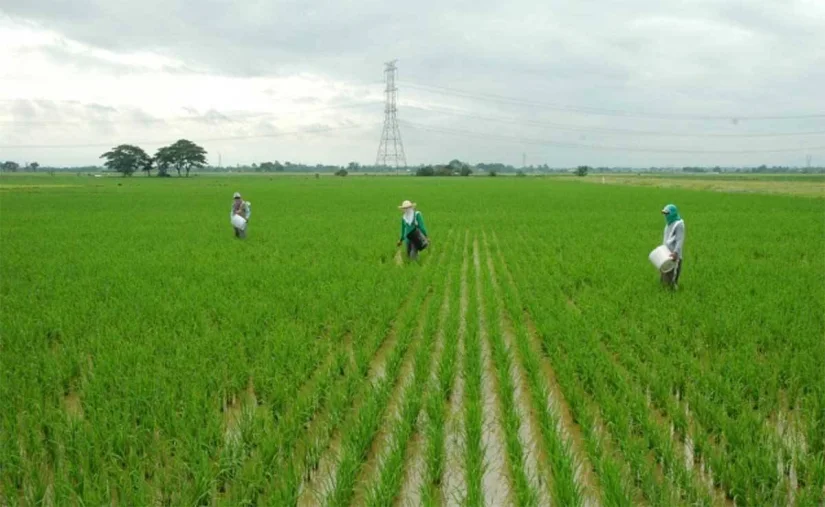
Supposed “experts,” some even from government, blame rapid urbanization as the culprit. However, the study notes this is not the case; rather, stagnation driven by limits on land expansion in rural areas and yield growth, and compounded by structural disadvantages make Filipino farmers less competitive than their Southeast Asian neighbors.
Unlike Vietnam and Thailand, which benefit from vast, naturally irrigated river deltas like the Mekong and Chao Phraya, the Philippines is an archipelago with no comparable water source. This geography forces Filipino farmers to rely on smaller, fragmented plots that are harder to irrigate and mechanize.
Data from the Philippine Rice Research Institute (PhilRice) illustrates the stark economic cost of this disadvantage. producing a kilogram of palay in Nueva Ecija costs approximately P12.41. In contrast, farmers in Can Tho, Vietnam, can produce the same amount for just P6.53, while those in Suphan Buri, Thailand, spend P8.85.
Labor and land rent are the biggest drivers of this disparity. Filipino farmers pay significantly higher rates for both than their Thai and Vietnamese counterparts. Furthermore, farm sizes in the Philippines average just 1.3 to 1.4 hectares, restricting the economies of scale enjoyed by Thailand, where average farm sizes are more than double at roughly 3.2 hectares.
Geographical risks
Geography also dictates the climate risks. The Philippines sits directly on the typhoon belt, enduring an average of 20 tropical cyclones annually hazards that rarely affect the inland rice bowls of its neighbors.
This vulnerability is evident in the regional data analyzed by the Ateneo researchers. Between 2018 and 2023, the typhoon-prone Eastern Visayas saw rice production drop by 11 percent. Similarly, the Cordillera Administrative Region suffered a 15-percent decline due to lack of irrigation investment and repeated weather shocks.
In these areas, struggling farmers are increasingly converting rice lands to more profitable, export-oriented crops like coconut. The research team warns, however, that this land-use shift should not be dismissed as simple market efficiency.
“The loss of rice lands in typhoon-prone areas will always pose a critical threat to local food security, especially with rice being a staple food in the Philippines,” they told The Manila Times. With domestic consumption already outpacing production, they argue that intervention is needed to support low-yielding regions rather than allowing rice production to concentrate only in high-performing areas.
Despite the national stagnation, the study highlights regions that have bucked the trend. The Bangsamoro Autonomous Region in Muslim Mindanao (BARMM) recorded a massive 40-percent surge in production from 2018 to 2023.
The researchers attribute this growth to “harmonized interventions” by the region’s newly established Ministry of Agriculture, Fisheries, and Agrarian Reform (Mafar), alongside peace dividends and investments in irrigation. The Cagayan Valley region also posted a 27-percent increase, driven by the expansion of irrigated areas and the adoption of hybrid seeds.
In contrast, the Visayas region saw yields remain completely stagnant at 3.4 metric tons per hectare over the past decade, even as Luzon and Mindanao posted improvements. Beyond climate shocks, the researchers suggest that geographical differences in climate patterns between the three island groups may be affecting soil health in ways that warrant further investigation. They encourage supplementary soil research to compare regional conditions and understand why Visayan rice lands are not responding to the same interventions that worked elsewhere.
The findings suggest that broad national policies like Republic Act (RA) 11203 that created the Rice Competitiveness Enhancement Fund (RCEF) which focuses largely on seeds and mechanization may not be enough to fix the specific deficits of lagging regions.
The researchers also raise concerns about RCEF’s long-term sustainability, particularly the risk of “over-mechanization” without adequate environmental safeguards. They point out that heavy machinery like tractors generates significant carbon emissions and can cause soil compaction creating denser soil layers that prevent rice roots from accessing deeper nutrients.
“The RCEF’s sustainability is heavily dependent on the long-term sustainability of rice fields,” the team explained, “and the sustainability of rice fields are influenced by changes in climate, water, and soil conditions.” They emphasize the need for capacity-building programs that train farmers on machinery use while ensuring environmental sustainability.
Closing the 18 percent gap, the authors argue, will require moving away from a “one-size-fits-all” approach. The country needs regionally tailored strategies: repairing “hard” infrastructure like irrigation in mountainous areas, improving climate resilience in the Visayas, and replicating the governance successes seen in Mindanao. Without such targeted measures, the country’s dependence on imported grain is likely to persist.
“We genuinely hope that our research paper could be a starting point for further research in the political, environmental, and even economic angles of rice production in the Philippines. This is so we could have more long-term sustainable rice farming and agricultural interventions to sustain our rice production supply, and also meet the rice consumption demand moving forward,” Alenn Jhulia Prodigalidad, one of the authors said, responding to a question from The Times.
Along with Henry Bartelet, Janelle Dy, and Jan Gabriel Manzano, the Ateneo scientists published their paper “Understanding rice production stagnation in the Philippines: Regional evidence and development implications in the open-access journal PLOS One.”
https://www.manilatimes.net/2025/12/18/business/agribusiness/paper-by-ateneo-researchers-identifies-factors-bugging-ph-rice-production/2245085Published Date: December 18, 2025


 READ
READ