Downloads
 Login
Login
 Register

Tags
Marcos’ agriculture, food security record marked by systemic failure
By: Dr. Teodoro Mendoza PhD
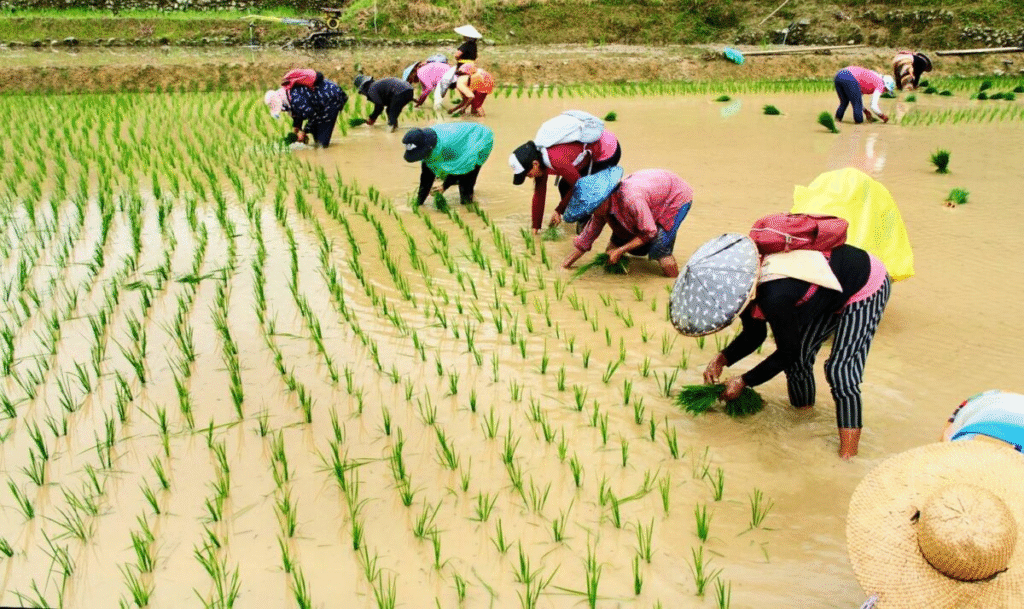
The verdict is clear: President Ferdinand “Bongbong” Marcos Jr.’s leadership in agriculture has been marked by systemic failure.
Agriculture remains the backbone of Philippine society. Yet under Marcos, who concurrently served as agriculture secretary, the sector has faced mounting crises rooted not only in climate shocks and import dependence but also in a broader debt-and-corruption trap that has eroded fiscal space and undermined farmer welfare.
An estimated ₱8.8 trillion was lost to corruption between 2016 and 2025 — money that could have been used to build classrooms, fund hospitals and protect farmers from traders and import shocks.
The leakage has pushed the government into deeper debt dependence. National debt rose from ₱12.79 trillion in 2022 to ₱18.55 trillion by May 2026, crowding out resources for agriculture, irrigation and food security programs.
Although nominal agriculture budgets have increased, real per capita support has stagnated. Filipino farmers receive less than half the support provided to their counterparts in some neighboring Southeast Asian countries.
Import dependence
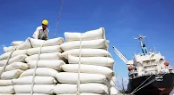
The Philippines’ return as the world’s largest rice importer in 2024 underscored the depth of its structural weaknesses. Rice imports reached 4.8 million metric tons, with projections rising to 6 million metric tons amid El Niño and global disruptions.
Rice demand has consistently exceeded production capacity. By 2025, total demand had reached 13.8 million metric tons, while production had stagnated at 12.4 million metric tons, leaving a deficit of 1.4 million metric tons.
Imports not only filled the gap but also exceeded it, reaching 4.7 million metric tons in 2025. The imbalance reflects a declining rice self-sufficiency ratio, which fell from 116% in 1960 to 91% in 2025.
The erosion of domestic production capacity has been compounded by trade liberalization, climate variability and inadequate farmer support. The Rice Tariffication Law of 2019 dismantled quantitative restrictions, exposing farmers to global competition without sufficient safety nets.
Although imports temporarily stabilized consumer prices, they weakened farmer morale, reinforced middleman-dominated value chains and increased the country’s vulnerability to peso depreciation.
The food import burden has grown into a trillion-peso liability. Direct imports of rice, meat, fish, sugar, dairy products and processed food reached $21 billion to $22 billion, or about ₱1.3 trillion, in 2026.
Indirect imports, including fertilizers, pesticides, vaccines, feed grains and machinery, added $8.5 billion, or ₱517 billion. Costs associated with peso depreciation, shipping and displaced labor raised the total burden to an estimated ₱2 trillion to ₱2.2 trillion, equivalent to 31% of the national food economy.
This dependence exposes households to external shocks. The peso’s depreciation from ₱2 to the dollar in 1960 to ₱61.50 in 2026 has increased import costs, while oil price volatility has affected food prices through higher fertilizer and logistics expenses.
The result is a food system locked into external dependence, with an estimated 5 million to 6 million Filipinos displaced or underemployed because of import substitution.
Climate and governance
Climate vulnerability compounds these structural weaknesses. A looming super El Niño in 2026 threatens to reduce rice yields by as much as 30%, possibly cutting palay output to 17 million to 18 million metric tons and forcing rice imports to rise to 6 million metric tons.
Rising oil prices linked to tensions in the Middle East also increase fertilizer and logistics costs, while inadequate irrigation leaves rain-fed areas exposed.
The Marcos administration has failed to articulate a credible adaptation strategy and has instead relied on reactive importation. That approach is increasingly untenable as rice-exporting countries such as Vietnam, Thailand and India face droughts of their own.
The absence of coherent, long-term planning underscores the administration’s inability to balance food affordability with agricultural sustainability.
Governance failures have further aggravated agricultural decline. Technical and physical smuggling continue to destabilize the onion, garlic and sugar markets, while ghost projects in the Department of Public Works and Highways divert funds that could have been used for irrigation and postharvest facilities.
The transfer of ₱60 billion from the Philippine Health Insurance Corp., or PhilHealth, despite Supreme Court rulings, also reflects fiscal management problems that deprive farmers of needed support.
The National Food Authority’s minimum buying price of ₱21 per kilogram of palay remains ineffective because the agency lacks the budget to purchase even 25% of harvests. Farmers are therefore left at the mercy of traders.
Marcos’ pledges to plant 15 million coconut trees and amend the Coconut Farmers and Industry Trust Fund Act also remain unfulfilled, deepening farmers’ disillusionment.
Policy distortions have added to the problem. Inflated estimates placing annual rice consumption at 148 kilograms per person, instead of the reported actual range of 105 to 110 kilograms, were used to justify excessive imports that cost farmers an estimated ₱50 billion a year.
The Filipino diet also remains heavily dependent on rice, imported wheat and processed food. There is no national program to diversify calorie sources toward corn, root crops, vegetables and fish.
This nutritional imbalance weakens the country’s resilience to shocks and perpetuates import dependence. Farmers, whose average age is 57, face declining morale as younger Filipinos leave rural areas, raising a fundamental question: Who will produce food for the next generation?
Declining farm support
The agriculture budget increased from ₱500 million in 1960 to ₱211.3 billion in 2025, but it declined as a share of gross domestic product and the General Appropriations Act.
In real terms, per capita allocations fell from $75 in 1960 to $10 in 2025, partly reflecting the effects of peso depreciation. Even after the increase in the 2025 budget, Filipino farmers received less than half the real per capita support provided in Vietnam and Thailand.
Vietnam’s allocation of about ₱1,200 per capita helped support its 1-million-hectare low-emission rice program, while Thailand’s allocation of about ₱1,800 per capita sustained its export competitiveness.
The Agriculture Orientation Index, or AOI, measures agriculture’s share of government spending relative to its contribution to GDP. The country’s AOI fell from 0.65 in 2005 to 0.48 in 2025, signaling a decline in fiscal priority for the sector.
For a food-insecure country such as the Philippines, this decline is particularly damaging.
Reversing the decline in the AOI would require clear commitments in the national budget. Allocating at least 1% of GDP to agriculture, comparable with levels in Vietnam and Thailand, would signal renewed fiscal priority.
The allocation should support not only production inputs but also marketing assistance, buffer stocks and agricultural cooperatives.
The MSP option
India’s Minimum Support Price, or MSP, system offers instructive lessons. India guarantees farmers a fixed price for rice and more than 20 other crops.
Through the Food Corporation of India, the government procures 25% to 30% of annual rice production, ensuring that farmers have a reliable buyer even when market prices collapse.
The procured crops feed into the Public Distribution System, which maintains large buffer stocks and distributes rice at subsidized prices. This arrangement stabilizes farmer incomes and consumer access by linking production support with marketing and distribution.
Philippine policies, by contrast, have emphasized production inputs such as fertilizers, irrigation and mechanization while neglecting marketing support. The imbalance leaves farmers vulnerable to price volatility, trader dominance and import dependence.
The proposed Philippine MSP Act of 2026 seeks to adopt India’s model with local adaptations. Its main provisions include a guaranteed floor price, set annually by the Department of Agriculture, for rice and at least 20 other strategic crops; government procurement to ensure a reliable buyer for farmers; buffer stocks for food security and price stabilization; and explicit budgetary allocations for MSP operations.
The framework would institutionalize marketing support, reduce import dependence and stabilize farmer incomes. By linking procurement with food security, an MSP law could transform the agricultural sector, as India’s system did beginning in the 1970s.
Implementing an MSP system in the Philippines would nevertheless present several challenges.
Debt service consumes a large share of the national budget, limiting the government’s capacity to finance procurement. Corruption and inefficiencies in procurement agencies could undermine the system’s credibility, while climate-related disruptions could threaten production stability.
Changing diets would also require MSP coverage to extend beyond rice to feed grains and other staples as demand for meat and processed food rises.
Despite these constraints, an MSP system could help reduce import dependence, stabilize the peso, protect farmers and improve health outcomes. It could also strengthen buffer stocks, integrate climate-resilient production strategies and give agricultural cooperatives a larger role in procurement.
Cooperative empowerment is particularly important because middleman-dominated value chains have long weakened farmers’ bargaining power.
By making farmer cooperatives procurement partners, the government could bypass trader cartels, help farmers receive fair prices and provide consumers with more stable supplies. The approach could also strengthen rural employment and help reverse the displacement caused by import substitution.
Dietary diversification offers another opportunity. A national program linked to MSP coverage could encourage the production of corn, cassava, sweet potato, mung beans and tilapia.
Diversification would reduce reliance on imported staples, improve nutrition and reinforce local culinary traditions.
Fiscal discipline and governance reform must underpin these initiatives. Funding an MSP system would require political commitment, stronger budget management and effective safeguards against corruption.
Transparent procurement, digital monitoring and cooperative oversight could reduce the risk of ghost projects, smuggling and the diversion of funds intended for procurement and buffer stocks.
The National Food Authority must also be strengthened and reoriented toward farmer-centered procurement.
Climate adaptation must be integrated into agricultural policy. Research on climate-resilient seeds, irrigation rehabilitation and crop insurance programs is essential to protect farmers from extreme weather.
India’s system shows how buffer stocks can help stabilize food supplies during climate-related crises. By maintaining reserves of rice and other staples, the Philippines could protect consumers from price spikes while ensuring that farmers have a reliable buyer.
Linking MSP procurement with climate adaptation would help keep production and distribution systems functioning during extreme weather events.
Structural reforms
Structural reforms in governance and legislation are equally urgent.
Four measures stand out:
- Passage of the National Land Use Act to rationalize the allocation of land among agriculture, industry and housing.
- Repeal of the Rice Tariffication Law and its replacement with the Rice Industry Sustainable Development Act, which would restore farmer protections while promoting sustainability.
- Renationalization of the Department of Agriculture, following India’s model of a Department of Agriculture and Farmers Welfare, to strengthen farmer-centered governance.
- Creation of a Department of Fisheries and Aquatic Resources to support aquaculture and coastal livelihoods.
These reforms would rebalance policy priorities, institutionalize farmer welfare and align agricultural governance with food security needs.
The cultural dimension of food nationalism is also important. Food nationalism can be defined as growing, eating and protecting locally produced food to reduce dependence on imports and foreign control of the food supply.
It encourages consumers to patronize local dishes such as pinakbet, dinengdeng, inabraw and ginataang lubi-lubi rather than rely heavily on fast-food chains. Such choices can reinforce cultural identity while supporting rural livelihoods.
In this framework, food nationalism is linked to food sovereignty, food security and national security. Agriculture serves as the engine, rural transformation as the road and industrialization as the vehicle toward sovereign development.
By incorporating dietary reform, cooperative empowerment and local consumption into national policy, food nationalism could provide a cultural and economic path toward greater resilience.
Agriculture at a crossroads
In his State of the Nation Address, Marcos must confront the country’s reliance on food imports, the lack of a credible climate adaptation strategy and governance failures that have left food security precarious.
The address offers the administration an opportunity to change direction by committing to structural reform, fiscal discipline and farmer-centered governance.
Food security is not merely an economic concern. It is a matter of national security.
Decades of trade liberalization, currency depreciation and climate shocks have entrenched food import dependence, displaced agricultural workers and exposed households to external volatility.
Although the agriculture budget has increased in nominal terms, real per capita support remains modest compared with support in neighboring countries. The decline in the AOI further reflects agriculture’s diminishing fiscal priority.
The Philippines must rebalance its agricultural policy by institutionalizing marketing support alongside production assistance. The proposed MSP Act of 2026 offers a possible path to stabilize farmer incomes, reduce import dependence and strengthen food security.
By integrating procurement, buffer stocks and distribution, the government could bridge the gap between production and marketing and build a food system that serves both farmers and consumers.
The Marcos administration stands at a crossroads. The debt-and-corruption trap has narrowed fiscal space, import dependence has increased the country’s vulnerability, and climate shocks threaten production.
By adopting an MSP system, promoting dietary diversification, strengthening cooperatives and supporting locally produced food, the Philippines can begin building a more resilient agricultural sector.
Without urgent reforms, the country will remain trapped in recurring food import crises, widening inequality and persistent governance failures. With meaningful reform, it can strengthen food sovereignty and secure a future in which farmers and consumers can thrive. /dm
https://newsinfo.inquirer.net/2271066/marcos-agriculture-food-security-record-marked-by-systemic-failurePublished Date: July 27, 2026


 READ
READ