Downloads
 Login
Login
 Register


Tags
Innovative investments in agro-processing will put Cambodia’s economic vision within reach
Milan Thomas
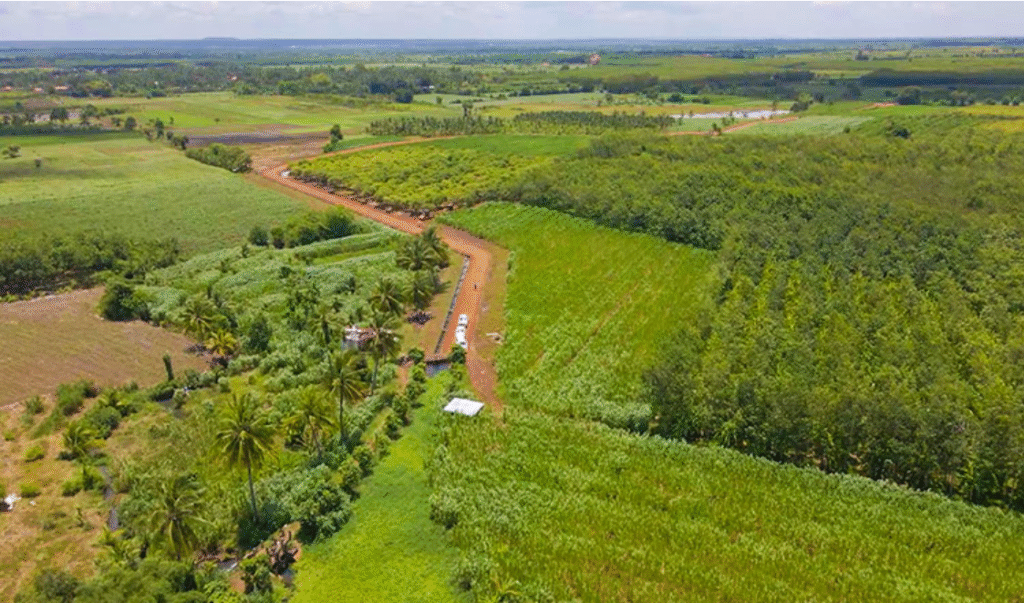
Cambodia’s agriculture sector is at a pivotal moment. The country aims for rapid economic growth ahead of its graduation from Least Developed Country status.
Achieving its long-term goal of High-Income Country status by 2050 will require transformation of the agriculture sector, which employs about one-third of the workforce and has grown only about one-third as quickly as the rest of the economy for the past two decades.
There are barriers to Cambodia’s agriculture sector growth that are common to developing countries in Asia and the Pacific. Low mechanisation, inadequate irrigation, and land fragmentation hold back agricultural production, while lack of processing facilities holds back value-addition in the sector.

A key challenge for Cambodia is its crop profile. Rice cultivation dominates, accounting for over half of the country’s agricultural output. Not only is rice a low-value crop, but Cambodia has a low position in the global value chain for rice due to credit market and technological constraints on smallholder farmers. Cambodia mills only one-third of the rice it grows and exports the rest as paddy.
Crop diversification and increasing value-added agriculture through agro-processing are key elements of the government’s vision for economic growth. While the public sector is proactively encouraging modernisation of agriculture through initiatives under the National Agricultural Development Policy, that can only be achieved through strong private sector participation.
But starting a viable agri-business requires capital. This creates an unfortunate trap. Demonstrating the viability of agro-processing enterprises in Cambodia would unlock more financing, but the domestic financial market is not sufficiently developed to bear risk on a scale that fosters agro-processing enterprises.

This market failure is why government leadership in the agriculture sector is so important. It also calls for donor facilitation and innovation in the agriculture sector, supported by development partners.
What is needed is a new approach that focuses on three critical dimensions for Cambodia’s agro-processing future: increasing domestic processing capacity for established crops, branching into new products using established crops, and diversifying into new crops.
Aside from the obvious case of rice, cashews have the clearest benefits from increasing domestic processing capacity. Cashew exports have grown rapidly over the past decade, making Cambodia the world’s second largest cashew producer after Cote d’Ivoire. Its cashew sector generated over $1 billion in 2024, or 2% of GDP.
But Cambodian cashews are largely exported raw, with only 10% processed in Cambodia and the rest processed in neighbouring countries like Vietnam. Raising Cambodia’s domestic value-addition to cashew exports would generate hundreds of millions of dollars.
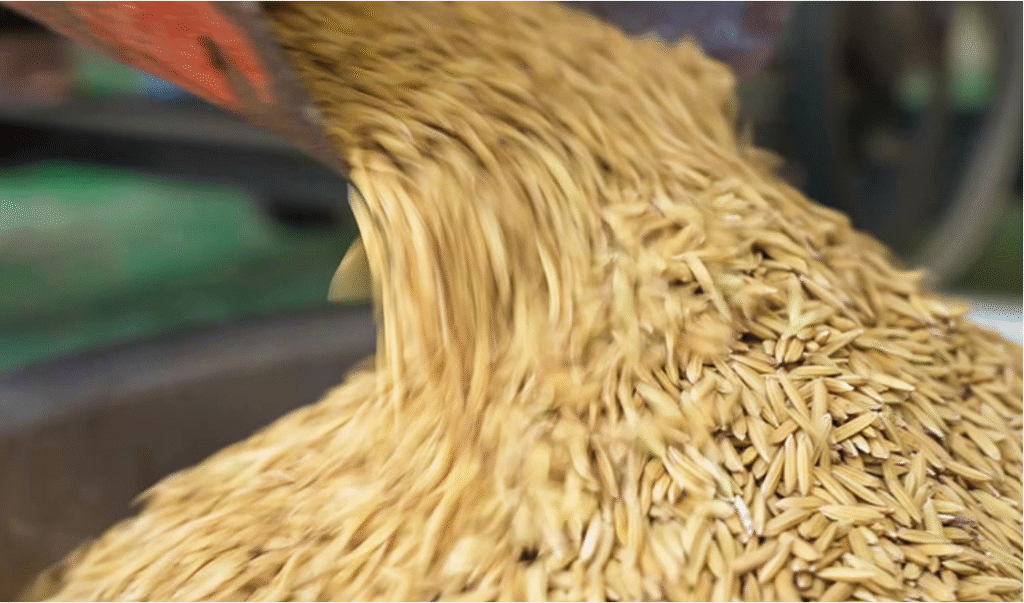
To address this, local companies like Ample Agro Products are starting to import technology and know-how to equip workers in their processing facilities. This allows the enterprise to grow rapidly supplying products to domestic and export markets.
Cambodia exports dried fruits, including mango and pineapple. There is scope to grow into adjacent products, like jams, snacks, and drinks, but doing so requires training workers in new processing and quality assurance techniques. This can be done by a local company working with local farmers and investing in workforce training, as demonstrated by domestic companies like Misota.
The third contributor to Cambodia’s agricultural productivity will be entering new product markets. About 95% of Cambodia’s dairy consumption is imported. Global dairy demand is projected to rise over the coming decade due to population and income growth, as well as perception of dairy as a healthy source of protein.
Producing internationally certified dairy products would open up a new set of products for Cambodia’s agriculture sector. This can be done by deploying modern farming techniques and using software to manage livestock, as is the practice of Kirisu Farms, another Cambodian agricultural start-up.
These three examples, supported by catalytic funding from Asian Development Bank’s ADB Frontier, operate in different parts of the country and different segments of the agriculture sector, but they have a common focus on raising Cambodian production to global standards through technology adoption and technical training.
Innovative firms can have an outsized impact on Cambodia’s agricultural productivity by diffusing agricultural technology and skills, raising local understanding of international standard compliance, and loosening financial market constraints by demonstrating the viability of agro-processing businesses.
Efforts to support them can elevate Cambodia as a competitive, high-quality, and diversified producer in the region, and while building a more adaptable and resilient workforce. The latter is especially important as Cambodia’s labor market grapples with the impacts of geopolitical turmoil and global trade uncertainty.
Rethchoronai Leang, Investment Analyst, ADB Frontier, Phalsombo Pen, Investment Analyst, ADB Frontier, and Sophorn Kith Investment Manager, ADB Frontier contributed to this article.
https://www.khmertimeskh.com/501852098/innovative-investments-in-agro-processing-will-put-cambodias-economic-vision-within-reach/Published Date: February 25, 2026


 READ
READ