Downloads
 Login
Login
 Register


Tags
India’s status as world’s rice leader augurs water crisis
Experts warn Punjab and Haryana’s groundwater may fall further under growing rice cultivation pressure.
Reuters

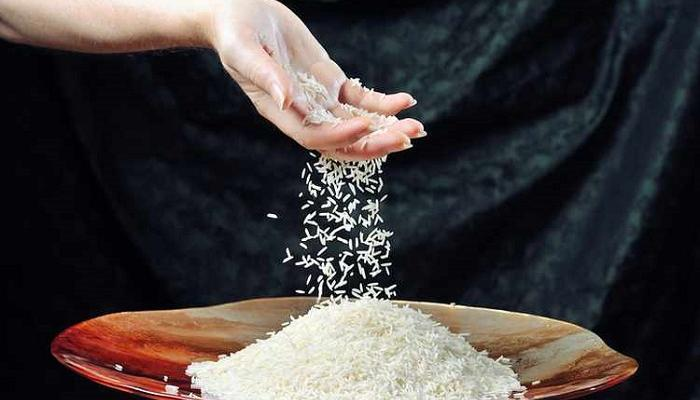
When India overtook China as the world’s largest producer of rice this year, the country’s politicians and agriculture lobby marked the moment by praising resilient farmers and innovative government policy. India has nearly doubled the amount of rice it exported over the past decade, with shipments crossing 20 million metric tonnes in the latest fiscal year.
But many rice farmers in the country’s agricultural heartlands are in a less celebratory mood. There is widespread concern that rice crops are unsustainably draining India’s already-low aquifers, forcing farmers to borrow heavily to drill ever-deeper borewells.
In the rice-basket states of Haryana and Punjab, groundwater was reachable at around 30 feet a decade ago, according to 50 farmers and eight water and agriculture officials. But drainage has accelerated in the past five years and borewells must now go between 80 and 200 feet, according to the farmers, whose accounts were corroborated with government data and research by Punjab Agricultural University.
At the same time, government subsidies that incentivise rice cultivation discourage farmers from switching to less water-intensive crops, said Uday Chandra, a South Asia politics expert at Georgetown University in Qatar. The subsidies include a minimum price for rice that has climbed by around 70% over the past decade, as well as heavy power subsidies that encourage extracting water for farm use.
The net effect, said Avinash Kishore at the International Food Policy Research Institute think-tank in Washington, is that one of the world’s most water-stressed countries is paying farmers to consume vast amounts of groundwater.
India grows far more rice than it needs to feed its domestic population, which overtook China’s in 2023 to become the world’s largest, at more than 1.4 billion people.
While farmers in much of India rely on a mix of surface and groundwater irrigation, growers in Punjab and Haryana typically depend on groundwater. That dependence makes rice farmers in both states particularly vulnerable to weak monsoons.
Even though monsoon rains have been strong for the last two years, farmers have been extracting so much water that aquifers in large parts of Haryana and Punjab are classified by the Indian government as either “over-exploited” or at “critical”. The two States extract between 35% and 57% more groundwater annually than their aquifers naturally replenish, according to government data for 2024 and 2025.
Growers constrained to existing borewells are in turn spending more money on longer pipes and more powerful pumps, the farmers said.
Producing a single kilogram of rice consumes 3,000-4,000 litres of water, according to farm economist Ashok Gulati, who previously advised the government on crop prices. That is between 20-60% more than the global average, according to farm-policy experts.
There are some signs that Indian officials are hoping to break the vicious cycle between subsidies and groundwater extraction. Haryana last year began offering a subsidy of ₹ 17,500 per hectare to encourage farmers to switch to crops such as millets, which require significantly less water. However, the incentive is available only for one growing season and has so far failed to drive large-scale adoption.
https://www.thehindu.com/sci-tech/energy-and-environment/indias-status-as-worlds-rice-leader-augurs-water-crisis/article70456310.ecePublished Date: December 31, 2025


 READ
READ