Downloads
 Login
Login
 Register


Tags
India’s rice exports break records: Australia questions subsidies
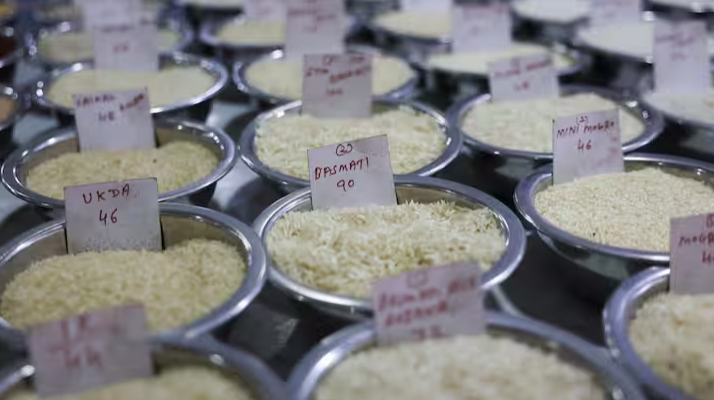
India’s rice exports broke records in 2025, totaling $12.043 million, a year-over-year increase of 1.8%, according to data from the World Trade Organization (WTO).
India accounted for 36% of global rice exports that year.
India is competitive in the rice sector due to its vast arable land, favorable monsoon climate, abundant low-cost labor, adoption of high-yield varieties, and government subsidies for energy and fertilizers, all of which have solidified its position as a global export leader.
AdquirirMaquinaria Industrial
India’s rice exports
Notable destinations for India’s rice exports include Saudi Arabia, Iraq, Iran, Benin, Bangladesh, the United Arab Emirates, and Guinea.
Other leading rice exporters in 2025 were Thailand ($4,500 million), Pakistan ($2,417 million), the United States ($1,903 million), Cambodia ($1,561 million), and China ($987 million).
The following table shows the trend in India’s rice exports, in millions of dollars:
- 2019: 6,801.
- 2020: 7,980.
- 2021: 9,624.
- 2022: 10,767.
- 2023: 10,455.
- 2024: 11,833.
- 2025: 12,043.
Indian Subsidies
At a meeting held in May in Geneva, Switzerland, at the WTO, the Australian delegation noted that India remained the leading notifier of trade-distorting domestic support under Article 6 of the Agreement on Agriculture.
It further noted that, of the most recent aid package notified under Article 6—totaling $55 billion—market price support was the primary mechanism driving overproduction and the increase in public stocks. This coincided with the rise in exports.
As the world’s second-largest rice producer by volume in 2023, India’s rice production had grown by 31% between 2012 and 2023. In comparison, there was only a 7.5% increase in global rice production during the same period.
As the largest rice exporter since 2012, India’s rice exports had increased by 413% during that period. In 2023, they accounted for nearly 40% of global exports and one-fifth of its domestic production.
At the same time, according to the Australian delegation, India’s rice price under the market price support scheme was rising steadily. As a result, this created production incentives that led to increasing levels of subsidized rice production and a distortion of world markets.
In the view of the Australian delegation, when combined with India’s reliance in recent years on export restrictions on rice other than basmati, this meant that global rice markets were increasingly affected by India’s trade and market price support policies.
https://www.opportimes.com/en/indias-rice-exports-break-records-australia-questions-subsidies/Published Date: September 1, 2026



 READ
READ