Downloads
 Login
Login
 Register


Tags
How are Basmati Rice Exports Hit by the Middle East Conflict?
Megha Bajaj
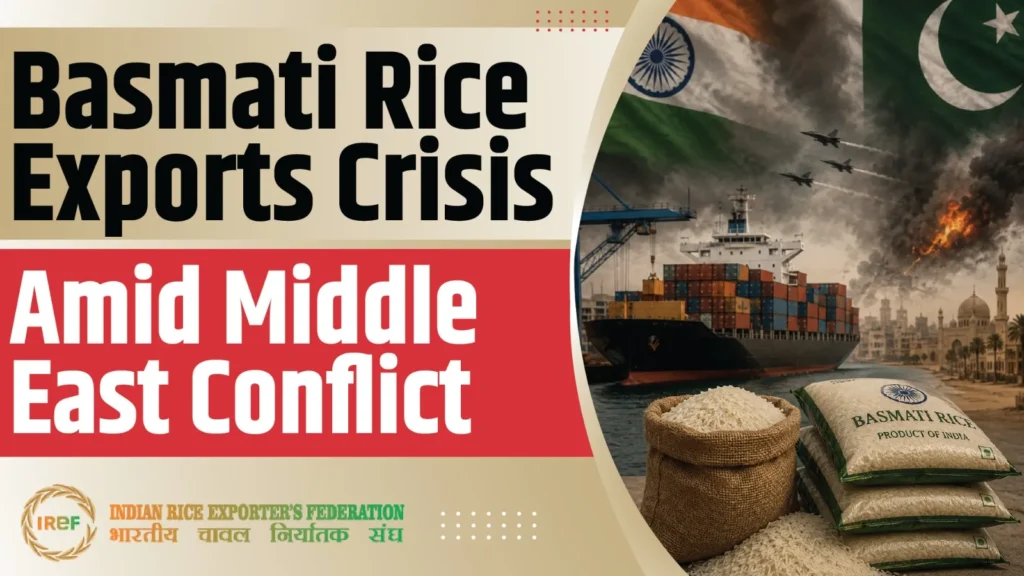
Interestingly, Basmati rice exports play a crucial role in the Indian economy. But the current crisis of the Middle East Conflict has hampered these exports. Undoubtedly, obstacles in transit through the Strait of Hormuz are preventing Indian Basmati rice from reaching the Gulf nations. Consequently, this situation has left the exporters deeply concerned regarding the exports of Basmati rice. Since rice exporters are facing financial losses. However, there is a twist to this scenario; this pathetic situation has turned advantageous for Pakistan. The country shares a 900-km border with Iran, which is giving it a logistical advantage in the current situation.
India- Largest exporter in terms of Basmati rice exports
At the same time, ongoing disruptions around the Strait of Hormuz are affecting trade flows and putting pressure on Indian rice exports to key markets. India, the world’s largest exporter, ships around 6 million tonnes annually worth nearly ₹50,000 crore, with Gulf nations being a major destination now facing supply constraints. Interestingly, Iran imports large quantities of rice from India, while countries such as the UAE, Saudi Arabia, and other Gulf nations also remain key buyers of Indian Basmati rice. One Indian rice exporter said the sector is going through a difficult phase, with financial losses continuing to rise for Basmati traders. Despite the challenges, exporters remain hopeful that tensions in the Middle East will ease soon and trade conditions will gradually return to normal. Meanwhile, reports suggest that Pakistan is moving to formalise barter trade arrangements and ease certain banking restrictions to support smoother trade operations.
Govt.‘s RELIEF scheme of ₹497 crore for affected exporters
The report notes that Pakistan is making use of its land border with Iran to export Basmati rice, which is helping it maintain export momentum and strengthen trade ties with Iran. Meanwhile, recent data shows a sharp decline in India’s rice exports to the Middle East. In March 2023, India exported around 470,000 tonnes of rice worth ₹3,431.30 crore. This year, however, exports fell by nearly 40%, dropping to about 276,000 tonnes valued at roughly ₹2,240.37 crore.
According to exporters, shipments are increasingly being routed through trans-shipment hubs such as Jebel Ali, Hamad Port, Aqaba, Jeddah, Aden, and Sohar, along with UAE ports like Khor Fakkan and Fujairah. However, they pointed out that offloading cargo at these neutral ports has become expensive, as additional land or feeder transport is required. This process also involves war-risk charges and often leads to delays. From these hubs, consignments are further transported by road to Jebel Ali before reaching final Gulf destinations. As a result, the current geopolitical situation is creating significant pressure on Indian exporters, with many facing financial strain, delayed payments, and rising operational costs. Despite these challenges, the government has announced a ₹497 crore relief package aimed at supporting exporters and easing some of the financial burden.
Experts’ appeal to the government
Experts have appealed to the government to intensify diplomatic efforts regarding Basmati exports amid the ongoing tensions in the Gulf region. It ensures that India retains its prominent position in the global Basmati market.
https://iref.net/news/how-middle-east-conflict-hit-basmati-rice-exportsPublished Date: May 12, 2026


 READ
READ