Downloads
 Login
Login
 Register


Tags
CORPORATE WINDOW : Rethinking Pakistan’s food plate
Manan Aslam

Food in Pakistan is usually discussed in cultural or emotional terms. What people eat is linked to habit, tradition, and affordability, while the deeper economic forces shaping these choices remain largely unseen. Yet, food is also an outcome of markets, policies, and corporate decisions.
Viewed through a corporate window, Pakistan’s food plate reflects decades of incentive structures, subsidy regimes, and investment patterns that have quietly shaped both production and consumption. Understanding this perspective is essential if food awareness is to be raised without moralising, preaching, or medicalising everyday choices.
At the centre of Pakistan’s food economy lies wheat. Its dominance is often justified through tradition and necessity, but its true strength comes from policy design. Government procurement, minimum support prices, and subsidised flour distribution have institutionalised wheat as the most reliable and affordable staple.
These interventions were critical in addressing food insecurity during periods of shortage. Over time, however, they have also created a narrow consumption base. When one crop is consistently protected, markets respond predictably: farmers allocate land to wheat, processors invest in wheat-based products, and retailers prioritise wheat-derived foods. Dietary uniformity, in this sense, is not a cultural inevitability but an economic outcome.
From a corporate window, this concentration represents both risk and inefficiency. Climate variability, groundwater depletion, declining soil fertility, and rising input costs increasingly threaten wheat productivity. Yet, the policy response has largely been to preserve existing arrangements rather than diversify the food base.
Gradual adjustments such as reducing procurement bias, supporting pulse cultivation, and investing in vegetable logistics can crowd in private capital and encourage innovation
An economy that relies too heavily on a single staple exposes itself to supply shocks and fiscal pressure. Diversification, therefore, is not a lifestyle argument; it is a risk-management strategy for both the state and the private sector.
Balanced diets that include boiled rice, lentils, vegetables, and simpler, non-spicy food preparations are often framed as matters of personal discipline. This framing misses the economic reality. Consumers behave rationally. They choose foods that are affordable, accessible, and convenient. Wheat dominates because it satisfies all three conditions. Shifting consumption patterns requires changing price signals, availability, and product formats, not assigning responsibility to households.
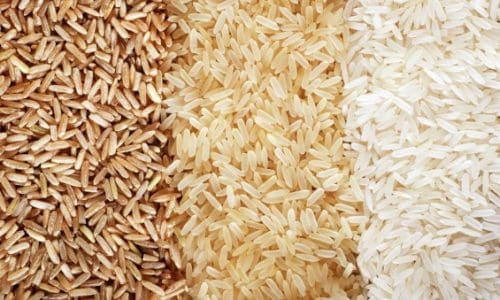
Rice offers a clear illustration of missed opportunity. Pakistan is one of the world’s leading rice exporters, yet, domestic consumption remains underdeveloped in value-added forms. Most rice innovation is directed outward rather than inward; this represents untapped potential.
Parboiled, packaged, and ready-to-cook rice products can serve urban households seeking convenience while strengthening domestic agro-processing. Encouraging rice-based diversification does not threaten wheat security; it broadens consumer choice and deepens value chains.
Lentils and pulses reveal an even sharper structural gap. Despite suitable agro-ecological conditions, Pakistan imports a substantial portion of its pulse consumption. This dependence reflects weak seed systems, limited extension support, and insufficient processing infrastructure rather than consumer resistance.
From an entrepreneurial perspective, pulses offer a relatively low-risk entry point. Investments in cleaning, grading, packaging, and branding can transform pulses from bulk commodities into competitive retail products, reducing import dependence while expanding dietary options.
Vegetables further expose inefficiencies in Pakistan’s food economy. High post-harvest losses, inadequate cold-chain infrastructure, and fragmented wholesale markets raise costs and suppress supply. These inefficiencies eventually appear on the consumer’s plate as volatile prices and inconsistent quality.
Public conversations around food habits often drift toward prescription. People are told what they should eat and how they should cook. This approach overlooks how deeply consumption patterns are embedded in economic architecture. Subsidies, procurement priorities, and regulatory frameworks quietly shape everyday decisions. When these structures reward uniformity, diversity becomes economically irrational for producers and consumers alike.
Large food companies influence sourcing decisions, product formulation, marketing narratives, and shelf space. That said, expanding portfolios to include lentil-based products, vegetable mixes, and low-spice meal options is not merely a social gesture. It is a strategic response to changing urban demographics, rising female workforce participation, and time-constrained households. Firms that adapt early are likely to capture emerging demand rather than chase it later.
Entrepreneurship amplifies this shift. At present, youth-led startups are experimenting with cloud kitchens, food delivery platforms, and agri-tech services. Integrating balanced food options into these models strengthens commercial viability while broadening consumer choice. Simplified cooking formats, regional ingredients, and plant-based options allow innovation without disrupting cultural preferences. These ventures represent early signals of a diversifying food economy.
The role of the state remains central, but reform need not be abrupt. Diversification does not imply abandoning wheat or undermining food security. It requires recalibrating incentives to avoid over-concentration. Gradual adjustments such as reducing procurement bias, supporting pulse cultivation, and investing in vegetable logistics can crowd in private capital and encourage innovation. When policy signals reward diversity, markets respond with investment and experimentation.
Importantly, food awareness can be raised without moral judgment. Linking wheat-heavy diets to subsidies, price controls, and market failures re-frames the discussion away from individual choice and toward systemic design. Advocating balanced diets through economic logic respects consumer autonomy while highlighting inefficiencies that constrain choice. This approach aligns with the tone of informed public debate rather than prescriptive guidance.
Pakistan’s food plate is less a reflection of taste and more a product of incentives. What people eat is shaped by what markets make available, affordable, and convenient. Aligning these factors with diversification goals can gradually reshape consumption without coercion.
A diversified food system also carries macroeconomic benefits. Reduced import dependence for pulses, expanded domestic value addition in rice, and lower post-harvest losses in vegetables strengthen trade balances and rural incomes. For agribusinesses, diversification opens new revenue streams and reduces exposure to single-crop volatility. For consumers, it expands choice without increasing cost.
Ultimately, rethinking Pakistan’s food plate requires rethinking the markets behind it. From a corporate window, food is not simply nourishment; it is an ecosystem of policies, businesses, and consumers interacting daily. Raising awareness without preaching, advocating balance without prejudice, and encouraging entrepreneurship without disruption offers a pragmatic path forward. A more diversified, resilient food system is not an abstract ideal. It is an economic necessity, built one incentive, one investment, and one choice at a time.
The writer is affiliated with the School of Management, Jiangsu University, P.R. China, and the Department of Agribusiness and Entrepreneurship Development, MNS-University of Agriculture, Multan.
Published in Dawn, The Business and Finance Weekly, December 15th, 2025
https://www.dawn.com/news/1961231/corporate-window-rethinking-pakistans-food-platePublished Date: December 15, 2025


 READ
READ