Downloads
 Login
Login
 Register


Tags
Bracing for future fertiliser shocks
SYED FATTAHUL ALIM
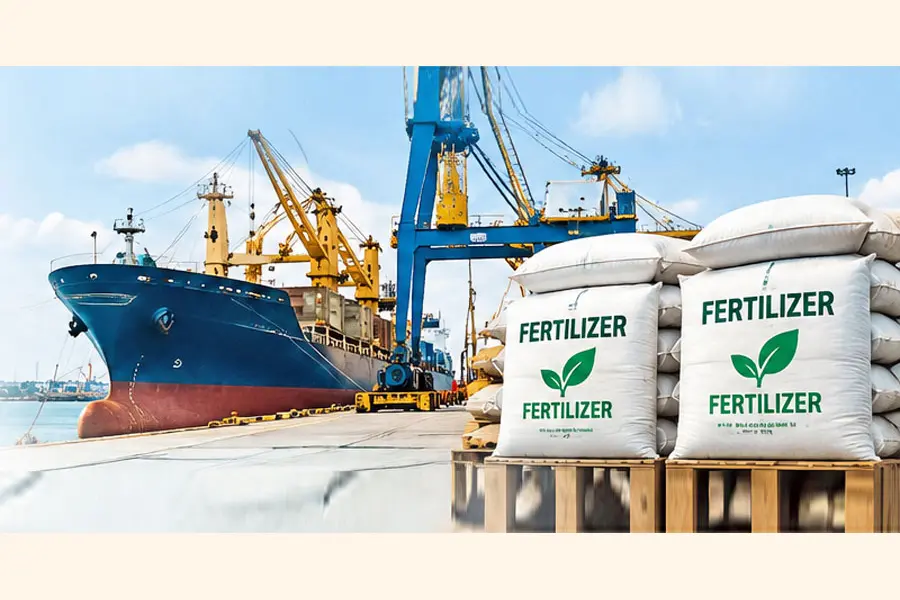
The recent decision of the Cabinet Committee on Government Purchase (CCGP) to procure 0.26 million tonnes of fertiliser has definitely been a right move. No doubt, it makes the most fertiliser-intensive stretch of the agricultural calendar. The intended purchase as reported covers urea as well as phosphatic fertilisers from domestic and overseas sources including KAFCO, Saudi Arabia, the UAE and Morocco. Ordinarily, such procurement would be routine housekeeping by the government. But these are hardly ordinary times. Bangladesh’s farmers are preparing for winter crops and, soon after, Boro, the single largest rice crop. At the same time, the world fertiliser market remains dislocated by the Middle East war and the severe disruption of shipping through the Strait of Hormuz. So, the more important question is not merely how much fertiliser the government is buying now, but whether enough can be secured and physically positioned before external shocks again tighten supplies.
Bangladesh has reason to be especially cautious. Annual demand for chemical fertilisers is around 6.7 million tonnes, with urea alone accounting for about 2.62 million tonnes. Domestic fertiliser factories, however, have been unable to operate anywhere near installed capacity because of chronic gas shortages, ageing plants and recurrent shutdowns. During the ongoing Middle East crisis, gas rationing forced five of the country’s six major urea factories to suspend production once. The shock travelled further. Shortage of ammonia after closure of urea plants also halted production at the state-owned DAP factory in Chattogram. Thus, an international energy crisis did not only complicate imports, it also weakened domestic production.
That is the uncomfortable double dependence Bangladesh has created over the years. It imports most of the fertilisers it consumes, while the local factories themselves depend on uninterrupted natural gas supply. Urea is the clearest example. Roughly three-quarters of annual requirement now has to be met through imports, and Saudi Arabia, the UAE and Qatar have traditionally supplied a large share. The Gulf region is also a critical source of LNG. So, when war disrupts the Strait of Hormuz, both ends of Bangladesh’s fertiliser equation-imports and domestic production-come under pressure at once.
Before the war, the Strait carried about 20 to 30 per cent of internationally traded fertiliser, according to FAO estimates. The Gulf, on the other hand, supplied around 30 to 35 per cent of global urea. Commercial traffic through the waterway has since fallen sharply and, though some cargoes have resumed, passage remains below normal while insurance costs complicate shipping. Earlier this year, urea prices climbed to their highest level since 2022 as Middle Eastern exports nearly stopped. Bangladesh itself learnt how difficult replacement purchases could become when international tenders attracted little response. In such a market, procurement made after a shortage becomes visible in farmers’ markets may already be too late.
However, fertiliser is only one part of the gathering problem. The wars in the Middle East and Ukraine and the developing El Nino are converging on the global food system from three directions. The Middle East crisis raises prices of energy and fertilizer. The Ukraine war disrupts grain movement through the Black Sea. And El Nino threatens crop yields through drought, abnormal heat and erratic rainfall. The countries of the Global South, many dependent on imported fuel, fertiliser and foodgrain, naturally stand to bear the heavier burden. Bangladesh belongs to this vulnerable group and cannot behave as though these developments concern distant markets alone.
The warning signs are already visible. The FAO’s latest Food Price Index averaged 136.0 points in September, its highest level in nearly four years, while its Cereal Price Index rose to 122.8 points, 17.2 per cent higher than a year earlier. Its September assessment put world cereal output at about 2.98 billion tonnes, around 2.0 per cent below the previous year and described the annual decline as the largest since 2018. Its October update still places production 2.1 per cent below last year’s record. Wheat and maize prices have been rising as Black Sea logistics tighten and weather concerns grow.
What happens when costly fertiliser and energy meet falling grain output? Farmers everywhere face higher production costs. Some respond by applying less fertiliser or planting less input-intensive crops. That in turn reduces yield and supply, pushing food prices still higher. In Bangladesh, where rice price carries an outsized weight in household expenditure and food inflation, the chain can become especially painful. A fertiliser shortage during Boro cultivation would therefore not remain a problem of farmers for long. It would ultimately show up in rice prices, inflation, public food stocks and the government’s import bill.
This is why the crop calendar deserves more attention than headline stock figures. Nearly two-thirds of Bangladesh’s chemical fertiliser use occurs between October and February, when winter crops and Boro create peak demand. Having fertiliser somewhere in the national stock is not the same as having the right type at the right district, upazila and dealer point when farmers need it. Recent complaints about shortages and sales above official prices should remind policymakers of the perennial gap between stocks on paper and availability in the field. The effectiveness of procurement therefore depends equally on transport, storage, district-wise allocation and control of hoarding and artificial scarcity.
At the same time, emergency imports cannot by themselves resolve the structural weakness of Bangladesh’s fertiliser system. Current risk-reduction options include diversifying import sources beyond the Gulf, keeping government-to-government arrangements open with producers elsewhere, maintaining a strategic buffer before major crop seasons and raising the reliability of domestic production. Predictable gas allocation to fertiliser factories matters in that equation because every tonne produced at home reduces exposure to shipping disruption. Longer-term resilience also turns on efficient plants, better storage and realistic district-level demand assessment rather than repeated crisis purchases after stocks begin to run down.
With the next Boro season approaching amid war, disrupted shipping and an intensifying El Nino, the government’s latest fertiliser procurement move appears to be part of its wider effort to insure food security against external supply shocks. However, its real import will depend on what follows: whether further supplies are secured before peak demand, whether import origins remain sufficiently diversified, whether local factories can operate more reliably and, above all, whether available fertiliser reaches farmers at official prices. In a gathering global food crisis, the difference between fertiliser secured before a shock and fertiliser sought after one has happened can ultimately become the difference between domestic grain on the market and costly grain imported from abroad.
https://thefinancialexpress.com.bd/columns/bracing-for-future-fertiliser-shocksPublished Date: October 4, 2026


 READ
READ