Downloads
 Login
 Register


Tags
India weighs curbs on non-Basmati rice exports to cool domestic prices
A 30% export duty and minimum export price are among the options being considered, with a temporary export ban reserved as a last resort.
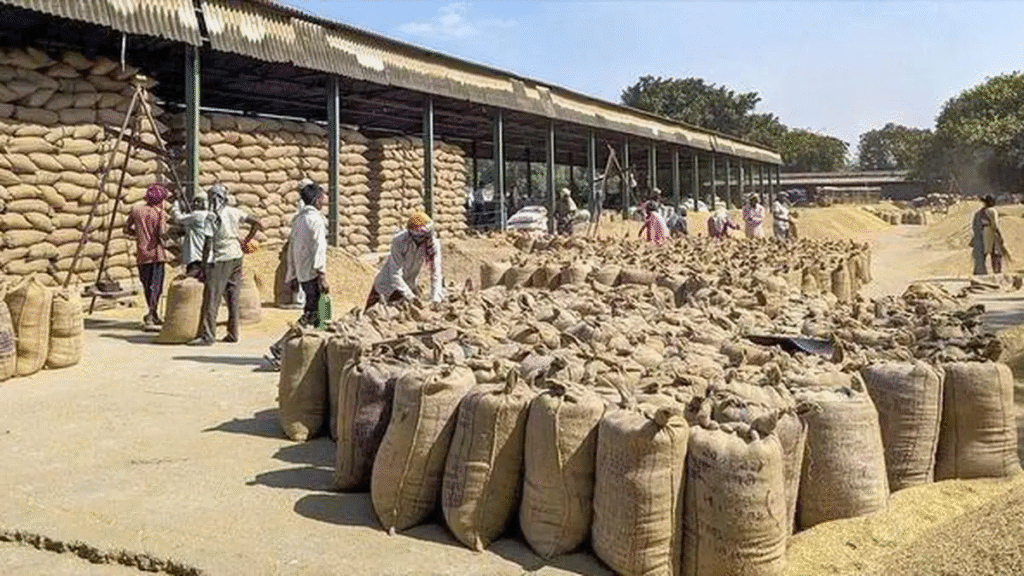
India is planning to ban non-Basmati rice export as a last resort to help cool domestic prices as it prepares to impose an export duty with a minimum export price (MEP) likely next month. However, any such export curb will be temporary unlike the previous ban imposed in 2023 which continued for 14 months.
Considering the current international rice prices and India’s export rates, the government is considering to levy 30 per cent export duty to reduce India’s global competitiveness in non-Basmati white rice, sources said. Also, if the duty is levied at 20 per cent, India will still be able to export since the rates offered by Thailand and Vietnam are higher, the sources said adding only Pakistani rice price will be lower.
In November first week when the plan to put curbs on export was put before an inter ministerial panel, the Indian FOB price of white rice (5 per cent broken) was $384-389/tonne as against Pakistan’s about $415/tonne, Thailand’s $495/tonne and Vietnam’s $480/tonne, the sources said.
Food inflation spiked to 8.94 per cent last month from 7.74 per cent in September. However, in cereal category, rice inflation has been steadily rising — 12.51 per cent in October, 8.27 per cent in September, 5.89 per cent in August, 3.30 per cent in July and 1.72 per cent in June.
During October, inflation in rice in most of the southern states was much higher — 43.2 per cent in Karnataka, 25.7 per cent in Andhra Pradesh, 24.6 per cent in Telangana, 17.4 per cent in Tamil Nadu and 9.4 per cent in Kerala.
Sources said that improved international market opportunities and strong demand for Indian rice have boosted export demand, sources said. Total non-Basmati rice (including paddy and seed) export during April-October of current fiscal has jumped 7 per cent to 8.84 million tonnes (mt) from 8.28 mt year-ago. But, there is a 5 per cent drop in shipment to parboiled rice at 4.87 mt whereas white rice has surged more than 18 per cent to 2.82 mt and broken rice 74 per cent at 0.98 mt.
In 2025-26 fiscal, India had exported 15.04 mt of non-Basmati rice worth $ 5.87 billion.
“Though various options were discussed, the panel of officials decided not to put a blanket ban on export as the first measure and all such restrictions aimed at domestic price reduction will be calibrated one after another depending on price movement,” an official source said.
The Centre on November 6 doubled the target for rice sold through e-auction under the Open Market Sale Scheme (Domestic) for 2026-27 to 50 lakh tonnes (lt) after 25 lt got sold in seven months to October. The government also asked cooperatives NAFED, NCCF and Kendriya Bhandar to expand their footprints across the country, particularly in the southern States in selling rice at subsidised rates under ‘Bharat Rice’ brand.
The government also directed traders, retailers, wholesalers, processors and millers across the country to declare their Basmati Rice, Non-Basmati Premium Rice, non-Basmati Rice, Parboiled Rice, Broken Rice and Paddy stocks, separately on a weekly basis every Friday. Besides, Andhra Pradesh, Karnataka, Kerala, Tamil Nadu and Telangana were permitted to impose stock limits on both rice and paddy if there is such a need.
But despite these measures, the alĺ India average retail price of rice on November 21 was over 11 per cent higher from year-ago, triggering speculation of more curbs.
Kharif acreage under paddy (both Basmati and non-Basmati) for 2026-27 declined by about 4 per cent to 42.68 million hectares due to deficient rainfall in many states. While the government is yet to issue its first production estimates, trade and industry have pegged it at around 112-115 million tonnes (mt) in Kharif 2026-27. India had produced 124.76 mt of rice in Kharif 2025-26.
India had banned exports of broken rice and imposed a 20 per cent export duty on paddy, husked (brown) rice, and non-Basmati white (non-parboiled) milled rice in September 2022. Later, in July 2023, shipment of non-Basmati white rice (excluding parboiled rice) was prohibited. Further, in August 2023, a 20 per cent export duty on parboiled rice a Minimum Export Price (MEP) on Basmati rice were and introduced. However, during September-October 2024, all curbs including MEP were lifted. But the export ban on broken rice continued until March 2025 before it was lifted.
https://www.thehindubusinessline.com/markets/commodities/india-weighs-curbs-on-non-basmati-rice-exports-to-cool-domestic-prices/article71728177.ecePublished Date: November 22, 2026



 READ