Downloads
 Login
 Register

Tags
New labs, machinery, and training strengthen Pakistan’s wheat research as its partnership with CIMMYT turns 60
As CIMMYT and Pakistan mark six decades of working together, national research institutes receive new laboratories, equipment, and training to develop climate-resilient wheat faster.
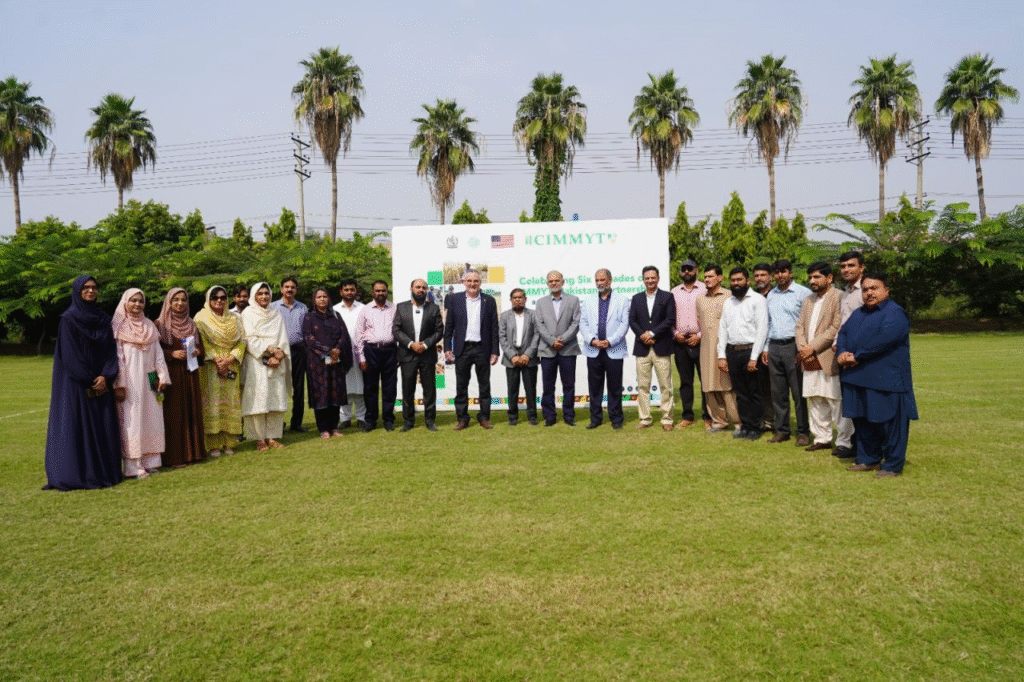
In October 2026, a new laboratory and working area opened at the Wheat Research Institute of the Ayub Agricultural Research Intitute (AARI) in Faisalabad, Pakistan. It is one of five national research institutes where CIMMYT set up or upgraded laboratory space this year, part of a wider effort to give Pakistani wheat scientists the tools they need to develop and test new varieties.
The support comes as CIMMYT and Pakistan mark six decades of collaboration. Since the 1960s, CIMMYT has shared wheat breeding lines with Pakistan, trained its scientists, and worked with national institutes on joint research. . With rising temperatures and a population of about 250 million, Pakistan needs wheat varieties that perform under heat and drought, and research institutes able to develop them quickly.
What CIMMYT supported in 2026: New or upgraded laboratories, with equipment, at five national institutes
Farm machinery for 11 national research partnersTraining for 46 Pakistani scientists through five courses in Ethiopia, Mexico, Nepal, and Pakistan10 zero-tillage multicrop drills for farming communities in the rice-wheat belt21 community seed banks scaled up in resource-poor and vulnerable areasThe five institutes are the National Agricultural Research Centre (NARC) in Islamabad, the Wheat Research Institute in Faisalabad, the Regional Agricultural Research Institute in Bahawalpur, the Cereal Crops Research Institute in Nowshera, and Barani Wheat Research Institute (BWRI) in Tandojam. The work is funded by the US government.
Marking Six Decades of Collaboration
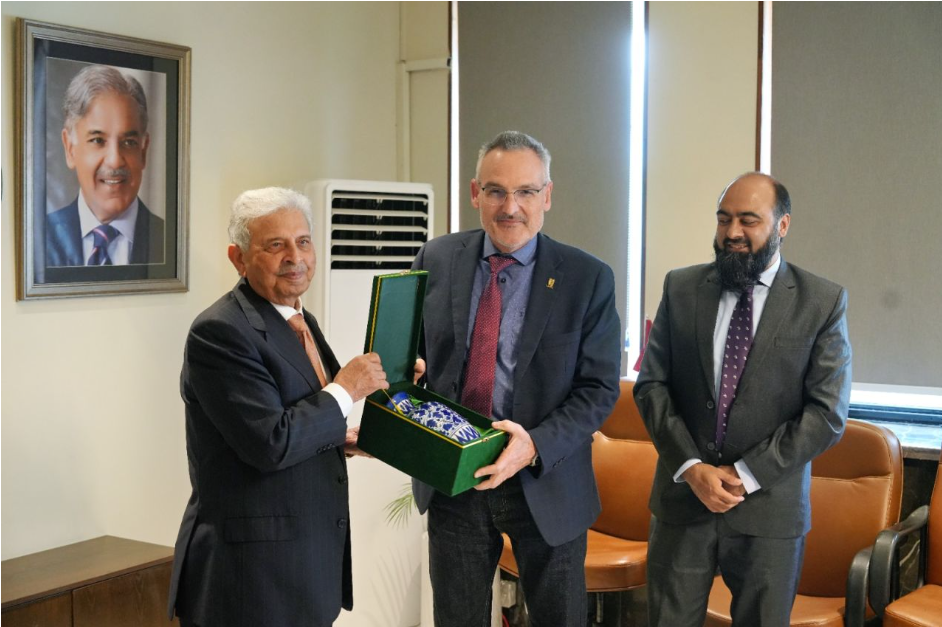
To commemorate this milestone, Flavio Breseghello, Director of CIMMYT’s Global Wheat Program, visited Pakistan in October 2026. With Sajid Ali, CIMMYT’s country representative for Pakistan, he met Rana Tanveer Hussain, federal minister for national food security and research. The minister recognized CIMMYT’s contributions over six decades and its role in Pakistan’s food and nutrition security. Ali briefed him on the history of the partnership and on current work to strengthen laboratories, equipment, machinery, and training across the country.
Better tools for breeders: During the visit, Breseghello inaugurated the new laboratory in Faisalabad. Laboratory equipment and farm machinery were also handed over to the 11 national research partners in Punjab, Sindh, Khyber Pakhtunkhwa, and Islamabad.
The equipment includes digital weighing scales, seed counters, pH meters, deep freezers, spectrophotometers, and canopy temperature meters, which researchers use to measure and analyze samples, store research material, and assess crops in the field.
Specialized machinery will speed up routine work. Seed cleaner-graders remove impurities and sort seed by size and thickness, which improves purity and uniformity. They are especially useful for institutes producing foundation seed of nutrient-enriched varieties, which can help address micronutrient deficiencies, also known as hidden hunger. Single-head, single-plant, and Vogel threshers let researchers process individual wheat heads, small plant samples, and experimental seed lots with less manual labor and less grain damage.
“Reliable field trials and careful handling of breeding materials are essential for wheat improvement. Equipping our national partners with the necessary tools and equipment will strengthen their capacity to evaluate promising lines and develop climate-resilient varieties for farmers,” said Breseghello. “Building on six decades of collaboration between CIMMYT and Pakistan, this support reinforces our shared commitment to advancing wheat research and contributing to food security for Pakistan’s 250 million people.”
Partners also received digital tablets, along with hands-on training to record field data digitally, upload it to the Enterprise Breeding System (EBS), and analyze it with BioFlow. This helps breeders collect better data in real time and base their selection decisions on it.
Climate-resilient practices in farmers’ fields
The 10 zero-tillage multicrop drills place seed and fertilizer directly into untilled soil, so farmers can skip conventional land preparation. Zero tillage can conserve soil moisture, cut fuel and labor costs, and help farmers sow on time. In rice-wheat systems, it also helps manage rice residues and reduces the need to burn them..
“Our priority is to help national partners turn research into solutions for farmers. Better working facilities and equipment support the daily work behind crop improvement and complement our wider efforts to improve seed access, scientific skills for data-driven decision-making, and climate resilience,” said Ali.
Breseghello also visited the Wheat Molecular Breeding Laboratory at Quaid-i-Azam University in Islamabad, where he met master’s and PhD students working on wheat genomics. Awais Rasheed and Tariq Mahmood briefed him on the laboratory’s work supporting winter wheat breeding in Pakistan and on CIMMYT’s research assistance.
At NARC, he joined a workshop on biological nitrification inhibition (BNI), a plant trait that can reduce nitrogen losses from the soil [VERIFY: wording], planted a tree, and inaugurated the center’s wheat physiology laboratory.
For the scientists using them, the new laboratories and machines are a starting point. The real test will come in the field: how quickly better data and faster seed handling turn into varieties that Pakistani farmers can grow as temperatures rise.
https://www.cimmyt.org/blogs/new-labs-machinery-and-training-strengthen-pakistans-wheat-research-as-its-partnership-with-cimmyt-turns-60/Published Date: November 9, 2026


 READ