Downloads
 Login
 Register


Tags
India’s Kharif acreage falls 11.81 Lakh Hectares as rice, maize and cotton lose ground
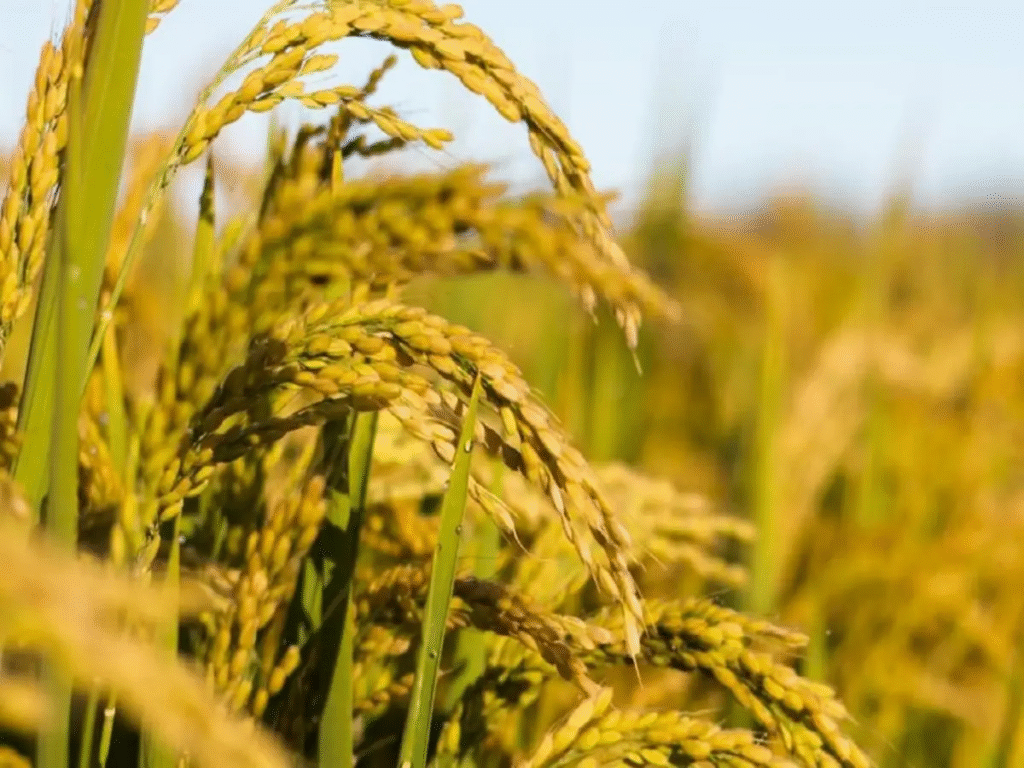
Pulse and oilseed acreage expands, but gains remain uneven; rice area declines 15.56 lakh hectares year-on-year, while maize and cotton also trail last season’s levels
India’s kharif sowing footprint has contracted year-on-year, with the area sown across major crops standing at 1,115.31 lakh hectares as of October 2, 2026, down 11.81 lakh hectares from 1,127.12 lakh hectares during the corresponding period of 2025–26. The latest crop-wise progressive sowing data from the Department of Agriculture and Farmers Welfare (DA&FW), sourced to the Crop Weather Watch Group (CWWG), point to a mixed agricultural picture: rice, maize and cotton have lost ground, while pulses, coarse cereals and oilseeds have recorded aggregate gains.
The contraction comes despite several crop categories maintaining acreage above their respective normal levels. The data suggest that the season’s headline shortfall is concentrated in a handful of major crops rather than representing a uniform decline across the kharif basket. However, acreage alone cannot establish the final production outcome, which will also depend on yields, crop conditions, rainfall distribution and harvesting performance.
The current gross acreage figure of 1,115.31 lakh hectares compares with the 2025–26 corresponding-period figure of 1,127.12 lakh hectares. The report also lists normal acreage of 1,104.46 lakh hectares and final 2025 area coverage of 1,134.27 lakh hectares. These are distinct reference points: the current season’s progressive sowing is 10.85 lakh hectares above the stated normal acreage, but remains 18.96 lakh hectares below the previous year’s final coverage.
Rice accounts for the largest acreage decline
Rice, India’s principal kharif crop, recorded an area of 433.62 lakh hectares as of October 2, compared with 449.18 lakh hectares a year earlier. The decline of 15.56 lakh hectares is the largest absolute reduction among the crop categories reported.
The current rice acreage remains above the normal level of 412.00 lakh hectares by 21.62 lakh hectares. Nevertheless, the year-on-year contraction is significant because rice carries substantial weight in India’s foodgrain supply, procurement operations and food-security framework.
The acreage figures do not, by themselves, establish whether rice output will decline by a corresponding proportion. Crop establishment, regional yield variations and the condition of standing crops will determine the final production outcome. Even so, the reduced planted area warrants attention as policymakers assess foodgrain availability, procurement requirements and the balance between domestic supply and other uses.
Pulses expand, led by tur and urad
Total pulses acreage increased to 122.39 lakh hectares from 119.82 lakh hectares in the corresponding period last year, representing an expansion of 2.57 lakh hectares. The current area remains marginally below the normal level of 123.64 lakh hectares.
Tur acreage rose to 47.93 lakh hectares from 46.43 lakh hectares, an increase of 1.49 lakh hectares. Urad recorded an even stronger expansion, rising to 26.57 lakh hectares from 23.60 lakh hectares, a gain of 2.96 lakh hectares.
Moong acreage, however, declined to 33.73 lakh hectares from 34.90 lakh hectares, a reduction of 1.17 lakh hectares. Kulthi fell to 0.72 lakh hectares from 0.93 lakh hectares, down 0.21 lakh hectares. Moth bean acreage edged up to 9.25 lakh hectares from 9.20 lakh hectares, adding 0.05 lakh hectares, while other pulses declined to 4.19 lakh hectares from 4.75 lakh hectares, a reduction of 0.55 lakh hectares.
The report lists normal acreage of 44.32 lakh hectares for tur, 29.60 lakh hectares for urad, 35.48 lakh hectares for moong, 1.48 lakh hectares for kulthi, 9.69 lakh hectares for moth bean and 3.07 lakh hectares for other pulses. Final 2025 coverage was 44.60 lakh hectares for tur, 21.26 lakh hectares for urad, 37.45 lakh hectares for moong and 15.66 lakh hectares for other pulses, the last figure carrying the report’s asterisk.
The footnote specifies that other pulses includes other pulses, kulthi and moth bean. The report also states that normal acreage is based on the average for 2022–23 and 2023–24.
The divergence within the pulses basket is important. Higher tur and urad acreage could strengthen the area base for domestic pulse production, but a larger sown area does not guarantee lower market prices or reduced import dependence. Yield performance and the timing of market arrivals will remain decisive, particularly for crops in which domestic supply-demand balances are sensitive to weather and production volatility.
Coarse cereals gain, but maize moves in the opposite direction
Total shri anna, or coarse cereals, acreage increased to 187.16 lakh hectares from 186.39 lakh hectares, an expansion of 0.77 lakh hectares. The category is above its normal acreage of 182.61 lakh hectares by 4.55 lakh hectares.
The gains were led by bajra and jowar. Bajra acreage rose to 64.96 lakh hectares from 62.87 lakh hectares, up 2.09 lakh hectares. Jowar increased to 13.90 lakh hectares from 12.61 lakh hectares, a gain of 1.30 lakh hectares. Small millets expanded to 4.53 lakh hectares from 4.15 lakh hectares, an increase of 0.38 lakh hectares.
Ragi acreage declined to 10.22 lakh hectares from 10.42 lakh hectares, down 0.20 lakh hectares. Maize recorded the steepest reduction within the coarse-cereal category, falling to 93.54 lakh hectares from 96.34 lakh hectares, a loss of 2.80 lakh hectares.
The normal acreage benchmarks are 14.44 lakh hectares for jowar, 70.90 lakh hectares for bajra, 11.98 lakh hectares for ragi, 4.52 lakh hectares for small millets and 80.77 lakh hectares for maize. Final 2025 coverage stood at 12.10 lakh hectares for jowar, 63.80 lakh hectares for bajra, 13.46 lakh hectares for ragi, 4.15 lakh hectares for small millets and 98.61 lakh hectares for maize.
Maize acreage remains 12.77 lakh hectares above its normal level, despite the year-on-year decline. Its reduced area nevertheless deserves attention because maize serves several demand channels, including food, animal feed and industrial processing. The eventual implications for supply and prices will depend on productivity and demand conditions, neither of which can be inferred from acreage alone.
The broader coarse-cereal expansion is consistent with a stronger aggregate area position for the category, but the underlying crop-level differences caution against treating the increase as uniform.
Oilseeds record a modest expansion
Total oilseeds acreage increased to 196.66 lakh hectares from 195.55 lakh hectares, adding 1.11 lakh hectares year-on-year. The category nevertheless remains below its normal acreage of 200.08 lakh hectares by 3.42 lakh hectares.
Groundnut acreage was reported at 51.00 lakh hectares, unchanged from the previous year’s 51.00 lakh hectares, with the report recording a marginal increase of 0.01 lakh hectares. Soybean area declined slightly to 123.16 lakh hectares from 123.30 lakh hectares, a reduction of 0.14 lakh hectares.
Sunflower acreage rose to 1.29 lakh hectares from 0.70 lakh hectares, adding 0.59 lakh hectares. Sesame increased to 11.23 lakh hectares from 9.86 lakh hectares, a gain of 1.37 lakh hectares. Nigerseed rose to 0.89 lakh hectares from 0.85 lakh hectares, up 0.04 lakh hectares, while other oilseeds increased to 0.12 lakh hectares from 0.08 lakh hectares, also up 0.04 lakh hectares.
Castorseed moved in the opposite direction, declining to 8.97 lakh hectares from 9.76 lakh hectares, a reduction of 0.80 lakh hectares.
The normal acreage benchmarks are 46.79 lakh hectares for groundnut, 128.71 lakh hectares for soybean, 1.20 lakh hectares for sunflower, 12.88 lakh hectares for sesame, 1.01 lakh hectares for nigerseed and 9.49 lakh hectares for castorseed. The table does not provide normal acreage for other oilseeds. Final 2025 coverage stood at 50.29 lakh hectares for groundnut, 123.86 lakh hectares for soybean, 0.88 lakh hectares for sunflower, 9.63 lakh hectares for sesame, 0.83 lakh hectares for nigerseed and 10.89 lakh hectares for castorseed.
The oilseeds picture is therefore one of marginal aggregate growth rather than a broad-based acreage surge. Sesame and sunflower have expanded, while soybean has slipped slightly and castorseed has contracted. Since the category remains below its normal area, the acreage data alone offer limited grounds for concluding that domestic oilseed supply constraints will ease. Production will depend on crop-specific yields, weather and harvesting outcomes.
Sugarcane and cotton remain below last year’s levels
Sugarcane acreage stood at 58.61 lakh hectares, compared with 58.87 lakh hectares in the corresponding period last year, a decline of 0.26 lakh hectares. The current area remains above the normal benchmark of 54.20 lakh hectares by 4.41 lakh hectares. Final 2025 coverage was 58.84 lakh hectares.
Cotton acreage declined to 110.53 lakh hectares from 111.08 lakh hectares, a reduction of 0.55 lakh hectares. The current area is below the normal benchmark of 125.51 lakh hectares by 14.98 lakh hectares. Final 2025 coverage stood at 115.20 lakh hectares.
The distinction between the two crops is material. Sugarcane acreage remains comfortably above its stated normal level despite the small year-on-year decline. Cotton, by contrast, is substantially below normal acreage as well as below the previous year’s corresponding area and final 2025 coverage.
For cotton, the acreage position will be one of several variables shaping the outlook for domestic fibre availability. Yield, pest pressure, weather and crop quality will also influence production. For sugarcane, acreage cannot independently establish the direction of sugar output, which depends on cane yields, recovery rates and the timing of crushing.
Jute and mesta remain broadly stable
Total jute and mesta acreage rose to 6.35 lakh hectares from 6.24 lakh hectares, an increase of 0.11 lakh hectares. The current area is close to the normal benchmark of 6.39 lakh hectares, falling short by just 0.04 lakh hectares. Final 2025 coverage was 6.06 lakh hectares.
The category’s modest increase contrasts with the larger movements in rice and maize, indicating relative stability in its planted area.
The bigger picture: acreage gains are not translating into an across-the-board expansion
The latest figures reveal a differentiated kharif season. Rice has registered the largest absolute decline, maize has weakened within coarse cereals, and cotton remains well below normal acreage. At the same time, pulses have expanded, coarse cereals have recorded an aggregate increase, and oilseeds have posted modest growth.
The total acreage figure is 10.85 lakh hectares above the reported normal level, but it is 11.81 lakh hectares below the corresponding-period figure for 2025–26. This is not contradictory: the normal benchmark, current progressive sowing and the previous season’s area are different comparisons.
The data also underline why crop-wise analysis matters more than the headline total. Gains in tur, urad, bajra, sesame and sunflower coexist with declines in rice, moong, maize, castorseed and cotton. These movements have different implications for foodgrain availability, feed and industrial demand, edible-oil supply and fibre production.
The next stage of assessment will depend on translating acreage into output. Rainfall distribution, soil moisture, crop health, pest incidence and yields will determine whether the expanded area in some crops offsets reduced acreage in others. Procurement, market arrivals and import requirements will need to be assessed against actual production and demand rather than sowing figures alone.
For policymakers and market participants, the central takeaway is that India’s kharif acreage has not contracted uniformly. The more consequential question is whether crop-specific yield performance can compensate for the shortfall in major crops, particularly rice and maize, while converting gains in pulses and selected oilseeds into stronger domestic availability.
Data source: Department of Agriculture and Farmers Welfare (DA&FW), Crop-wise All India: Progressive Crop Area Sown Report – Kharif Weekly Area Coverage as on October 2, 2026. Source cited in the report: Crop Weather Watch Group (CWWG). All area figures are in lakh hectares.
— Suchetana Choudhury (suchetana.choudhuri@agrospectrumindia.com)
https://agrospectrumindia.com/news/24/35049/indias-kharif-acreage-falls-11-81-lakh-hectares-as-rice-maize-and-cotton-lose-ground.htmlPublished Date: October 27, 2026


 READ