Downloads
 Login
 Register


Tags
Dwindling rice stockpile, El Niño inflation risks–BMI
Ada Pelonia
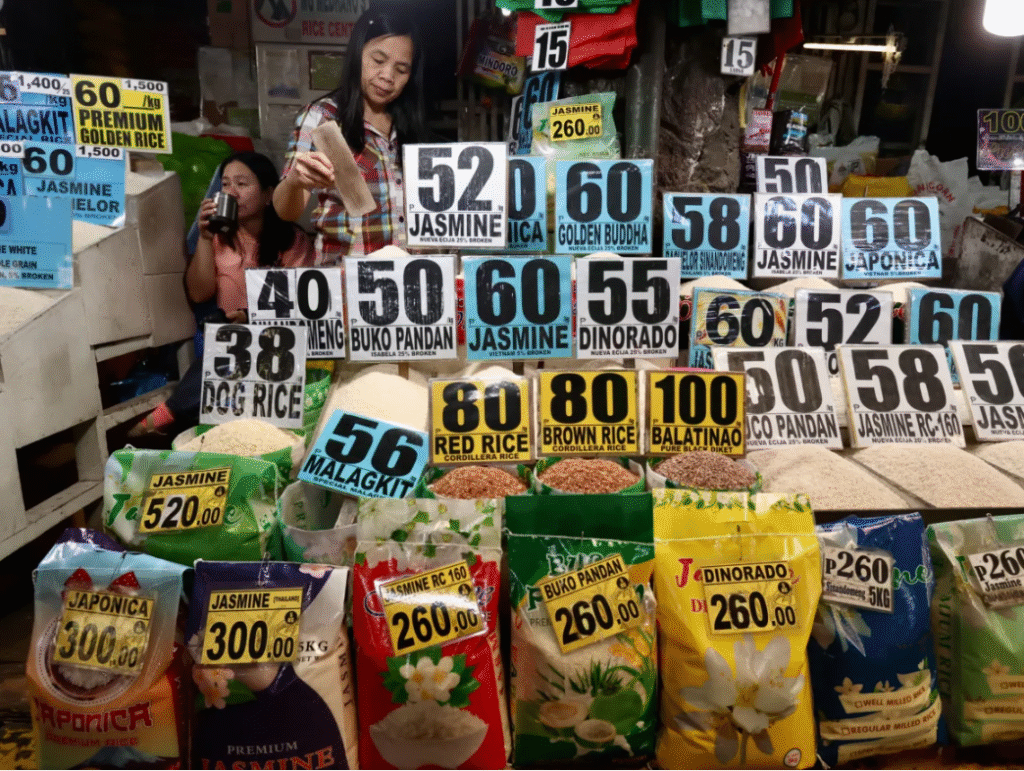
THE Philippines’s dwindling rice stockpile and the threat of El Niño would cause prices to accelerate and put more pressure on inflation, according to an international report.
BMI, a unit of Fitch Solutions, reported that the 2026/27 El Niño would likely raise drought risk for most cropland across several regions, threatening corn, rice, sugar, palm oil, and coffee production.
This includes Southern Africa, Central America, northern South America and Southeast Asia.
BMI noted that in past El Niños, “the share of cropland exposed to high-intensity drought rose by 11-12 percentage points on average across these regions.”
It added that among the countries hardest hit by the dry spell were Zambia, Zimbabwe, Central America’s Dry Corridor, the Philippines, Thailand, Guyana, and Suriname.
“In Southeast Asia, drought puts rice, Thai sugar, Indonesian and Malaysian palm oil and Vietnamese robusta at risk, and the region faces the largest population impact, with around 90 [million] more people exposed to drought on average in past events.”
The international report, however, stressed that thinner domestic buffers in Southeast Asia place supplies of rice, palm oil, and coffee at higher risk, further exacerbating the dry spell’s impact.
“Rice stocks have fallen below 2023 levels in Thailand, Vietnam and the Philippines, leaving the Philippines, which imports around a third of its rice, most exposed to higher prices,” BMI said.
It added that Indonesia’s palm oil and Vietnam’s robusta coffee stocks were also thin, at 9 percent and 2 percent of use, respectively.
Despite this, BMI said the global backdrop presents a “more reassuring” scenario, with rice powerhouse India holding record stocks equal to 47 percent of consumption, compared to the 30 percent before 2023/24.
“That makes a repeat of the pre-emptive export curbs that drove the 2023/24 rice price spike less likely, while Thailand’s ample sugar stocks should sustain exports.”
The Department of Agriculture (DA) recently said El Niño could inflict P20 billion in agricultural damage, potentially affecting the livelihoods of up to 4.6 million farmers and fisherfolk.
Agriculture Secretary Francisco Tiu Laurel Jr. said the climate pattern, which is shaping up to be the strongest on record, will destroy more crops and kill more animals and surpass the P16-billion farm damage recorded in the 2024 El Niño year.
He pegged the volume of losses to reach 1 million metric tons (MMT), with the affected area soaring to roughly 350,000 hectares.
The dry spell could also affect the livelihoods of a minimum of 2.8 million farmers and fisherfolk, possibly climbing to 4.6 million individuals under a worst-case scenario.
Latest government report showed that agricultural damage brought by the strengthening El Niño has swelled to P8.57 billion.
Image credits: Bernard Testa
https://businessmirror.com.ph/2026/10/27/dwindling-rice-stockpile-el-nino-inflation-risks-bmi/Published Date: October 27, 2026


 READ