Downloads
 Login
Login
 Register

Tags
Rice exports: From maintaining market share to finding new segments.
Developments in the first nine months of 2026 indicate that rice exports need to gradually reduce their dependence on a few traditional markets while expanding into markets with the potential to generate higher value.
Hà Nội Mới
Under pressure in terms of both quantity and value.
According to information from the Ministry of Agriculture and Environment , in the first nine months of 2026, Vietnam exported 6.4 million tons of rice, worth 3.11 billion USD, a decrease of 6.1% in volume and 10.9% in value compared to the same period in 2025. The average export price reached approximately 484.8 USD/ton, a decrease of 5.1% compared to the same period.
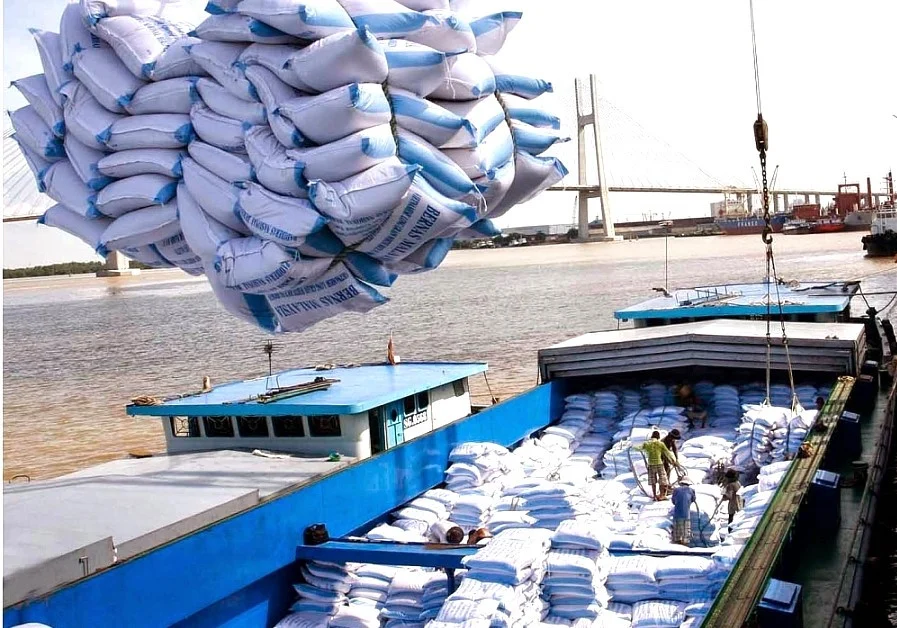
The Philippines continues to be the largest market, accounting for 40.9% of Vietnam’s total rice exports. China ranks second with 17.4%, followed by Ghana with 12.7%. However, the largest market is also showing signs of becoming less favorable than before. In the first nine months, the value of rice exports to the Philippines decreased by 16.8%, and to Ghana by 1.1% compared to the same period in 2025.
With a share exceeding 40% in Vietnam’s rice exports, the Philippines continues to play a decisive role in the overall performance of Vietnamese rice. In 2026, the Philippines’ rice import demand underwent several adjustments. After a period of projected import reductions, the market showed signs of recovery and continued importing to increase reserves. However, the Philippine Department of Agriculture’s initiation of a preliminary safeguard investigation into imported rice is creating another factor to monitor for supplying countries, including Vietnam.
Meanwhile, export prices are also being affected by the supply and demand dynamics in the international market. According to the Vietnam Food Association (VFA)’s rice price update on October 14th, Vietnamese white rice with 5% broken grains is being offered at 420-424 USD/ton; Jasmine rice at 515-519 USD/ton; and fragrant rice with 5% broken grains ranging from 440-445 USD/ton.
Compared to Vietnam, the price of 5% broken white rice from Thailand is currently at 455-459 USD/ton, while Pakistan is offered at around 409-413 USD/ton. In India , 5% broken white rice ranges from 382-386 USD/ton; parboiled 5% broken rice is at 381-385 USD/ton.
Notably, on the global market, abundant supply continues to put pressure on prices. India exported approximately 12.27 million tons of rice in the first half of 2026, a 5% increase year-on-year. This large supply from India exerts significant pressure on world rice prices, particularly in Asian and African markets.
In this competition, Vietnamese rice not only has to compete with India but also faces pressure from Thailand , Pakistan, and several other suppliers. As price becomes a more prominent competitive factor, the advantage in production volume is no longer sufficient to guarantee export growth.
Shift your competitive advantage from price to quality and brand.
Many experts believe that the rice export situation over the past nine months shows that there is still room for growth in the export market, but it is not evenly distributed. Opportunities lie in markets with different demands and require businesses to be more flexible in terms of varieties, quality, packaging specifications, and product standards.
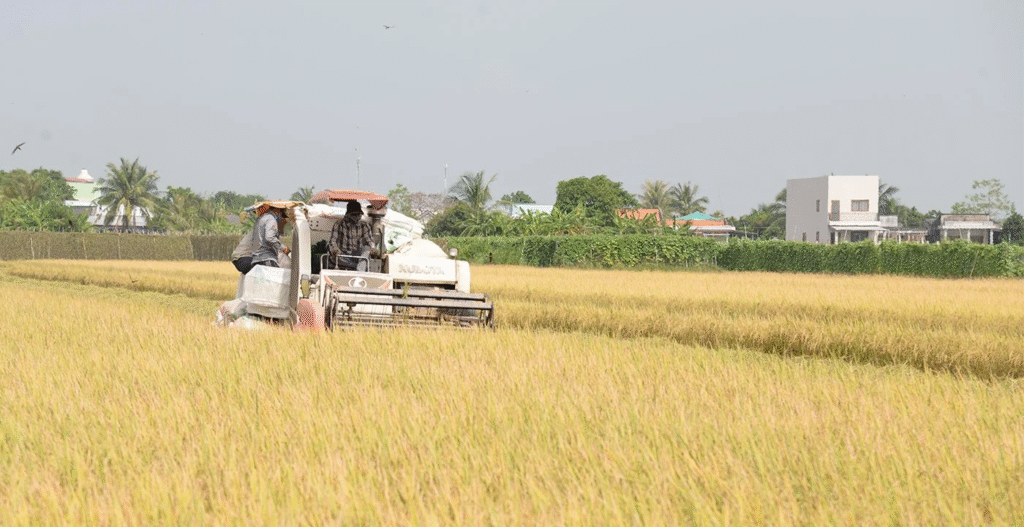
Besides expanding its market reach, Vietnamese rice is gradually approaching segments with higher quality requirements. In August 2026, ST25 rice was available in retail systems in Germany, while several batches of “Green, Low-Emission Vietnamese Rice” were exported to Japan, a very demanding market.
This is a meaningful direction given the pressure on the price of conventional rice from global supply. However, to go further, businesses must simultaneously meet many requirements, from seed varieties, growing regions, and cultivation processes to food safety, traceability, and consistent quality.
In particular, the implementation of the Sustainable Development Project for one million hectares of high-quality, low-emission rice cultivation in the Mekong Delta is creating a production direction linked to quality and environmental standards.
According to the Vietnam Food Association (VFA), in the context of increasingly fierce international competition, the rice industry needs to simultaneously expand its market and enhance its brand value. VFA Chairman Do Ha Nam stated that to boost exports, it is necessary to proactively remove barriers in key markets, especially the Philippines; and at the same time expand into potential markets such as Africa, thereby diversifying risks and reducing dependence on a few traditional markets.
However, expanding the market will be difficult to transform in terms of value if the product still primarily competes on price. Therefore, developing a national rice brand based on high-quality varieties such as ST25, Jasmine, and other fragrant rice lines should be considered a crucial solution to increase export value, gradually shifting the advantage of Vietnamese rice from price to quality and brand.
“The agricultural sector and localities should continue to develop concentrated raw material areas, strengthening linkages between businesses, cooperatives, and farmers to ensure a stable supply. Improving traceability and quality control from the raw material areas is also a condition for meeting the increasingly high standards of import markets,” VFA Chairman Do Ha Nam suggested.
Source: Hà Nội Mới
https://www.vietnam.vn/en/xuat-khau-gao-tu-giu-thi-truong-den-tim-phan-khuc-moiPublished Date: October 15, 2026


 READ
READ