Downloads
 Login
Login
 Register


Tags
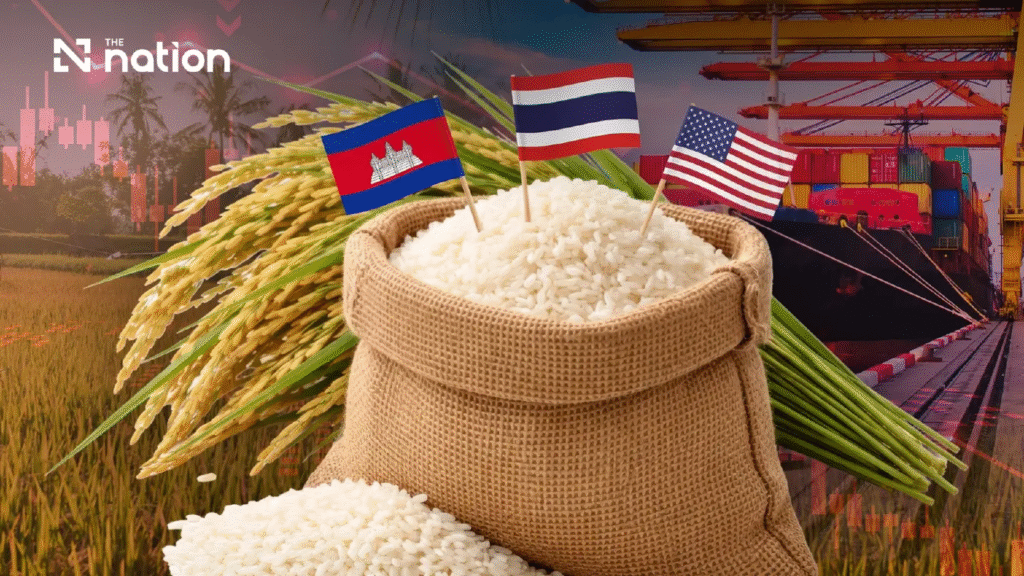
Thai jasmine rice faces cheaper Cambodian exports and potential US-developed rival Sallah
Charnvit Inyanya
- Cambodian fragrant rice is competing with Thai jasmine rice by being significantly cheaper, with a price gap of US$330 per tonne, causing a sharp decline in Thai exports to China.
- The increased Cambodian competition is partly due to tighter border controls, which have forced Cambodia to export its own surplus directly, now posing a risk to Thailand’s market share in the United States.
- A new, potential long-term rival named ‘Sallah’ is being developed in the United States, featuring an aroma similar to Thai jasmine rice and targeted for commercial availability in 2027.
Thai jasmine rice is facing growing competition from cheaper Cambodian supplies in China and a potential longer-term challenger developed in the United States, according to a Thansettakij report published on October 12.
Chookiat Ophaswongse, honorary president of the Thai Rice Exporters Association, told Thansettakij that Thailand exported only 16,000 tonnes of jasmine rice to China in the first eight months of 2026 as Cambodian suppliers expanded their presence. Historically, annual Thai jasmine rice shipments to China had run into the hundreds of thousands of tonnes, he said.
Cambodian price advantage widens to US$330 a tonne
Cambodian fragrant rice, including the Phka Rumduol variety, is gaining a competitive advantage from a widening price gap with Thai jasmine rice, according to Chookiat.
Thai jasmine rice currently costs about US$1,150 a tonne on the international market, compared with approximately US$820 for Cambodian fragrant rice. The difference of about US$330 a tonne has widened substantially from the previous gap of US$50–70.
Chookiat said the lower price gave Chinese importers greater scope to make a profit, encouraging them to switch suppliers despite Thai jasmine rice’s established reputation and longstanding market presence.
Chookiat linked Cambodia’s stronger export push to restrictions at the Thai–Cambodian border. Before the border closure, approximately 400,000–500,000 tonnes of Cambodian fragrant paddy entered Thailand annually for milling and blending with
Thai fragrant rice, he said, explaining that the varieties were closely related.
Tighter border controls following the border conflict have restricted those flows, leaving Cambodia with accumulated stocks and greater pressure to sell directly to overseas markets, Chookiat said.
The association’s honorary president said price was consequently becoming more important alongside quality and reputation, particularly for importers focused on costs and profit margins.
US market could face greater Cambodian competition
The United States imports approximately 800,000 tonnes of rice from Thailand each year, including 600,000–650,000 tonnes of jasmine rice, according to Chookiat.
Cambodian fragrant rice has so far made limited inroads into the US market. However, Chookiat warned that the risk to Thai exporters would increase if American buyers tried cheaper Cambodian supplies and accepted their quality.
“If the Thai–Cambodian border remains closed and US buyers begin trying much cheaper Cambodian fragrant rice and find its quality acceptable, this could affect the market for Thai jasmine rice in future,” Chookiat said.
Chookiat’s warning points to a risk beyond lost orders in the short term. Buyers in a major Thai export market could diversify their suppliers if competing rice meets their requirements for both price and quality.
US-developed Sallah targets commercial availability in 2027
A separate potential challenge comes from Sallah, an aromatic rice variety developed by the US Department of Agriculture’s Agricultural Research Service (ARS) in partnership with the University of Arkansas System Division of Agriculture.
A source at an importer selling Thai rice in the United States told Thansettakij that Sallah, also identified as breeding line LJ 110, had been developed to give US growers another option in the aromatic rice market.
Sallah was presented at the 2026 Rice Research and Extension Center Field Day on August 6 in Stuttgart, Arkansas. ARS identifies its parentage as a cross between Jasmine 85 and Lemont.
ARS describes Sallah as a mid-season variety with commercially acceptable grain and milling yields, slender, translucent grains and low chalkiness, meaning relatively few opaque areas within the grains.
The importer source compared Sallah’s aroma with Thai jasmine rice or Indian basmati. ARS specifically describes an aroma similar to Thai jasmine, alongside cooking characteristics associated with medium-grain rice.
Sallah could give US farmers another option for entering the aromatic rice segment, where Thai jasmine rice remains an important established supplier.
Sallah has not yet entered widespread commercial cultivation. ARS is working with the US rice industry to make the variety commercially available to growers in 2027, while the importer source said seed supplies were being prepared for that planting season.
Sallah’s eventual competitiveness will depend on yields, quality after cooking, consumer acceptance and the ability to produce commercially at scale. Consistent quality and sufficient supply would be necessary before the variety could pose a substantial challenge to established imports.
For Thai jasmine rice exporters, the immediate challenge is Cambodia’s price advantage, while Sallah represents a possible future source of competition in a key market. Maintaining established export markets will require attention to price and quality alongside Thailand’s reputation, as buyers gain more alternatives.
Charnvit Inyanya
https://www.nationthailand.com/business/trade/40072143Published Date: October 12, 2026


 READ
READ