Downloads
 Login
Login
 Register


Tags
Rice exports surge as Cambodia nears ambitious 1 million tonne target
Chea Vanyuth / Khmer Times
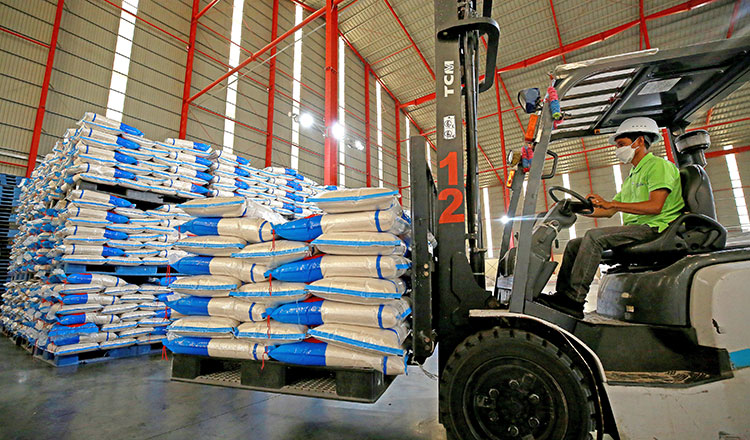
Synopsis: Strong global demand drives Cambodia’s milled rice exports to 707,471 tonnes in the first seven months of 2026. This marks a major year-on-year growth of 68 percent in shipment volume and 34 percent in total value.
Cambodia exported 707,471 tonnes of milled rice in the first seven months of 2026, earning about $415 million, government and industry figures showed Tuesday.
The shipments marked a year-on-year rise of 68 percent in volume and 34 percent in value compared with the same period in 2025.
European Union countries remained the Kingdom’s largest market by value, receiving 207,157 tonnes of milled rice worth more than $156 million, according to the report.
China and its autonomous regions imported 174,930 tonnes, valued at $103.1 million, while five ASEAN member states purchased 266,300 tonnes worth $102 million.
Cambodia also exported 59,084 tonnes of milled rice, valued at $52 million, to 25 other markets, including countries in Africa and the Middle East.
At the current pace, milled rice exports are approaching the Cambodia Rice Federation’s (CRF) target of one million tonnes for the year, CRF President Lay Chhun Hour told Khmer Times.
“Rice exports will enable Cambodia to achieve the strategic goal of promoting 1 million tonnes per year to expand international markets and boost the national economy,” Chhun Hour said, adding that strong demand from the Philippines, China and EU markets, together with sufficient export stockpiles, has driven the recent surge.
Outlining the strategic planning in promoting premium rice in the existing markets and exploring new markets for the commodity access to including the US and Middle East countries, Chhun Hour said, “Cambodia has to join in the international rice market events to promote our premium rice.”
The Kingdom had set up a 1 million-tonne milled rice export target in 2015, but it failed to achieved the target mainly due to high rice production cost in Cambodia.
The state has mandated a collaborative push to elevate Cambodian rice potential, funding targeted research to strengthen the market position of all domestic agro-exports.
The government also urged the private sector to invest in potential products to support agriculture, such as agro-fertiliser to reduce spending on imported fertilisers to help local farmers.
As Cambodian rice is increasingly appearing on supermarket shelves around the world, intensified efforts to boost production, improve quality and promote exports begin to pay off.
The CRF, in close collaboration with government agencies and its members, has stepped up measures including upgraded milling standards, stronger quality control, expanded market access initiatives and targeted marketing campaigns to showcase Khmer rice varieties abroad.
“We are very optimistic that if we work together and cooperate to promote the remaining quantity, we expect to achieve the government’s target,” he added.
Fragrant rice continued to dominate exports, accounting for 59.23 percent of milled rice shipments during the period. White rice represented 23.66 percent, broken rice 13.70 percent, parboiled rice 1.93 percent and organic rice 1.28 percent, with other varieties making up the remainder.
In addition to milled rice, Cambodia exported more than 3 million tonnes of paddy rice in the first seven months, generating estimated revenues of $665.70 million, declines of 22 percent in volume and 27 percent in value compared with the same period last year.
Latest data show Cambodia cultivates roughly 3.86 million hectares of rice fields, yielding annual paddy production of about 14.2-14.6 million tonnes.
Rice remains the country’s primary staple crop, covering over 70 percent of agricultural land and driving significant economic output.
The CRF comprises more than 240 members, including small and medium-sized mills, larger mills and exporters, and related service providers, with a mission to strengthen competitiveness and market linkages.
Additionally, the CRF highlighted growing anxieties regarding climate-driven risks, specifically citing El Niño’s potential to negatively impact agricultural yields over the coming months.
Chhun Hour credited continued success to public-private collaboration and stronger partnerships between the government and the private sector to address challenges and open new markets.
Financing remains a constraint for some rice actors, he said, citing issues with collateral requirements, short-term loans and small loan sizes.
The state-backed Agricultural and Rural Development Bank has provided about $531 million in loans to SMEs, companies, agricultural communities and value chain actors, with rice sector lending representing roughly 35 percent of the total.
Financing schemes and concessional loans aim to ease credit constraints for small and medium millers so they can scale up operations and meet export standards, ARDB said.
In 2025, Cambodia reached a record by exporting 940,321 tonnes of milled rice to 75 international markets, earning $602.41 million. The country also shipped 6.85 million tonnes of paddy rice through border trade, adding $1.58 billion in earnings.
https://www.khmertimeskh.com/501990606/rice-exports-surge-as-cambodia-nears-ambitious-1-million-tonne-target/Published Date: August 6, 2026


 READ
READ