Downloads
 Login
Login
 Register


Tags
Liquidating the aquifer: the true cost of Pakistan’s rice exports
By Mohsin Leghari
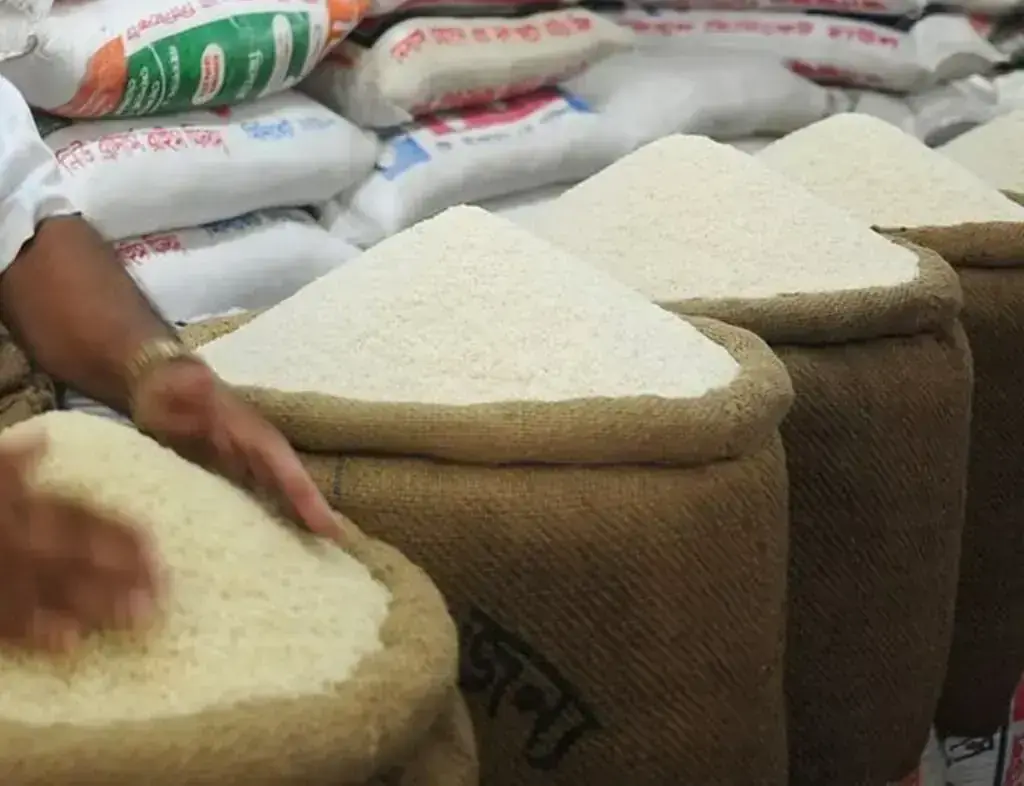
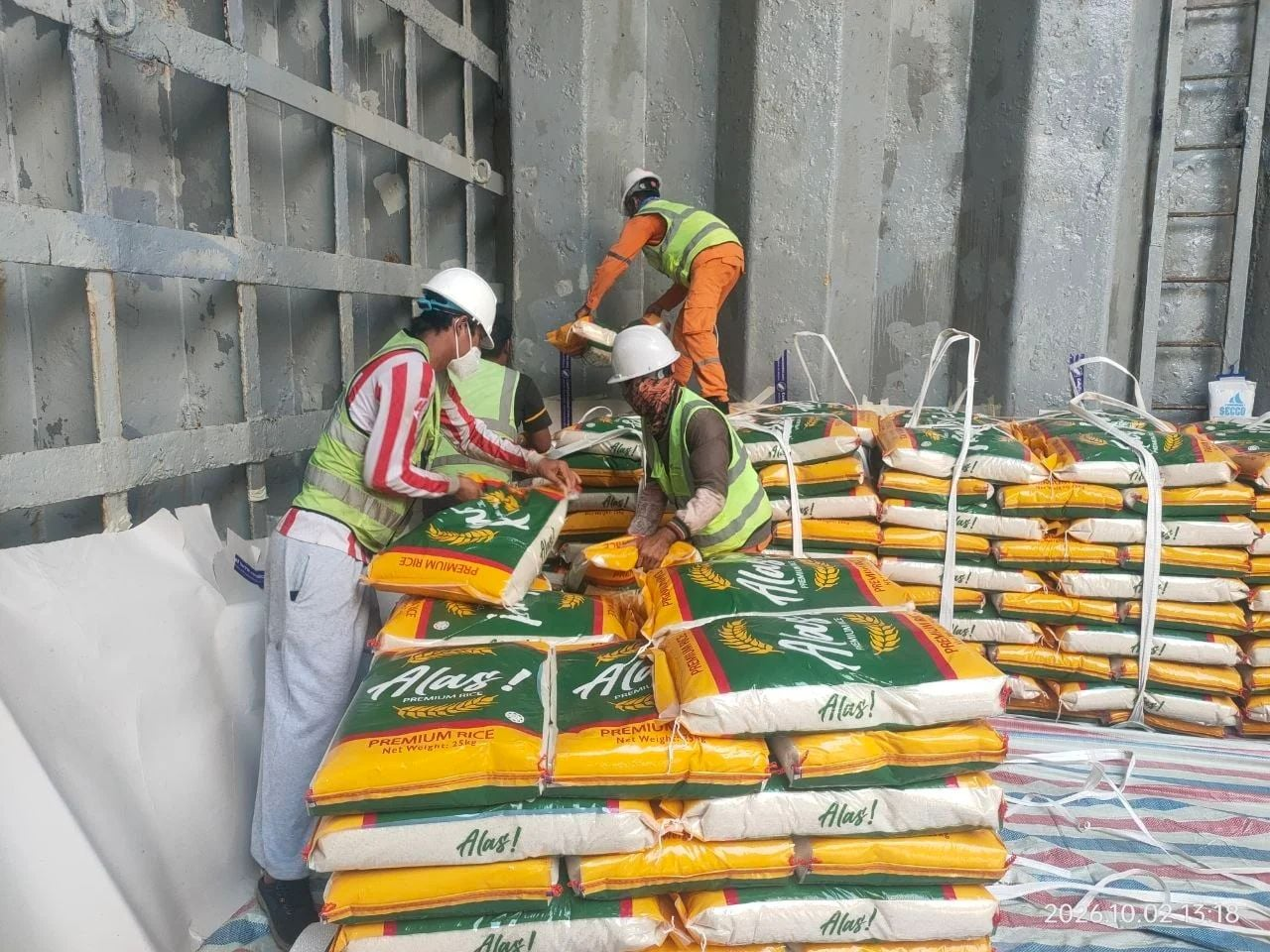
Every metric tonne of Pakistani rice exported from Karachi carries with it thousands of litres of water, much of it drawn from centuries-old aquifers. In FY 2023-24, Pakistan earned nearly $3.9 billion by exporting around 5.8 million metric tonnes of rice. The Ministry of Commerce celebrated the record figure. The Ministry of Water Resources did not, because the calculation was already incomplete.
As Pakistan navigates strict IMF conditionalities and a fragile current account, celebrating export growth secretly subsidised by the liquidation of natural capital is a dangerous macroeconomic illusion.
Those 5.8 million tonnes of rice contained approximately 14.5 trillion litres of water, calculated using the water-footprint methodology developed by Arjen Hoekstra and Mesfin Mekonnen at the University of Twente (public technical university located in Enschede, the Netherlands), applying a conservative benchmark of 2,500 litres per kilogram. In Pakistan’s irrigation-dependent production system, the overwhelming majority of that footprint is blue water drawn from rivers, canals, and aquifers. We sold that water, embedded in rice grains, for a price that reflected only the cost of seed, diesel, labour, and milling. Not once did the invoice account for what it actually cost the Indus Basin to produce it.
The accounting gap
Modern accounting recognises the depreciation of machinery and infrastructure, but rarely the depletion of groundwater, though aquifers are just as productive a form of capital. That omission makes exporting water-intensive crops look like wealth creation, when part of the income actually comes from consuming the asset base.
Pakistan’s per capita water availability has fallen from 5,260 cubic metres a year in 1951 to below 1,000 cubic metres today, according to the Pakistan Council of Research in Water Resources, crossing the Falkenmark water-scarcity threshold. In the very decade we crossed it, rice cultivation expanded to over 7.6 million acres.
The consequences are written in the bore wells, though they differ across Pakistan’s rice belt. In central Punjab, Sheikhupura, Gujranwala and Sialkot, the heartland of the basmati economy, water tables are falling by 1.5 to 2.7 metres annually as extraction outpaces recharge; Punjab Irrigation Department data comparing 2004 and 2024 shows that of thirty districts monitored, only three show rising water tables. Sindh’s rice belt faces the opposite problem: extensive canal irrigation, combined with inadequate drainage, has produced chronic waterlogging and salinity. Whether through aquifer depletion in Punjab or land degradation in Sindh, the common denominator is the inefficient use of scarce blue water.
In Sheikhupura, a basmati farmer recently installed a third tube-well to expand his acreage. His yield has never been better, his income is up, and he has no reason to know that the water table beneath his land dropped another two metres last year. The aquifer depletes invisibly; the harvest cash arrives visibly. This asymmetry is what makes liquidation feel like prosperity.
The blue water problem
Green water is rainfall, renewed each season. Blue water comes from rivers, canals, and aquifers built up over centuries. Hoekstra and Mekonnen found Pakistan’s rice footprint is predominantly blue water, roughly four times larger than the green-water component. Central and southern Punjab have crossed into chronic overdraft: withdrawals consistently exceed recharge from precipitation, seepage and return flows. This is not a temporary phenomenon reversible by a good monsoon, but the cumulative effect of decades of extraction outpacing replenishment.
The comparative disadvantage
Among major rice exporters, Pakistan ranks as one of the most blue-water intensive producers. Thailand, Vietnam, and Cambodia rely predominantly on monsoon rainfall, with blue water accounting for only 30 to 40 per cent of their footprint. Even India’s national average is substantially lower. When water is properly valued, Pakistan’s apparent comparative advantage in rice dissolves into a comparative disadvantage masked by unpriced depletion.
Egypt’s contrast: policy coherence
Egypt faces an identical hydrological reality: its rice cultivation is 97 to 98 per cent blue water dependent, drawn almost entirely from the Nile in an arid zone with virtually no rainfall. Cairo’s response has been starkly different: since 2008, Egypt has maintained an intermittent rice export ban, cut cultivation area by over 35 per cent, and criminalised unauthorised rice farming outside designated zones. Egyptian officials have stated plainly: “Growing crops like rice and exporting it is akin to exporting water, which should not be allowed for a country like Egypt.” While Pakistan removed its Minimum Export Price in 2024 to chase export opportunities, Egypt turned from rice exporter to importer. The hydrological constraints are identical; the policy coherence is not.
Policy choices, not market failure
This is not market failure. This is policy choice. No one at the trade ministry table was required to ask what filling India’s export gap would cost the aquifer, because water and agriculture remain separate files in separate ministries.
Three reforms: measure, value, reform
None of this requires a new treaty or donor financing. It requires three unglamorous policy changes, managed carefully, because rice exports deliver genuine forex, rural income and jobs.
First, measure extraction. Meter and licence agricultural tube-wells in the most water-stressed districts. Implement volumetric pricing or strict extraction quotas tied to recharge estimates. Without measuring, management is impossible.
Second, price the asset. Recognise water as an economic asset and integrate its cost into export pricing, crop selection and subsidy allocation.
Third, reform incentives. Restructure support towards less water-intensive crops, efficient irrigation and shorter-duration varieties. Punjab’s Managed Aquifer Recharge pilots channel monsoon floodwater back into the ground, laser land levelling has cut water use measurably, and Kala Shah Kaku’s Rice Research Institute is developing shorter-duration varieties. Scaling this, alongside transition support and crop insurance for farmers, can stabilise water tables without sacrificing rural livelihoods.
The domestic reckoning
Pakistan must defend its rights under the Indus Waters Treaty through every available forum. That fight is legitimate, but it should not obscure the crisis beneath our own fields. Even if Pakistan prevailed in every IWT dispute, central and southern Punjab’s aquifers would still be depleting at 1.5 to 2.7 metres a year. The groundwater collapse is a failure of domestic governance: one we can begin fixing without waiting for India to change course.
The choice ahead
Some of our most celebrated export industries may be generating far less real economic value than conventional trade statistics suggest. We are selling aquifer depletion at commodity prices, treating stock as if it were flow, capital as if it were income. Pakistan rightly devotes enormous diplomatic energy to defending its treaty rights. It should devote equal determination to protecting the water beneath its own fields. Because every container of rice that leaves Karachi Port still carries the same invisible invoice: thousands of litres of Punjab’s groundwater, priced at zero, billed to no one, and paid for by the aquifers we are leaving emptier for the next generation.
Copyright Business Recorder, 2026
https://www.brecorder.com/news/40433133Published Date: August 4, 2026


 READ
READ