Downloads
 Login
Login
 Register


Tags
Chinese scientists achieve major hybrid rice breakthrough with 100% cloning efficiency
By Du Qiongfang
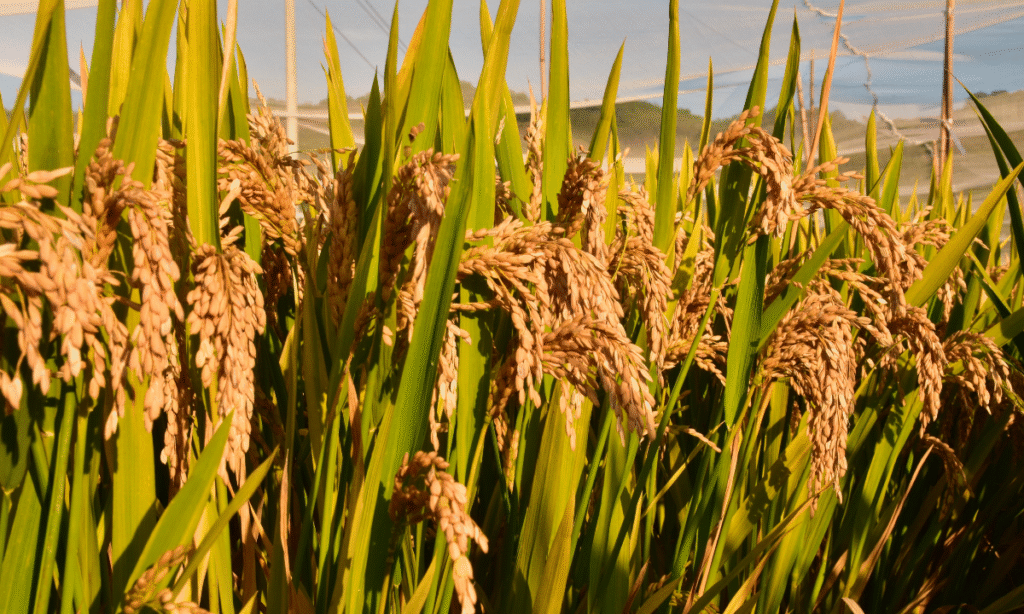
Chinese scientists have made a major breakthrough in hybrid rice breeding with the development of “clonal hybrid rice,” which demonstrates 100 percent stable cloning efficiency and normal fertility, enabling hybrid vigor to be permanently passed down through seeds. The breakthrough is expected to revolutionize hybrid rice production and bolster global food security, the Global Times learned from the research team on Thursday.
Hybrid rice achieves higher yields and greater resilience through hybrid vigor. However, the seeds of conventional three-line and two-line hybrid rice cannot be saved for replanting, as their traits separate in subsequent generations. This forces farmers to purchase new seeds every season, increasing production costs.
The new hybrid rice developed by the research team led by Wang Kejian, a professor at China National Rice Research Institute, uses synthetic apomixis to produce clonal seeds and permanently preserve hybrid vigor. By fixing hybrid vigor, the technology could achieve “one-time hybridization, lifelong use across generations.” In theory, obtaining just a single hybrid seed would allow continuous production of hybrid rice without the need for yearly seed breeding.
The study was published in the international journal Vita on July 21.
According to Wang, hybrid rice can boost yields by 10 percent to 30 percent, but its adoption remains limited due to high seed production costs. It accounts for only about 50 percent of rice cultivation areas in China and around 5 percent globally.
“Producing hybrid seeds costs 10 to 20 times more than conventional seeds, even before adding processing, storage, and transportation expenses, making the high-yield hybrid rice unaffordable for many developing regions, especially African countries where higher yields are most needed,” Wang told the Global Times on Thursday.
After years of research, the team discovered a rice gene named “Huaxu” that can trigger parthenogenesis in hybrid rice egg cells, enabling the production of haploid offspring.
Combining apomixis with a clonal gamete strategy, the team have developed hybrid rice lines with cloning efficiency exceeding 99 percent across varieties, generations, and field conditions, while maintaining normal yields.
According to Wang, the achievement has solved a globally recognized challenge in crop breeding – enabling hybrid rice to permanently preserve hybrid vigor through seeds. It is expected to fundamentally transform the traditional model of hybrid rice production, which relies on annual seed production, and provides new technological support for global food security.
In addition, the hybrid rice technology, which eliminates the need for complex annual seed production, could also give breeders more flexibility in boosting genetic diversity and strengthening resistance to climate change, diseases, and extreme weather, Wang said.
https://www.globaltimes.cn/page/202607/1366615.shtmlPublished Date: July 23, 2026



 READ
READ