Downloads
 Login
Login
 Register

Tags
Pakistan-Iran trade revival faces hurdles
Failed rice export deal highlights banking, barter challenges.
Shazia Tasneem Farooqi
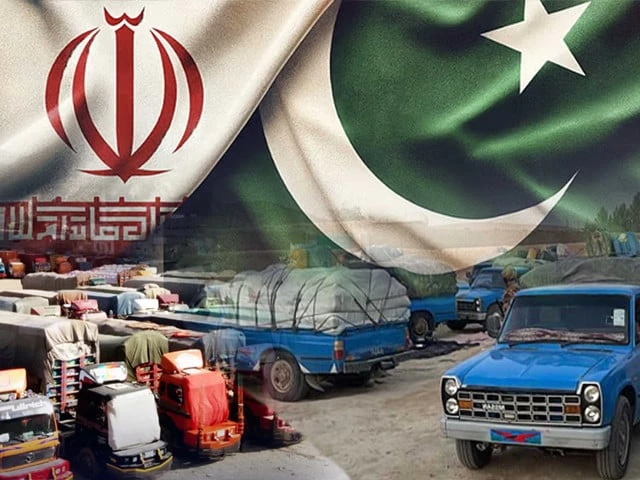
KARACHI: Amid growing discussions over the potential easing of sanctions on Iran, attention has once again turned to reviving Pakistan-Iran trade, with both countries having previously expressed ambitions to increase bilateral trade to $10 billion.
Pakistan and Iran enjoyed robust trade relations before sanctions on Tehran intensified more than a decade ago, with bilateral trade surpassing $1.2 billion in FY10. However, tightening restrictions, including banking and financial sanctions, severely curtailed formal trade flows. Both countries could revive trade supported by greater economic engagement and the planned development of border Special Economic Zones, according to a report by Topline Securities.
Pakistan is well-positioned to benefit from trade normalisation, given Iran’s demand for products in which Pakistani exporters enjoy a competitive advantage, including rice, maize, fruits and vegetables, textiles, pharmaceuticals and surgical goods.
Energy trade key to value
However, Head of Research at KTrade Fawad Basir told The Express Tribune that increasing trade with Iran will take time, as the initial challenge will be formalising smuggling channels, particularly for petrol and diesel. Food trade may take off immediately, but the primary trade value driver will be energy-related trade. “The opportunity is there to ease our import bill, particularly for energy, however meaningful development on these channels may take a while before trade actually takes off,” he said.
While the $10 billion target appears ambitious, Basir said a more realistic near-term objective would be around $2 billion. “Once operational and financial modalities are established, trade can gradually expand into more lucrative sectors,” he said.
Failed export deal
A trading firm has revealed how a multi-million-euro rice export deal with Iran’s Government Trading Corporation (GTC) was undermined by the absence of formal banking channels and a rigid barter arrangement involving Iran’s power utility TAVANIR and Pakistan’s Central Power Purchasing Agency.
Transtrade Global CEO Hassan Ahmed shared with The Express Tribune that due to Iran’s isolation from international markets, GTC contracts are often written in Persian, creating an additional hurdle for exporters. “The Euro 18.675 million export transaction was linked to a proposed barter arrangement involving electricity imports from Iran, under which payments for rice exports were to be settled through dealings between Iran’s power utility and Pakistan’s CPPA-G, adding complexity to an otherwise straightforward commercial transaction,” Ahmed said. Documents seen by The Express Tribune support his account. Even if the arrangement was based on barter trade, Pakistan could have negotiated the removal of certain conditions rarely seen in normal trade agreements, he said.
The deal required multiple layers of inspection, including final mandatory clearance by an Iranian agency at Bandar Abbas port. According to Ahmed, the condition placed substantial risk on exporters, as cargo would already have left Pakistan by the time the final inspection took place. Any rejection could leave exporters exposed to significant losses with little recourse. “It was unfortunate that the government of Pakistan could not take a strong stance in favour of its own exporter,” he regretted.
Trade projection
Basir said growing momentum towards a US-Iran understanding has revived discussions on expanding Pakistan-Iran trade, particularly after the Board of Investment indicated bilateral trade could eventually reach $10 billion. Stronger economic ties could also support energy cooperation and infrastructure development.
Before sanctions disrupted trade, Pakistan exported rice, meat, paper, textiles, fruits and surgical goods to Iran, while importing chemicals, plastics, oil, iron and steel products. “The normalisation of trade relations would open a significant market for Pakistani exporters and deepen economic ties with a key regional neighbour,” Basir added. Pakistan has identified five cross-border trading centres – Taftan-Minjaveh, Ladgasht-Jalaq, Parome-Kuhak, Mand-Peshin, and Santsar-Nobandan – designed to formalise trade at concessional customs rates.
Gas pipeline
The Iran-Pakistan gas pipeline would deliver up to 750 million cubic feet of natural gas per day, addressing Pakistan’s chronic energy deficit and driving industrial growth, KTrade analysts said. However, Topline cautioned that the long-delayed pipeline is unlikely to see immediate progress. Any revival would require not only the easing of sanctions but also a renegotiation of pricing and contractual terms to make it commercially viable for Pakistan.
https://tribune.com.pk/story/2615184/pakistan-iran-trade-revival-faces-hurdlesPublished Date: June 26, 2026


 READ
READ