Downloads
 Login
Login
 Register


Tags
CORPORATE WINDOW : Saving Basmati exports
Shamsul Islam Khan

Pakistan’s rice exports are no longer slowing down — they have already collapsed. Rice exports from Pakistan to all global destinations have fallen nearly 50 per cent in the first half of FY26. This is not a cyclical dip; it is a systemic failure. If this trajectory continues, Basmati — the country’s flagship geographical indication agricultural export — will soon be reduced to a nostalgic footnote rather than a viable industry. The country’s export managers have relied on ‘steroids’ of rebates and duty drawbacks to drive volume since the 1960s, rather than making our exports efficient, value-added and diversified to promote export culture in the country.
Yet, instead of confronting the structural causes of the decline, the government has once again chosen the most convenient and least effective option: export rebates under the Duty Drawback of Local Taxes and Levies (DLTL) scheme. This policy may create the illusion of action, but in reality, it deepens distortions, rewards hoarders, punishes consumers, and accelerates Pakistan’s loss of global market share — particularly to India, our only Basmati competitor.
Rebates that inflate prices, not exports
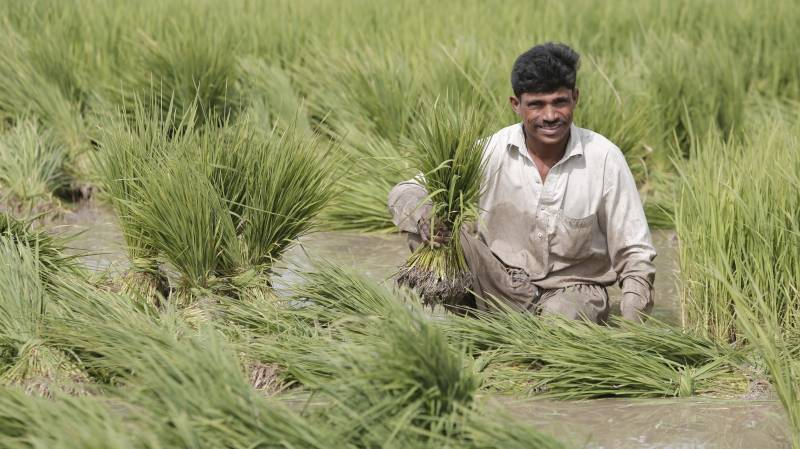
DLTL is being sold as an export revival tool. In truth, it is a post-harvest windfall for stockists. Paddy procurement for the current cycle has been largely completed; the crop has shifted hands from rice growers to paddy stockists, shellers and rice millers. Rice paddy stocks are now in silos and warehouses locked by large traders and middlemen. Any incentive announced at this stage cannot reach growers, who already sold their produce months ago under depressed prices and rising input costs.
Pakistan’s rice exports are being taxed into decline, and only structural reform — not stopgap rebates — can revive a sector edging toward permanent loss
What DLTL does achieve is predictable: hoarders will restrict supply to earn premium open-market Basmati, and the price of other rice will surge, inflaming food inflation.
In effect, the Pakistani consumer is being forced to subsidise rice exporters who have not made themselves efficient or capable of adding value to the rice stalk, husk, bran or broken rice by-products compared with regional peers, while rice growers — the backbone of the sector — remain excluded from the incentive chain.
This is not export promotion; it is rent distribution and promotion of rent seekers.
Painkillers for a terminal disease
Pakistan’s rice exports are suffering from chronic ailments: the punitive withholding tax was doubled. Energy costs, expensive financing, inflated inland transport costs, and rising farm input prices are not minor irritants, they are competitiveness killers.
Instead of addressing them, the government is prescribing DLTL as if it were a cure-all. It is not. At best, it is a painkiller. At worst, it accelerates the disease by distorting prices and delaying reform.
A sector battling declining productivity and shrinking market share does not need rebates; it needs cost correction.
The offshore profit problem
There is another uncomfortable truth policymakers continue to ignore. A significant number of Pakistani rice exporters have established overseas entities using export refinance to re-route their exports through the United Arab Emirates, Kenya, Madagascar and other African countries.
Under rebate-driven regimes, exporters invoice shipments to their own overseas entities and will switch bill of lading and invoice to the eventual buyers. Furthermore, declared prices are inflated to maximise rebates. Bigwigs will enjoy the blessings of DLTL, while small exporters will vanish entirely from rice exports.
Importers will not get any low-priced rice incentive, hence India will continue to grab our market share. Pakistan does not gain competitiveness. The fiscal burden, however, remains entirely domestic.
India: the unforgiving competitor
While Pakistan is debating rebates, India is executing policy. India has already overtaken Pakistan in both coarse and premium Basmati rice markets, including segments traditionally dominated by Pakistani Basmati in the UK, EU, Saudi Arabia, UAE and other Gulf Cooperation Council countries. Lower costs, predictable policies, and scale efficiencies have allowed Indian exporters to capture the shelf space Pakistan once owned.
India does not rely on rebates to sell rice; it offers farm subsidies to reduce production costs. The area under cultivation is increasing, as well as the per-acre yield. India relies on cost competitiveness. Pakistan relies on DLTL incentives because it refuses to fix rising farm input costs.
The real reform agenda
If the objective is a genuine export revival, the path is an obvious one. First, withholding taxes on rice exports must be abolished to restore liquidity. Second, exports should be placed under a self-assessment scheme as previously. Third, tax income, not export sales turnover. Fourth, reduce energy tariffs for all exporters to regional benchmarks. And fifth, shift from trader-centric incentives to grower-centric productivity support.
Furthermore, currently, exports are heavily taxed. Tax collections are largely made from rice exports of around $3 billion, while local rice trading of around $9bn is hardly taxed at all. Taxing domestic consumption over exports would stabilise domestic prices by reducing hoarding profiteering through domestic trade. There are thousands of local brands in domestic markets spread from Akbari Mandi Lahore to Peshawar, Rawalpindi, Faisalabad, Multan, Bhawalpur, Sukkur, Hyderabad and Karachi, but tax collections from rice in these markets are negligible compared to rice exports.
A sector on life support does not need another rebate. It needs surgery. And the longer policymakers delay, the closer Pakistan comes to losing one of its most valuable agricultural exports — permanently.
The writer is a former vice president of KCCI and a commodities and international trade expert
Published in Dawn, The Business and Finance Weekly, February 2nd, 2026
https://www.dawn.com/news/1970572/corporate-window-saving-basmati-exportsPublished Date: February 2, 2026


 READ
READ