Downloads
 Login
Login
 Register


Tags
Philippines to cut rice imports in 2026 amid record output
The Department of Agriculture (DA) expects Philippine rice imports in 2026 to fall below 4 million metric tons, as domestic palay production is forecast to reach an all-time high of 20.3 million metric tons.
Agriculture Secretary Francisco P. Tiu Laurel Jr. said imports next year will likely range between 3.6 million and 3.8 million metric tons. He noted this volume would be sufficient to meet national demand while protecting farmgate prices.
At a consultative meeting with rice importers Monday, Tiu Laurel presented a calibrated importation plan designed to stabilize rice prices for consumers and ensure profitability for farmers—an approach supported by stakeholders.
The DA’s 2026 palay production target is nearly equal to the 20.3 million metric tons originally set for 2025. That goal is now unlikely to be met due to flooding and other weather disruptions. The country’s record harvest stands at 20.06 million metric tons, achieved in 2023.
Ahead of the lifting of a four-month rice import ban at the end of 2025, the Bureau of Plant Industry (BPI) will begin processing Sanitary and Phytosanitary Import Clearances (SPICs) for 500,000 metric tons, including 50,000 metric tons allocated for government agencies.
All import shipments under these clearances must arrive by mid-February 2026 to avoid affecting palay prices during the summer harvest.
Once the ban ends, rice tariffs will increase to 20 percent from 15 percent, following a policy agreement among President Ferdinand Marcos Jr.’s economic team.
“The tariff increase reflects several realities—the recent depreciation of the peso and the likelihood of higher global prices once the Philippines reenters the market,” Tiu Laurel said.
To ease financial pressure on rice traders, the DA will suspend the 10-percent down payment usually required for SPIC issuance.
Rice imports for the January–February 2026 window will be limited to 17 designated ports: Manila, Batangas, Tacloban, Bacolod, Iligan, Cagayan de Oro, Davao, Zamboanga, Cebu, Iloilo, Capiz, Tagbilaran, Dumaguete, Subic, Calbayog, General Santos, and Tabaco.
Tiu Laurel also encouraged diversification of supply sources. “Instead of relying almost entirely on Vietnam, we encourage importers to consider Cambodia, Myanmar, and other non-traditional suppliers,” he said.
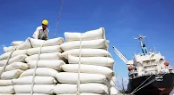
The Philippines liberalized rice imports under the Rice Tariffication Law. In 2024, the country imported a record 4.8 million metric tons—a 33 percent increase from 2023—as traders anticipated reduced harvests caused by El Niño and La Niña weather patterns.Due to a government-imposed import freeze that began in September 2025, total rice imports this year are expected to drop to around 3.5 million metric tons, according to the BPI.
Tiu Laurel said the surge in 2024 imports—1.2 million metric tons above the previous year—combined with heavy arrivals in early 2025, contributed to a steep drop in palay prices and squeezed farmers’ incomes.
The U.S. Department of Agriculture has projected Philippine rice imports at 5.5 million metric tons for the 2025–2026 marketing year. However, with the import ban in place and the DA committed to tighter volume management, that estimate is becoming increasingly unlikely.
https://dailyguardian.com.ph/philippines-to-cut-rice-imports-in-2026-amid-record-output/Published Date: December 21, 2025


 READ
READ