Downloads
 Login
Login
 Register


Tags
Why Rice Prices Are Rising in Indonesia Despite Claims of Self-Sufficiency
Reporter – M. Faiz Zaki
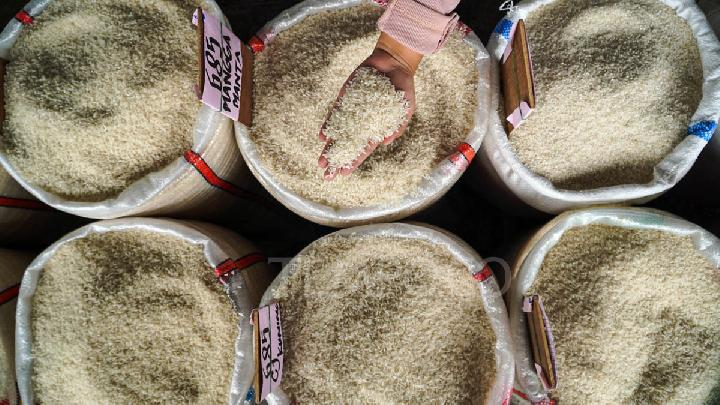
TEMPO.CO, Jakarta – Researcher from the Center of Reform On Economics (CORE) Indonesia, Eliza Mardian, said that the price of Harvested Dry Grain (GKP) at Rp6,500 per kilogram affects the increase in rice prices even though Indonesia had achieved rice self-sufficiency at the end of December 2025. Previously, the price was around Rp5,000 per kilogram. “When there is an increase in the price of paddy, it means there is an increase in production costs for milling,” she said when contacted on Thursday, January 8, 2026.
According to Eliza, consumer prices will also increase to adjust because middle-class consumers will prioritize profit margins. However, there are both positive and negative sides, namely an improvement in the welfare of farmers as the exchange rate for farmers was previously low. But the consequence is that consumer prices will rise.
She believes that upper-middle-class consumers have no problem with rice price increases because there is a corresponding increase in paddy prices. The problem lies with lower-middle-class consumers because their income does not adjust along with inflation, causing their purchasing power to diminish. “Especially lower-middle-class individuals spend nearly 60 percent of their income on food. Even a slight increase in rice prices is keenly felt,” said Eliza.
She believes it is the government’s job to ensure the well-being of farmers and the purchasing power of lower-middle-class consumers. Therefore, the government’s rice reserve, the State Logistics Agency (Bulog), must distribute rice optimally through extensive market operations at various points.
Market operations need not be directed solely to markets with high consumer purchasing power. As the operations progress, the government needs to distribute rice in smaller packaging, between 1-2 kilograms, replacing the 5-kilogram rice packaging under the Food Supply and Price Stabilization (SPHP) program.
Another issue, according to Eliza, is that Bulog must promptly distribute its existing stock and not let it accumulate. “So that lower-middle-class individuals do not feel disappointed because they also have a right to receive quality rice for consumption,” she remarked.
Previously, President Prabowo Subianto claimed that Indonesia had achieved rice self-sufficiency at the end of 2025. He said this was the fastest achievement compared to the previous plan of up to four years. “Our four-year target was achieved in just one year,” he said on Monday, January 5, 2026.
Despite being declared self-sufficient, Statistics Indonesia (BPS) noted a surge in rice prices at the retail, wholesale, and milling levels. Deputy for Distribution and Service Statistics at BPS, Pudji Ismartini, said that on average, the price of rice in December 2025 increased compared to December 2024.
“The rice prices we convey are the average prices of rice that cover various qualities and regions throughout Indonesia,” she said at a BPS press conference on Monday, January 5, 2026.
BPS recorded the average retail rice price in December 2025 at Rp15,061 per kilogram. This figure rose by 3.68 percent compared to December 2024.
Meanwhile, at the wholesale level, the average rice price in December 2025 was Rp14,162 per kilogram, a 5 percent increase from December 2024.
At the milling level, the average rice price in December 2025 was Rp13,488 per kilogram, showing a 6.38 percent increase from December 2024.
https://en.tempo.co/read/2079165/why-rice-prices-are-rising-in-indonesia-despite-claims-of-self-sufficiency?utm_source=Digital%20Marketing&utm_medium=BabePublished Date: January 9, 2026


 READ
READ