Downloads
 Login
Login
 Register


Tags
Wholesale rice prices ease on record Aman harvest hopes, but retailers still unmoved
Shahadat Hossain
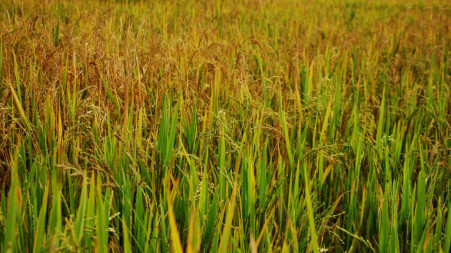
Farmers say they are struggling to secure fair prices for paddy despite persistently high rice prices.
Highlights:
- Wholesale prices of coarse, medium rice fall in Dhaka with arrival of new Aman harvest
- Retail rice prices remain largely unchanged despite wholesale decline
- Retailers say new-season rice has not fully reached shops yet
- Farmers say they are not getting fair prices for paddy
Wholesale prices of coarse and medium-grade rice have declined in the capital as newly harvested Aman rice enters the market, but retail prices remain largely unchanged and premium varieties continue to sell at higher prices despite expectations of record production.
At the capital’s wholesale markets, coarse Swarna rice is selling at Tk49-50 per kg, while medium varieties such as Paijam and BR-28 are selling at Tk50-52. In contrast, fine rice prices remain elevated, with Miniket selling at Tk78-80 per kg and Nazirshail at Tk75-85, depending on quality.
Polao rice has recorded the steepest rise, increasing by Tk6-10 per kg in a week to Tk120–130. Traders report that prices have jumped by Tk20-25 per kg over the past two to three months, citing lower output of aromatic and fine varieties this season.
“Arrival of Aman rice has eased prices of coarse varieties, but atap and polao rice have been expensive for months due to lower production,” said Mohammad Shawon, a wholesaler at Dhaka’s Karwan Bazar.

Infograph: TBS
Despite the wholesale decline, retail prices have yet to reflect the change. A visit to several markets in Dhaka found Swarna selling at Tk54-60 per kg, BR-28 and Paijam at Tk58-68, and fine rice varieties at Tk70-85 – largely unchanged from last month. Retailers said new-season rice has not fully reached shops and prices would adjust within a week.
Md Alauddin, a trader from Shahjadpur in the capital, said, “New rice has not arrived in the shops yet. That is why they are being sold at the previous prices. If the wholesale prices decrease, the retail prices will also decline.”
Prices have also started to soften at the mill level. In Naogaon’s Aratdarpatty, the country’s largest rice hub, Swarna-5 prices have fallen by at least Tk3 per kg. Meanwhile, prices of Jirashail and Sampa Kataribhog rice produced from the last Boro crop have remained stable at Tk66-68 and Tk68-72 per kg, respectively, for three months.
Traders attribute the softer market to government-approved rice imports that continued until 30 November, increasing supply and exerting downward pressure on local prices. While Aman farmers initially faced losses, traders say paddy prices have begun to improve after imports were halted.
Record yield expected
Agriculture officials expect Aman rice production to exceed the target of 1,81,75,000 tonnes this year. According to the Department of Agricultural Extension (DAE), Aman was cultivated on 59.23 lakh hectares, with harvesting completed on 51.68 lakh hectares so far, yielding around 1.61 lakh tonnes of rice at an average of 3.11 tonnes per hectare.
“This year has seen a bumper Aman harvest,” said Md Obaidur Rahman Mondol, director of the DAE’s field wing. “Losses from natural disasters were minimal, and production will surpass the target.”
Farmers’ distress and market control
Farmers say they are struggling to secure fair prices for paddy despite persistently high rice prices. In Naogaon’s Mahadebpur upazila, farmer Rezaul Islam said his production cost stood at Tk850 per maund, while he is selling paddy at a maximum of Tk1,260.
“After all the hard work, a profit of Tk410 per maund is not enough amid rising living costs,” he said, warning he may abandon cultivation if prices do not improve.
Another farmer, Shamsher Ali from Raninagar of the same district, said repaying loans after selling paddy would leave him with nothing in hand.
SM Nazer Hossain, vice-president of the Consumers Association of Bangladesh (CAB), said, “Rice prices have remained abnormally high for nearly two years, yet farmers are deprived of fair paddy prices.”
He alleged that large mill owners benefit by buying paddy cheaply and selling rice at inflated rates while the government fails to effectively regulate the market.
Nazer also said there is no justification for the current spike in polao rice prices.
[TBS Bogura correspondent Khorshed Alam contributed information to the report]
https://www.tbsnews.net/agriculture/wholesale-rice-prices-ease-record-aman-harvest-hopes-retailers-still-unmoved-1313746Published Date: December 19, 2025


 READ
READ