Downloads
 Login
Login
 Register


Tags
UP, PES: Supply chain woes curb gains from lower rice tariffs
By: Nyah Genelle C. De Leon
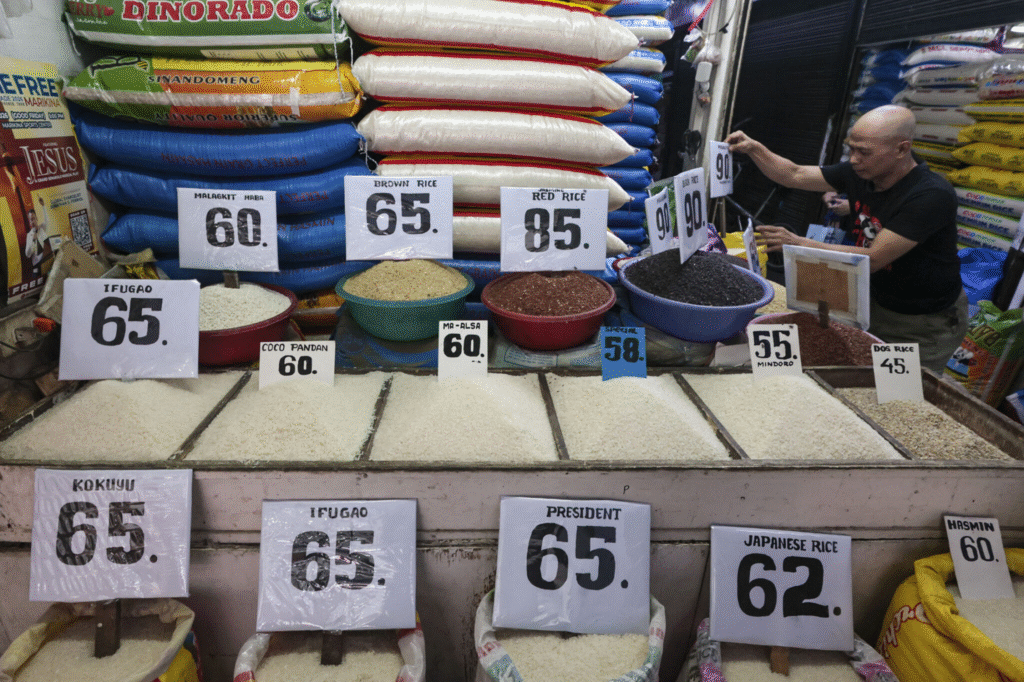
MANILA, Philippines – Weak competition and supply chain bottlenecks continue to negate the impact of lower tariffs and cheaper global rice prices on local retail rice prices, economists from the University of the Philippines and the Philippine Economic Society said.
In a study published in the Philippine Review of Economics, the economists found that consumers have received only part of the savings from lower import costs despite the liberalization of rice trade.
“This disconnect—tariff cuts without commensurate consumer gains—points to the role of competition and market structure in shaping price outcomes,” they said.
“In well-functioning markets, reductions in import costs are expected to pass through quickly and proportionately to consumers. However, when markets are concentrated or characterized by dominant intermediaries, this transmission may be weakened,” they added.
The Philippines replaced rice import quotas with tariffs in 2019 under the Rice Tariffication Law, cut the rate to 15 percent in 2024 under Executive Order No. 62, and later adopted a flexible 15- to 35-percent tariff regime under Executive Order No. 15.
Structural barriers
However, the economists said weak competition and supply chain inefficiencies have prevented households from fully benefiting from cheaper imports.
The study identified inadequate storage, fragmented logistics and poor inventory management as key constraints. It also said hoarding, strategic stockpiling and possible trader coordination allow some market players to keep the gains from lower import costs instead of passing them on to consumers.
“The literature shows that tariffs alone are insufficient for lowering consumer prices amid supply chain rigidities, poor infrastructure, and concentrated market power,” the study said.
“Price rigidity during liberalization is especially apparent in agricultural markets, where politically connected traders and ineffective regulatory oversight persist,” it added.
The economists also warned that frequent tariff and import policy changes create uncertainty and distort markets.
They urged the government to strengthen the Philippine Competition Commission’s enforcement against anti-competitive practices and continue investing in supply chain infrastructure.
“Transparent and predictable tariff and import regimes can reduce uncertainty, limit opportunities for arbitrage, and support more efficient market functioning. Where seasonal tariff adjustments are used, they should follow pre-announced, rule-based frameworks to minimize policy-induced volatility,” they said.
“Ultimately, the findings point to a broader conclusion: stabilizing food prices requires more than opening markets—it requires making markets work,” they added. /pai INQ
https://business.inquirer.net/598676/up-pes-supply-chain-woes-curb-gains-from-lower-rice-tariffsPublished Date: July 3, 2026



 READ
READ