Downloads
 Login
Login
 Register

Tags
Telangana Rice Exports Get a Boost Through G2G Deal With Philippines
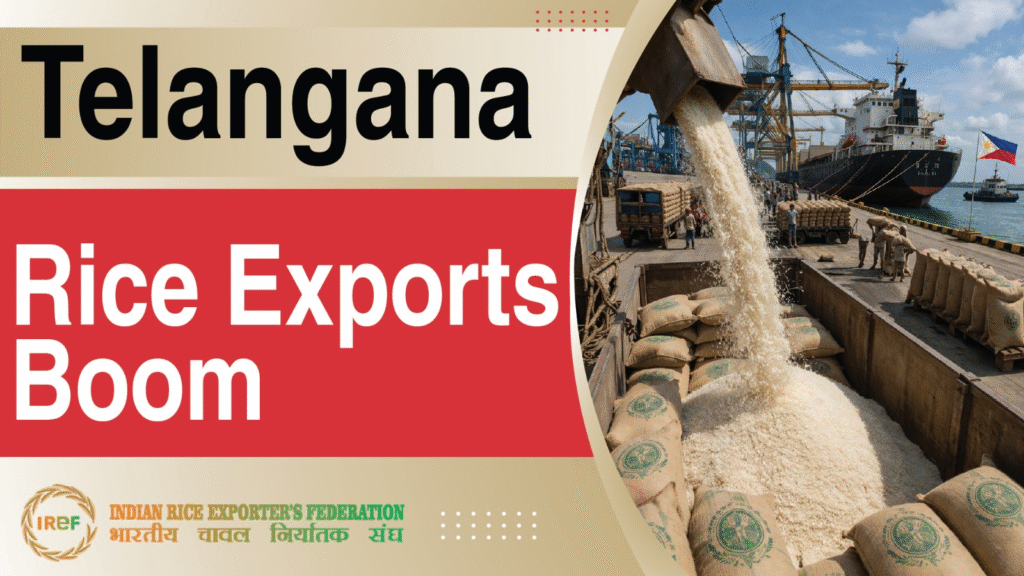
Telangana rice exports have received a major boost as the state signed a government-to-government (G2G) agreement with the Philippines, turning a surplus rice crisis into a strategic trade opportunity. The move comes at a time when Telangana was grappling with excess procurement, rising storage pressures, and delayed lifting by the Food Corporation of India (FCI). Traditionally, FCI procurement delays had created a financial burden on the state government, with surplus stocks occupying warehouse space and increasing interest costs. By entering global markets directly, Telangana rice exports are now helping the state convert surplus rice into profitable revenue, while also providing farmers with better price realization for their produce.
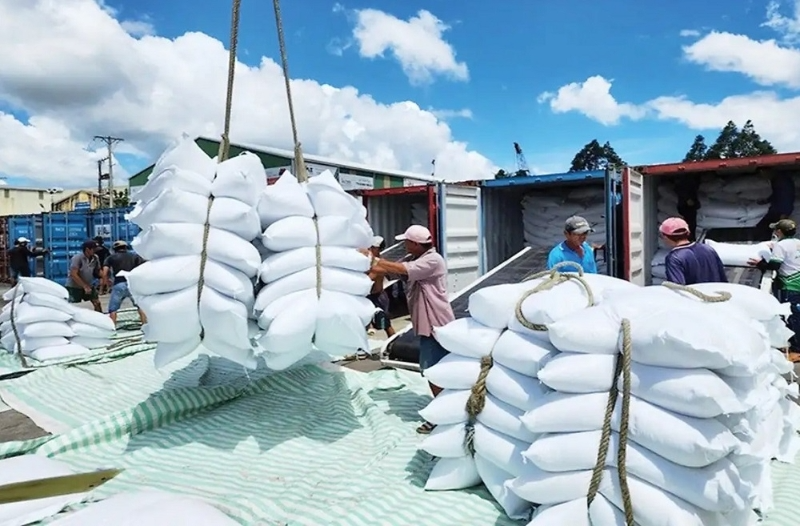
The first consignment under this agreement, consisting of 22,750 metric tonnes, has already been dispatched to the Philippines, generating around ₹81.9 crore. Officials highlighted that the deal secured a price of ₹3,600 per quintal, which is significantly higher than the domestic market rates for similar varieties. In comparison, rice of the same quality was reportedly selling for around ₹3,000 per quintal in Andhra Pradesh and between ₹1,800 and ₹1,900 per quintal in Chhattisgarh. This pricing advantage not only strengthens the case for Telangana rice exports but also demonstrates how direct government-to-government deals can outperform traditional domestic auctions in terms of profitability and efficiency.
Telangana Rice Exports Surge: Turns Surplus Crisis Into Opportunity
Telangana is one of India’s largest paddy-producing states, with an estimated production of around 280 lakh metric tonnes this year. During the Kharif season, the state government procured a record 72 lakh metric tonnes at Minimum Support Price (MSP). However, FCI agreed to lift only about 54 lakh metric tonnes, leaving a substantial surplus of roughly 86 lakh metric tonnes in state warehouses. This accumulation created logistical challenges, increased storage costs, and added financial pressure on the state exchequer, highlighting the urgent need for an alternative strategy. To address this surplus, the Telangana government adopted a direct export model, marking a significant shift in the way states can handle excess agricultural produce. Under the G2G framework, Telangana rice exports to the Philippines are planned to reach 1 lakh metric tonnes, with the first shipment already dispatched successfully. The move has several immediate benefits: it provides farmers with assured MSP procurement, reduces the risk of storage losses, improves the state’s revenue collection, and strengthens Telangana’s credibility in international markets. Experts note that this approach also highlights the growing importance of government-to-government trade in agriculture, where institutional support ensures quality standards, reliability, and consistent delivery—advantages that private exporters may not always guarantee at scale.
Global Demand and Future Potential
The Philippines has already expressed interest in additional procurement, with trade estimates indicating that demand could reach 20 lakh metric tonnes in 2026. This signals a strong long-term growth potential for Telangana rice exports, establishing the state as a key player in the global rice market. The initiative not only benefits farmers through better price realization but also provides the state government with a reliable avenue to manage surplus stocks efficiently.
From a broader perspective, the success of Telangana’s G2G deal presents a potential roadmap for India’s rice export strategy. While India accounts for approximately 40–45% of global rice exports, the majority of trade has traditionally been conducted by private exporters. Telangana’s model shows that state-led exports can complement private trade, particularly during periods of surplus accumulation or market stress. Analysts suggest that other major rice-producing states such as Punjab, Haryana, Andhra Pradesh, and Chhattisgarh could replicate this model, enabling them to directly access international markets, stabilize prices, and strengthen India’s position in global rice trade.
Moreover, the initiative underlines how surplus agricultural production can be leveraged as a strategic economic opportunity rather than a burden. By combining institutional support with market demand, Telangana has created a win-win solution for farmers, the state government, and international buyers, ensuring sustainable growth for its rice exports while enhancing India’s agricultural diplomacy.
Conclusion
Telangana rice exports under the G2G framework highlight a new approach to managing surplus agricultural stocks. The Philippines deal has not only addressed immediate storage and financial challenges but also opened a long-term pathway for India’s rice export strategy. With growing global demand and a strong institutional framework, this model has the potential to transform India’s agricultural trade landscape, demonstrating how strategic government intervention can complement private trade and strengthen farmer incomes.
https://iref.net/news/telangana-rice-exports-g2g-philippinesPublished Date: March 26, 2026


 READ
READ