Downloads
 Login
Login
 Register

Tags
Special to the Express | Punjab’s export engine faces strain amid shifting global trade winds
Tariff shocks, narrow markets and slow diversification expose Punjab’s vulnerabilities despite recent policy gains.
Written by Deepratan Singh Khara and Anmol Rattan Singh
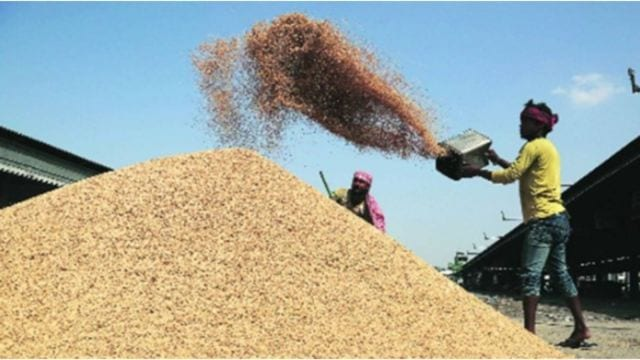
Amid fresh tariff realignments, stricter sustainability norms and supply-chain reordering triggered by renewed geopolitical frictions, Punjab finds itself on the frontlines of global trade uncertainty. Exporters of basmati rice and auto components, two of the state’s leading sectors, report shrinking margins, shipment delays and contract renegotiations. With nearly 15 per cent of Punjab’s exports headed to the United States, the tariff changes have disrupted trade flows and exposed the risks of relying on a limited set of markets and products. The developments highlight a structural vulnerability: Punjab’s narrow export base leaves it highly exposed to global policy shocks.
Punjab’s merchandise exports rose from $5.79 billion in 2017-18 to $6.74 billion in 2023-24. However, the state’s share in India’s total exports declined from 1.9 per cent to 1.5 per cent. Ranked 14th nationwide in export value, Punjab continues to underperform relative to its production and industrial potential.
The export composition shows both diversification and dependence. Engineering goods now anchor the state’s export basket, increasing from 29 per cent in 2017-18 to over 41 per cent in 2023-24. Yet Punjab’s share in India’s engineering exports has risen only marginally, from 2.1 per cent to 2.5 per cent, which reflects strong specialisation but limited national scale.
Textiles, once central to Punjab’s export identity, have declined from 31 per cent to 21 per cent because of higher production costs, intense competition and rising compliance requirements, even though the sector still supports small manufacturers and a large workforce. Agricultural exports have also fallen, from 26 per cent to 18 per cent, with climatic variability and non-tariff barriers restricting consistent growth.
Electronics and IT-enabled services are gaining momentum, particularly in the Mohali-Derabassi corridor. Electronics shipments have grown steadily, and IT exports have increased from $50 million in 2017-18 to more than $300 million in 2023-24, strengthening Mohali’s position as a digital export hub (PANJ Foundation report). Despite this diversification, Punjab’s market base remains narrow. More than one-third of export value goes to the United States, Saudi Arabia and the United Kingdom, and half of all exports are confined to 10 countries.
Policy readiness has improved
Punjab moved from rank 18 in 2020 to rank 10 in the NITI Aayog Export Preparedness Index in 2022. The next challenge is to translate this into sustained performance. The India-United Kingdom Free Trade Agreement, which was signed in July 2025, offers new opportunities for engineering, textiles and agro-processing through duty concessions and improved access to the UK market. With adequate institutional support and quality assurance systems, the agreement can help Punjab integrate more effectively with European value chains.
Export activity continues to be concentrated in a few districts. Ludhiana remains the principal hub, followed by Mohali and Jalandhar, and together they account for nearly two-thirds of the state’s exports. Punjab has expanded its logistics ecosystem with Inland Container Depots in Ludhiana, Jalandhar, Amritsar and Bathinda, connecting industrial clusters to western seaports. Air connectivity has improved through the Amritsar and Chandigarh international airports, and the upcoming Halwara airport is expected to boost the movement of time-sensitive and perishable cargo. Even so, long overland distances to ports remain a structural disadvantage.
Overland trade
Overland trade through the Attari Integrated Check Post in Amritsar continues to be an important regional asset. Before recent border disruptions with Pakistan, the corridor had shown strong potential. Total trade through Attari grew from $260 million in 2022-23 to more than $440 million in 2023-24. Greater regional stability could reduce dependence on seaports and expand connectivity with Central Asian and Eurasian markets.
To build resilience, Punjab must widen its export identity beyond traditional sectors. Expanding the portfolio of Geographical Indication (GI) products, beyond Basmati rice and Phulkari embroidery, through focused certification, branding and market development can strengthen the state’s global positioning. Under the District as Export Hub initiative, GI-linked processing and marketing centres can reinforce rural linkages and broaden the export base.
Sustained competitiveness will require an integrated strategy that combines diversification, technology adoption, logistics efficiency and sustainability. Design-linked incentives, digital innovation and research collaborations can raise value addition in engineering, electronics and agro-processing. At the same time, improved logistics, regulatory coherence and environmental compliance will be essential for aligning Punjab’s trade expansion with global standards.
(Deepratan Singh Khara is an Assistant Professor of Economics at SGGS College, Chandigarh, and Anmol Rattan Singh is the Co-Founder of Punjab-based policy research think tank PANJ Foundation.)
https://indianexpress.com/article/cities/chandigarh/punjab-export-global-trade-winds-10407438/Published Date: December 7, 2025


 READ
READ