Downloads
 Login
 Register


Rice prices fall 10% in North Korea after harvest
Daily NK’s market survey finds rice at 45,300 won per kilogram, still more than twice the price a year ago
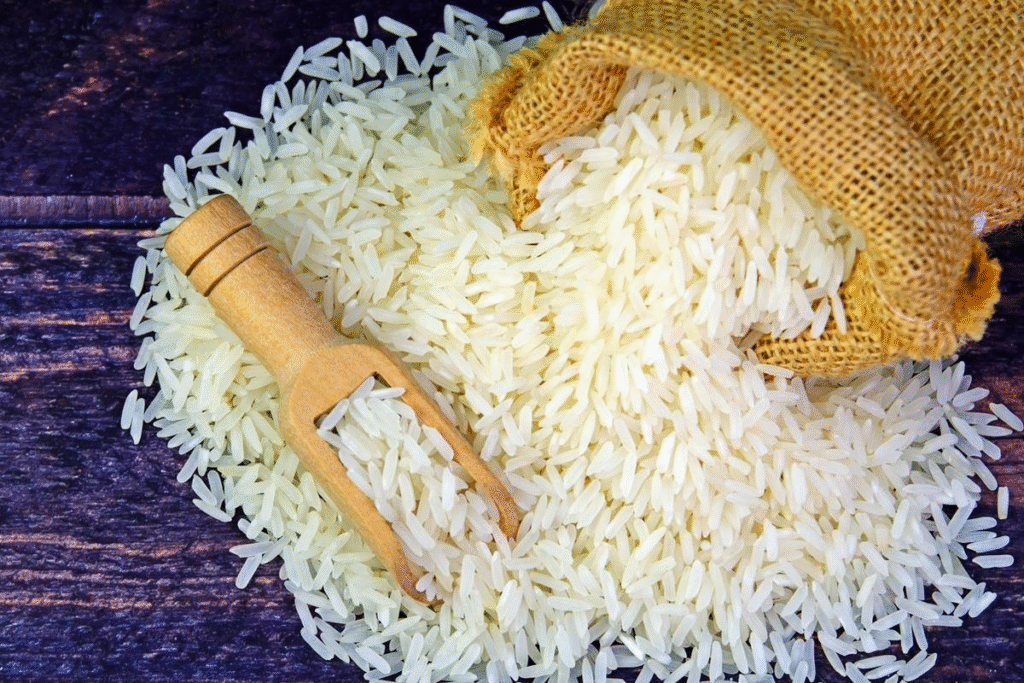
Rice prices in North Korean markets fell nearly 10% over two weeks in late November 2026 as freshly harvested rice reached market stalls across the country. The drop is smaller than last year’s post-harvest slide, however. With the dollar exchange rate still high, it remains unclear whether the decline will bring broader price stability to North Korea’s markets.
A kilogram of North Korean rice sold for 45,300 North Korean won at a market in Pyongyang on Nov. 22, according to Daily NK’s regular survey of market prices in North Korea. That was 9.9% lower than the 50,300 won recorded in the previous survey on Nov. 8.
Rice prices in Sinuiju, North Pyongan province, and Hyesan, Ryanggang province, fell by similar margins over the same period. Both cities sit on the Chinese border and serve as key hubs for trade and market activity.
In mid- to late October, before the new crop began circulating widely, rice prices in North Korean markets approached 52,000 won per kilogram, the highest level on record. Prices then dropped by more than 10% in a single month as farms finished the autumn harvest and new rice entered the markets.
Weak won keeps post-harvest drop in rice prices smaller than last year
Compared with last year, however, the post-harvest decline in rice prices has been relatively modest. In 2025, rice traded in the 30,000-won range per kilogram in early to mid-October. It then fell to 21,500 won by late November once new rice was in circulation, a plunge of roughly 30%.
North Korean agricultural agencies reportedly estimate that this year’s rice harvest roughly matches last year’s output. Rice prices are nonetheless falling more slowly than last year despite a similar harvest. That suggests the weakening North Korean won and broader inflationary pressure are also at work, not just grain supply.
Even after the recent decline, rice prices in North Korean markets remain more than double what they were at the same time last year. The won has lost much of its value over the past 12 months, driving up exchange rates. That has also raised the cost of farm supplies and fuel, limiting how far grain prices can fall.
State grain purchasing and distribution policies add another layer of uncertainty, since they can sharply change how much grain reaches the markets. North Korean authorities have also expanded the role of state-run grain stores in food distribution. As a result, harvest volumes alone offer a poor guide to where rice prices will head next.
Corn prices in North Korean markets also declined over the same period. A kilogram of corn sold for 13,700 won at a Pyongyang market on Nov. 22, down 3.5% from two weeks earlier. On the same day, corn sold for 13,800 won in Sinuiju and 13,600 won in Hyesan, down 2.1% and 2.9%, respectively, from the previous survey.
Corn is harvested and reaches markets earlier than rice in North Korea. Much of the downward pressure from new corn supplies was therefore already reflected in its price. That timing helps explain why corn prices have recently fallen less than rice prices in North Korean markets.
Yuan exchange rate drops more than 10% as China trade expands
Foreign currency exchange rates in North Korea, which had been climbing steadily, have also begun to fall. The won-dollar market exchange rate in Pyongyang stood at 70,200 won to the dollar on Nov. 22, down 1.4% from two weeks earlier.
The won-yuan exchange rate, which had soared in recent weeks, fell by more than 10%. In the border cities of Sinuiju and Hyesan, one Chinese yuan traded for 11,800 won on Nov. 22, a drop of 10.8% from two weeks earlier.
The yuan fell much further than the dollar over the same two weeks. That gap suggests a change in yuan supply rather than a recovery in the North Korean won itself. A sharp recent rise in North Korea’s exports to China lends weight to that reading.
North Korea-China trade totaled $2.53 billion from January to October 2026, up 17.9% from the same period last year, according to the General Administration of Customs of China. The agency compiles China’s official trade statistics, which serve as the main public record of North Korea’s foreign trade. The total marks the largest January-October figure for bilateral trade since 2017. That year, tougher United Nations sanctions on North Korea began to take full effect.
North Korea’s exports to China reached $531.25 million over the same period, a 51.6% jump from a year earlier. That growth far outpaced the 11.3% rise in imports from China, as cross-border truck traffic and trade expanded throughout the year.
Growing imports from China push up demand for yuan inside North Korea, while growing exports to China increase the supply of yuan. With exports rising sharply, more yuan appears to be flowing into North Korean markets and easing pressure on the exchange rate.
The dollar rate is still holding near its peak above 70,000 won, however. That makes it hard to read the falling yuan rate as a sign of recovery for the North Korean won. Even so, a continued decline in the yuan rate could ease price pressure on imports from China and help stabilize prices across North Korean markets to some degree.
The seasonal boost in grain supply from the autumn harvest will eventually fade in North Korea. Whether grain prices keep falling after that will depend on several factors. These include foreign currency supply, the value of the North Korean won and state grain distribution policy in the months ahead.
https://www.dailynk.com/english/north-korea-rice-prices-fall-harvest-yuan-exchange-rate/Published Date: November 27, 2026



 READ