Downloads
 Login
Login
 Register


Tags
Rice: Philippines raises import tariff as market reopens in 2026
- Higher duty reflects currency pressure and price risks
- Import resumption offers selective opportunities for regional exporters
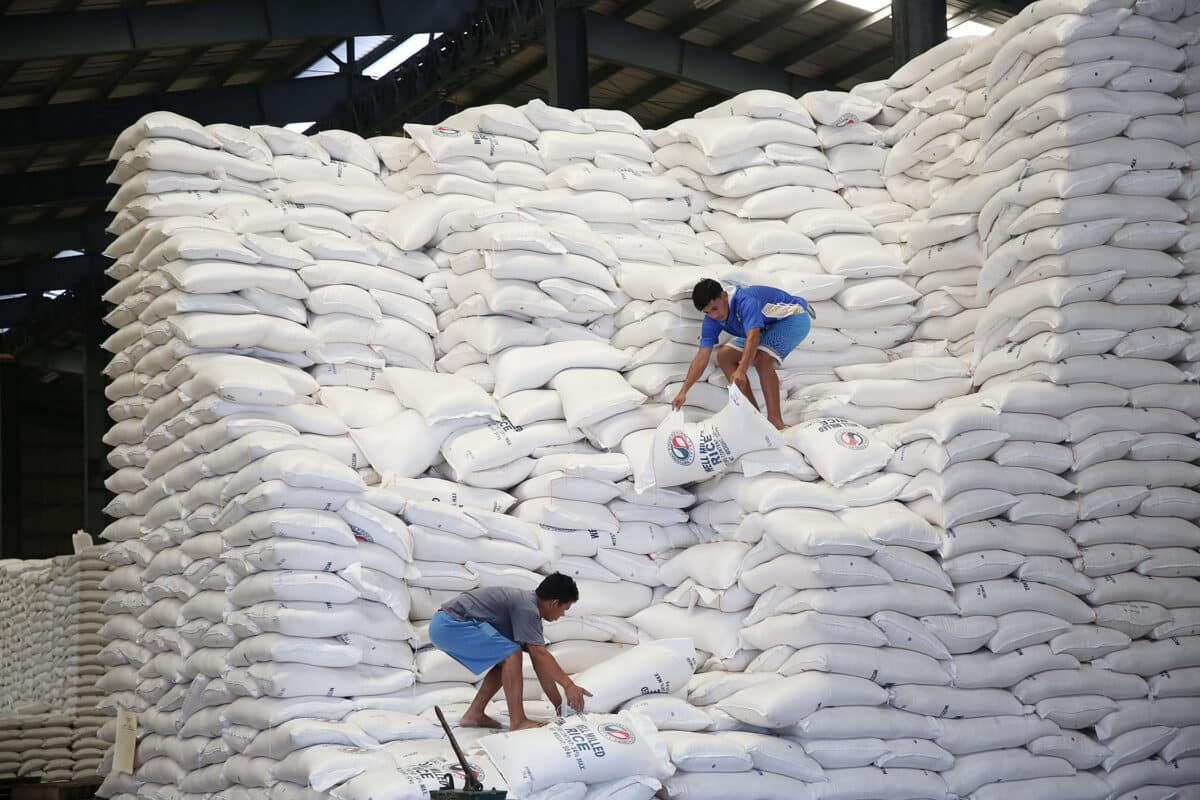
The Philippines, one of the world’s largest rice importers, suspended rice imports from 1 September 2025, initially for 60 days, with the measure subsequently extended. The ban on regular and well-milled rice remained in place until end-2025, aligning with the domestic harvest season and aimed at shielding local palay farmers from downward price pressure. Despite sustained policy efforts to achieve self-sufficiency, the Philippines remains structurally reliant on imported rice. To further limit market disruption, authorities imposed a mid-February 2026 arrival deadline to prevent import inflows from weighing on palay prices at the onset of the dry-season harvest.
In parallel, the government raised the rice import tariff to 20% from 15%, effective 1 January 2026, as it prepares to reopen the import window following the temporary suspension. The tariff hike points to a calibrated re-entry into the global rice market, reflecting an attempt to balance food security requirements with the need to preserve farmgate price stability.
Tariff hike tied to currency pressure and price outlook
Agriculture Secretary Francisco Tiu Laurel Jr. said the higher tariff reflects the recent weakening of the peso and the risk of firmer global rice prices once the Philippines returns to the market. A softer currency has increased import costs in local terms, prompting the government to use tariffs to moderate import-driven price volatility.
To reduce financial strain on importers, the DA will waive the 10% advance deposit required for Sanitary and Phytosanitary Import Clearances (SPSIC). The Bureau of Plant Industry will process clearances for up to 500,000 tonnes, including a 50,000-tonne quota.
Controls tightened as sourcing diversifies
JanuaryFebruary shipments will be restricted to 17 designated ports, including Manila, Cebu, Davao, Iloilo and General Santos, to manage supply flows and prevent regional oversupply. Importers have also been urged to diversify sourcing beyond Vietnam, with Cambodia and Myanmar cited as alternative suppliers.
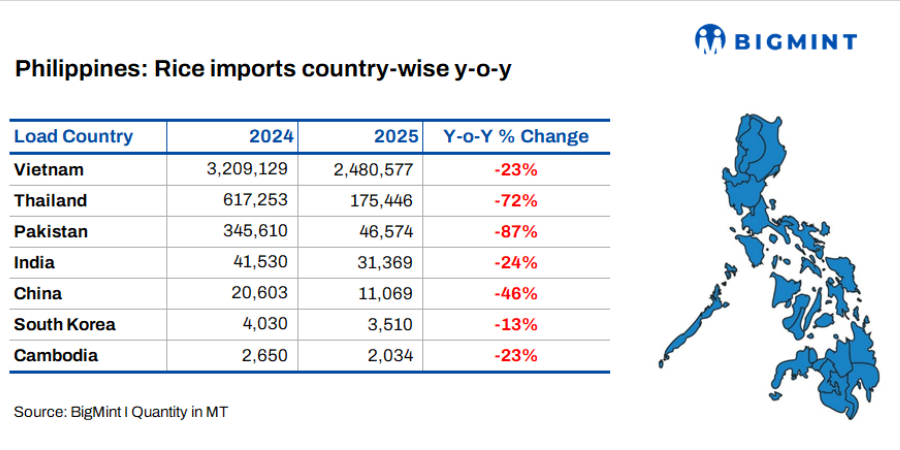
Vietnam’s rice shipments to the Philippines fell 22.7% year on year in 2025, declining to 2.48 million tonnes from 3.21 million tonnes in 2024. Imports from Thailand dropped sharply by 71.6%, while Pakistan’s volumes fell 86.5%. Indian shipments declined 24.5% year on year. Smaller suppliers also saw contractions, with imports from China down 46.3%, South Korea lower by 12.9%, and Cambodia easing 23.3%.
Outlook
Rice accounts for around 20% of the Philippines’ agricultural output. Despite government targets to meet 100% of domestic demand, production growth remains constrained by limited arable land, frequent weather disruptions, high costs and low yields. Market participants view the reopening of imports under higher tariffs and tighter controls as a pragmatic reset, with renewedthough competitive opportunities for regional exporters, particularly Thailand.
https://www.bigmint.co/insights/detail/rice-philippines-raises-import-tariff-as-market-reopens-in-2026-713795Published Date: January 13, 2026


 READ
READ