Downloads
 Login
Login
 Register


Tags
Rice output decline reflects policy, market and climate failures
By: Dr. Teodoro Mendoza PhD – @inquirerdotnet
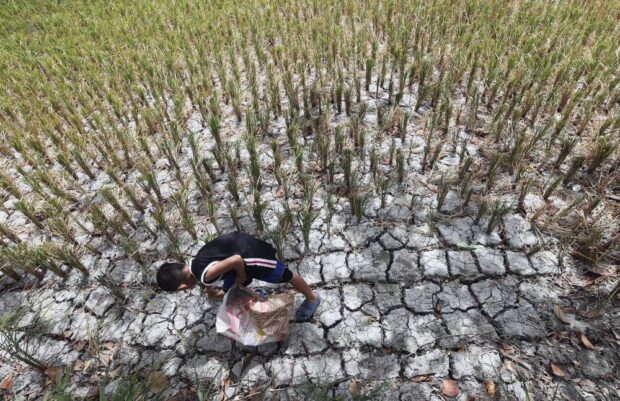
The Federation of Free Farmers forecasts a sharp drop in rice output in the fourth quarter of 2026, citing excessive and poorly timed imports, high fertilizer costs and El Niño.
Other factors are also contributing to the decline: unchecked agricultural land conversion that has permanently removed rice-producing areas; farmer fatigue that has led to a “planting strike” after repeated economic losses; inadequate irrigation, particularly in rainfed areas; and dry fields.
The report identifies the Rice Tariffication Law (RTL) of 2019 as the root cause of farmer fatigue. By abolishing quantitative restrictions and failing to use the Safeguard Measures Act, the government allowed palay prices to fall to P10 to P12 per kilogram for three to four cropping seasons. Farmers are now deeply indebted.
Although palay prices later rose to P27 per kilogram, the increase came after most farmers had harvested and sold their crops. The National Food Authority (NFA) is supposed to buy fresh palay at P17 per kilogram and dry palay at P20 per kilogram, but it lacks sufficient funds for procurement.
Selling to traders at P15 per kilogram is below the break-even price. Many farmers have decided not to plant, saying, “Lalo lang malulugi at babaon sa utang.”
Using available data and field-level analysis, this report brings together imports, input costs, climate conditions and land issues within a single framework. It argues that the projected decline in the fourth quarter of 2026 is not a cyclical dip but the convergence of market failure, policy failure and ecological stress.
Without changes to land policy, restored irrigation and import volumes calibrated against farmer income, the Philippines risks deeper import dependence, rural impoverishment and reduced food sovereignty.
Introduction
Rice remains the primary source of calories for Filipinos, accounting for 45% to 70% of daily intake. Yet the country’s production base is under unprecedented pressure.
The chair of the Federation of Free Farmers (FFF), a former agriculture secretary, anticipates a significant decline in rice output in the fourth quarter of 2026.
The reasons are familiar: Rice imports have surged, pushing palay prices down to P10 to P12 per kilogram for three to four cropping seasons, far below the P18 to P20 per kilogram cost of production.
At the same time, fertilizer prices remain elevated following global oil and gas shocks, while El Niño threatens to reduce yields by hundreds of thousands of metric tons.
This report argues that the FFF analysis is correct but incomplete. It captures the price-cost squeeze and climate risks but does not fully account for the loss of rice-producing acreage and the collapse in farmers’ intention to plant.
Across Laguna, Nueva Ecija and Mindoro, farmers are choosing not to plant because “nalulugi lang.” Many fields are dry because irrigation is unavailable or unaffordable.
In peri-urban areas from Biñan to San Pablo, as well as in Bulacan, Pampanga, Nueva Ecija and other parts of the country, rice lands near roads are being converted into subdivisions, warehouses and solar farms.
These are not weather events. They are policy outcomes.
The five factors — imports, fertilizer costs, El Niño, land conversion and farmer nonplanting — must be considered together to explain the projected contraction in rice output in the fourth quarter of 2026.
This report: 1) quantifies the import-price-fertilizer squeeze; 2) assesses the yield risks from El Niño; 3) documents the loss of rice land; 4) explains the planting strike; and 5) proposes integrated responses.
Import, price and fertilizer squeeze
Imports depress palay prices
Under the Rice Tariffication Law, quantitative restrictions were replaced with tariffs. This was followed by a surge in imported rice, particularly from Vietnam and Thailand.
Imports reached 4.7 million metric tons in 2025. For farmers, this translated directly into lower prices.
Farmgate palay prices during the peak harvest fell to P10 to P12 per kilogram, while production costs remained at P18 to P20 per kilogram. That represents a loss of P6 to P10 for every kilogram sold.
The FFF chair is correct to attribute declining output to this price signal. Rice is not only a subsistence crop for most smallholders but also a source of income.
When the market guarantees a loss, farmers may reduce their planted area, shift to corn or vegetables, lease out their land or sell it.
Rising fertilizer costs
The report estimates that fertilizer accounts for 50% to 60% of rice yield.
Producing 1 kilogram of nitrogen requires the diesel equivalent of 2.15 liters for Haber-Bosch manufacturing, packaging, hauling, transportation and farm application. Producing 1 metric ton of palay requires 18 to 20 kilograms of nitrogen.
With oil prices at $95 to $105 a barrel in 2025, fertilizer prices increased, but palay prices did not.
Farmers consequently reduced their fertilizer applications. Field reports indicate that farmers cut basal and top-dress rates.
The estimated agronomic result is a 25% to 30% yield penalty, or as much as 4.8 million metric tons in losses across 2.68 million hectares.
The “high fertilizer, low palay” scissors effect is therefore not only an income problem. It also threatens yields in the next cropping cycle.
El Niño’s impact
El Niño intensifies the economic pressure on farmers.
In 2025, four typhoons during the early harvest caused losses of 150,000 metric tons. El Niño caused an additional 600,000 metric tons in losses, bringing the total to 750,000 metric tons.
Irrigated areas produce an average of 4.3 metric tons per hectare, while rainfed areas produce only 3 metric tons per hectare. When rainfall is insufficient, rainfed fields can be left with only stubble.
For the fourth quarter of 2026, PAGASA models project continued dry spells in Northern and Central Luzon.
These conditions will affect the regions expected to compensate for low-priced wet-season harvests.
The FFF forecast is therefore supported by the projected climate conditions. Climate alone, however, does not explain why some farmers are not preparing to plant.
Land conversion
Permanent loss of rice land
The Philippines has 12 million hectares classified as agricultural land. However, the country’s net rice-producing area is shrinking.
The 1991 Local Government Code devolved land-use approval to local government units (LGUs). Under Internal Revenue Allotment pressure, many LGUs approved the conversion of irrigated rice lands for residential, commercial and industrial uses.
From Biñan to Calamba and from San Jose del Monte to Cabanatuan, rice fields have been converted into subdivisions and logistics hubs.
Once converted, the land cannot be returned to rice production.
The Department of Agriculture’s projection of 3.6 million to 3.8 million metric tons of rice imports in 2026 assumes that the country’s rice-producing area is static. It is not.
Every hectare lost is a hectare that cannot respond to price incentives.
Farm size and irrigation
The average rice farm is now 0.8 hectare, generating about P48,000 in gross income per crop and a net loss of P24,000 to P32,000 per crop.
These losses leave farmers without funds to invest in shallow tube wells or solar pumps. National Irrigation Administration systems are also aging.
Without water, a farmer’s first decision is not which rice variety to use but whether to plant at all.
The report cites a ratio of only one agricultural extension technician for every 150 barangays in Northern Mindanao, limiting the guidance available to farmers.
The planting strike
Why farmers stop planting
Farmers are not passive victims. They are economic agents.
When expected revenue is lower than expected costs, they withhold labor and capital. This is a planting strike.
It is more damaging than lower yields because it removes acreage from production entirely. Under the report’s model, if 10% of farmers do not plant, national output falls by 10%, regardless of the weather.
The planting strike is a direct response to three to four cropping seasons of losses under the RTL.
When palay prices remain at P10 to P12 per kilogram for several harvests, farmers accumulate debts to traders and input dealers (Mendoza, 2025d).
The subsequent rise in palay prices to P15 to P20 per kilogram offers little relief because the NFA lacks sufficient funds to buy at the floor price (Mendoza, 2025a).
Farmers consequently face liquidity and solvency problems. For many, the rational decision is not to plant.
“Bakit pa? Lalo ka lang malulugi at lalong babaon sa utang.”
This is not laziness. It is an attempt to protect already weakened balance sheets. Field reports from Bay and Calauan confirm that farmers skipped wet-season planting for this reason.
Dry fields and tighter credit
The second reason is biophysical.
Many communal irrigation systems were damaged by typhoons and were not rehabilitated. Pump irrigation is expensive when diesel prices are high.
Without assured water, farmers will not risk investing in seeds and fertilizer.
“Dry fields” therefore describes both climate conditions and inadequate infrastructure.
Banks and cooperatives also tighten credit after experiencing farmers’ loan defaults.
How the factors interact
The five factors are not merely additive. They are multiplicative:
- Imports → Price collapse: Imports depress palay prices.
- Fertilizer → Yield penalty: High costs force farmers to reduce fertilizer applications, cutting yields by 25% to 30%.
- El Niño → Area risk: Dry conditions reduce the harvestable area in rainfed zones.
- Land conversion → Area loss: The permanent removal of rice land reduces the production base.
- Planting strike → Intention collapse: Farmers leave fields fallow.
Arithmetically:
Output = Area planted × Yield
Imports and fertilizer costs reduce yields. El Niño and dry fields reduce the area planted. Land conversion reduces the total area available. The planting strike further reduces farmers’ intention to cultivate their land.
The projected result for the fourth quarter of 2026 is a contraction larger than any single factor would produce.
Table 1 presents the output-risk matrix for the fourth quarter of 2026, while Table 2 traces the collapse in palay prices and the cropping seasons of losses following the implementation of the RTL.
Table 1. Rice output risks in Q4 2026
| Risk factor | Driver | Probability in Q4 2026 | Impact on output | Combined risk level | Policy lever |
|---|---|---|---|---|---|
| Import surge | Tariffed imports exceeding 4.5 million metric tons; farmgate prices of P10 to P12 per kilogram | High | High: 15% to 20% reduction in area planted | Critical | Executive Order No. 101, PRICERS and P130 billion in NFA funding |
| Fertilizer cost | Oil at $95 to $105 a barrel; nitrogen application cut by 25% to 30% | High | High: 25% to 30% yield reduction | Critical | Targeted subsidy and soil analysis |
| El Niño | Dry spells in Luzon; pattern of losses ranging from 600,000 to 750,000 metric tons | Moderate to high | High: Loss of 600,000 to 750,000 metric tons | High | Climate-resilient water systems |
| Land conversion | Peri-urban conversion and LGU approvals | Moderate | Moderate: 1% to 2% reduction in area per year | Moderate | Moratorium on the conversion of irrigated land |
| Planting strike | “Nalulugi lang,” dry fields and lack of irrigation | High | Very high: 10% to 15% reduction in area | Critical | Minimum support price of P25 to P27 per kilogram and crop insurance |
Source: Author’s synthesis from Mendoza, 2025a-2025g; PAGASA, 2026.
As imports rose from 2.1 million metric tons in 2022 to 4.7 million metric tons in 2025, farmgate palay prices fell from about P20 per kilogram to P10 to P12 per kilogram.
At those levels, palay prices were P6 to P10 per kilogram below production costs, triggering the planting strike observed in Laguna and Nueva Ecija (Mendoza, 2025b).
The question is whether the country will continue to have sufficient rice on the table.
Three of the five factors are classified as critical and are driven by policy and market conditions rather than by weather.
If the import surge, high fertilizer costs and planting strike coincide, rice output in the fourth quarter of 2026 could fall by more than 20%, even without a strong El Niño.
Table 2. Palay prices after the RTL
| Year/season | Average farmgate price | No. of cropping seasons | Difference from production cost of P18 to P20 per kilogram | Policy context |
|---|---|---|---|---|
| 2018, pre-RTL | P20.14 | Baseline | P0.14 to P2.14 above cost | Quantitative restrictions in place |
| 2019, RTL Year 1 | P16.95 | Seasons 1-2 | P1.05 to P3.05 below cost | RTL implemented in March 2019; safeguards not used |
| 2020, RTL Year 2 | P16.76 | Seasons 3-4 | P1.24 to P3.24 below cost | Continued import surge |
| 2021, RTL Year 3 | P16.76 | Seasons 5-6 | P1.24 to P3.24 below cost | Lows of P10 to P12 per kilogram reported |
| May 2022 | P15 | Season 9 | P3 to P5 below cost | Wet-season field price |
| 2023-2024 | P8 to P10 | Seasons 7-8 | P8 to P12 below cost | Three to four cropping seasons of cumulative losses |
| 2025, post-EO 101 | P17 for wet palay; P20 for dry palay | Season 10 and beyond | P1 below to P2 above cost | Farmers sell to traders at P15 per kilogram because of the NFA’s limited budget |
Source: Philippine Statistics Authority; Inquirer; Mendoza, 2025a and 2025c.
Critical seasons: The report identifies three to four consecutive harvests from 2019 to 2021 when palay prices fell to P10 to P12 per kilogram, well below production costs of P18 to P20 per kilogram (Mendoza, 2025a).
Debt trigger: The 12- to 16-month period of losses caused widespread farmer indebtedness and contributed to the planting strike.
P15-per-kilogram trap: Even with the Executive Order No. 101 floor of P23 to P30 per kilogram for dry palay, the NFA lacks the P130 billion needed for procurement.
Farmers are forced to sell to traders at P15 per kilogram or allow their palay to rot (Mendoza, 2025a and 2025c).
Policy recommendations
Recalibrate rice imports
Executive Order No. 101’s Price Range Scheme (PRICERS) is a start, with prices of P26 to P30 per kilogram for dry palay and P22 to P25 per kilogram for wet palay.
NFA procurement, however, must be funded and operational.
Without P130 billion for palay procurement and a national database of eligible farmers, PRICERS will remain only a policy on paper.
Rice imports should be timed and capped to protect the floor price.
Target fertilizer and water aid
A blanket fertilizer subsidy is inefficient.
Support should instead be linked to: 1) farmers using soil analysis; 2) farmers in areas served by the National Irrigation Administration; and 3) farmers planting climate-resilient varieties.
The government should simultaneously invest in climate-resilient water systems, including community reservoirs, solar pumps and canal rehabilitation.
Protect rice land
The government should declare a moratorium on the conversion of irrigated and irrigable rice lands.
Geographic information system mapping should be used to protect the remaining agricultural lands for rice and diversified crops.
LGUs should be compensated for foregone conversion taxes through a “Food Security IRA” allocation.
Address the planting strike
The government should create a “Planting Assurance Program” that provides a minimum support price of P25 to P27 per kilogram, full crop-value insurance and zero-interest input credit under a “plant now, pay at harvest” arrangement.
Farmers are more likely to plant when they are not guaranteed to lose money.
The program should be paired with a target of one agricultural extension technician per barangay.
Adapt to El Niño
The country should diversify its calorie sources by reducing rice to 40% of daily calorie intake and obtaining the remaining 60% from root crops, corn, adlai, fish and vegetables.
This would reduce national rice demand from 119 kilograms to 80 to 90 kilograms per person and strengthen resilience.
Renationalize the agriculture department
The country should build a Department of Agriculture that meets farmers’ needs.
The reported ratio of one agricultural extension technician for every 150 barangays in Northern Mindanao may not apply to all areas. However, the report calls for one technician in every barangay.
Of the country’s 42,000 barangays, 60% still have agricultural lands. About 25,200 agricultural extension technicians are therefore needed.
The agriculture secretary has said the department would hire 10,000 technicians, or about 40% of the estimated requirement.
Conclusion
The FFF chair’s assessment is correct: Rice output in the fourth quarter of 2026 is expected to fall because imports depress prices, fertilizer is expensive and El Niño is damaging production.
The assessment, however, should also account for land conversion and farmer fatigue, which has led many farmers to stop planting.
The Philippines is not facing a rice shortage because it cannot grow rice. It is facing a shortage because rice production has become unprofitable, risky and constrained by the loss of agricultural land.
The policy response must therefore be integrated: Manage the timing of imports, protect farmer income, preserve rice land, restore irrigation and diversify diets.
Without such action, the report warns, the fourth quarter of 2026 may be remembered not merely as a bad harvest but as the period when the country’s rice system lost the confidence of its farmers. /dm
https://newsinfo.inquirer.net/2264199/rice-output-decline-reflects-policy-market-and-climate-failuresPublished Date: July 16, 2026


 READ
READ