Downloads
 Login
Login
 Register


Tags
Rice imports tumble nearly 30% in 2025 after import ban
By Dexter Barro II
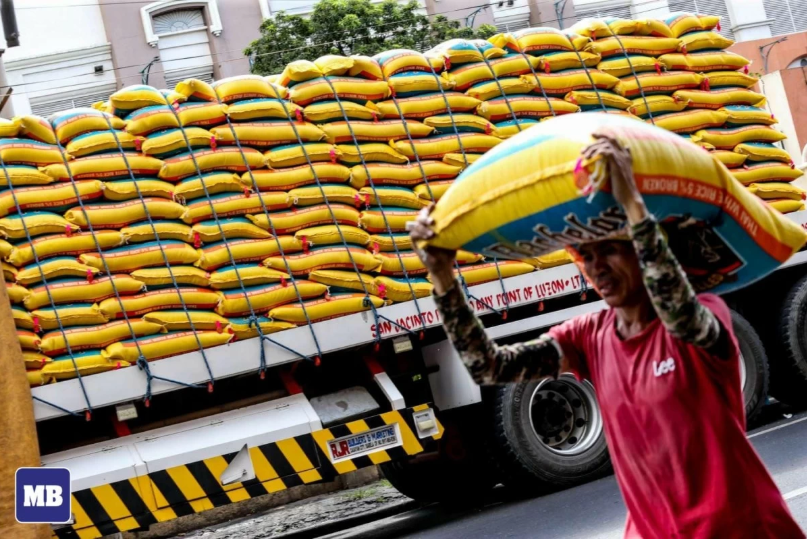
The country’s rice imports last year reached 3.37 million metric tons (MT), nearly 30 percent lower than the record high in 2024, amid the imposition of an import ban as rice production improved.
Based on the latest data from the Bureau of Plant Industry (BPI), the country’s rice imports in 2025 dropped from 4.81 million MT in 2024.
Import volume last year was 130,000 MT short of the government’s estimate of 3.5 million MT. It was also the country’s lowest level in four years.
Vietnam was the country’s top supplier last year, shipping a total of 2.74 million MT as of Dec. 25, or 81 percent of the rice import tally.
Other major sources included Myanmar with 343,910 MT, Thailand with 176,840 MT, Pakistan with 76,448 MT, and India with 20,786 MT.
BPI data showed that it issued 4,500 sanitary and phytosanitary import clearances (SPSICs) last year, of which nearly 87 percent, or 3,909, were used.
The SPSICs were intended for importation of 4.32 million MT of milled rice, but only 78 percent of projected imports arrived in the country.
Department of Agriculture (DA) Assistant Secretary Arnel de Mesa attributed the decline to the implementation of the four-month suspension on foreign rice shipments.
Before the import ban took effect in September, rice imports to the country were averaging around 370,000 MT per month.
From October to December, monthly arrivals plunged to about 32,000 MT, consisting of specialty varieties such as Japanese, black, and basmati rice that are exempt from the import ban.
De Mesa said the import ban was a success in tempering the sharp decline in farmgate prices of the staple, which fell to as low as ₱6 per kilo in some provinces.
The ban was in effect over a strong harvest season, with the country’s full-year rice production estimated to be between 19.61 million MT and 19.89 million MT.
While lower than the initial projection of 20.46 million MT, the new estimate is higher than the 2024 total output of 19.09 million MT.
Moreover, De Mesa said the import ban also proved that the country could sustain strong consumer demand without relying too much on imports.
“It means that there were too much rice imports arriving the country before, and we can control that. So now, imagine 3.37 [million MT] and we didn’t experience any shortage that could lead to price increases,” said De Mesa, also the DA’s spokesman.
This year, the government is turning to quantitative restrictions (QRs) to further limit the country’s importation of rice, relying on voluntary cooperation of local importers.
BPI resumed importation of milled rice last Jan. 1, with some shipments expected to arrive this month.
Based on the bureau’s guidelines, all rice imports must arrive within 60 days from issuance date of their corresponding SPSICs.
While the policy did not specify any restrictions in line with the country’s commitments to liberalize rice trading, the DA earlier floated that it is only targeting 500,000 MT of rice imports by February.
Without a restriction set in stone, there is no certainty that the country would only import around 500,000 MT, especially since traders may take advantage of lower rice tariff.
The country’s tariff on imported rice is currently set at 15 percent, but it will be raised to 20 percent on Jan. 16.
Nonetheless, De Mesa said the DA expects rice imports this year to remain below four million MT, banking on a projected rice production of 20.3 million MT.
These projections, however, are ultimately dependent on weather conditions and success of government interventions.
Sought for comment, Samahang Industriya ng Agrikultura (SINAG) executive director Jayson Cainglet said the most important policy that the government should consider this year is raising tariffs back to their previous levels.
“The single and most urgent policy intervention now is for the national government (NG) to reinstate rice import tariff to 35 percent for Association of Southeast Asian Nations (ASEAN) and 50 percent for non-ASEAN imports,” said Cainglet.
“All other intervention at this point is secondary,” he added.
https://mb.com.ph/2026/01/08/rice-imports-tumble-nearly-30-in-2025-after-import-banPublished Date: January 8, 2026


 READ
READ