Downloads
 Login
Login
 Register


Tags
Rice farmers abandon farms over 700,000-tonne unsold rice
By Kingsley Webora TANKEH
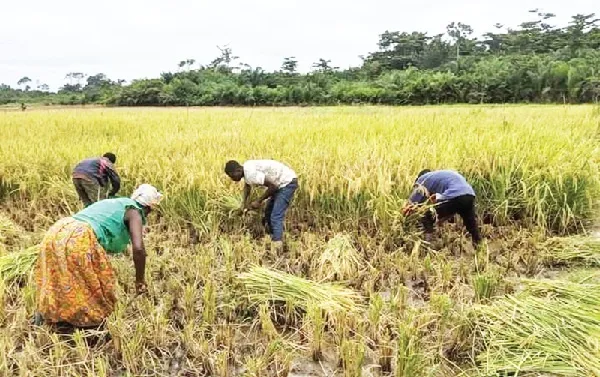
The 2026 planting season has begun, but across the major rice-producing valleys in the country, tractors are idle and farmers are reluctant to hit the ground. This is because they are still sitting on more than 700,000 metric tonnes of unsold paddy rice from last season and have neither the cash nor the incentive to cultivate again.
In an exclusive interview with the B&FT, via phone from the Upper East Region, a farmer and former director of the Peasant Farmers Association of Ghana (PFAG), Dr. Charles Nyaaba, who spent the past week touring the rice valleys of the North, Volta and Oti Regions, has confirmed that farmers have abandoned their fields as glut locks up planting capital.
“The valleys are virtually empty. Under normal circumstances, you would have seen tractors everywhere ploughing. I personally inquired from many rice farmers. Their homes and warehouses are full of paddy rice.
“They owe combine harvester operators; others bought paddy rice on credit and haven’t paid. They told me it doesn’t make sense to continue farming when what they have produced is yet to be sold,” Dr. Nyaaba explained.
Despite assurances that government would mop up the excess grain, farmers on the ground say no tangible intervention has taken place. According to the farmers in the northern belt, only about 20 percent of last year’s over 960,000-metric-tonne harvest has been sold so far.
“I can confidently say that less than 20 percent have been able to secure a market. So we are still looking at over 700,000 metric tonnes of paddy rice in the warehouses and rooms of farmers, yet to be sold,” he said.
Consequently, Dr. Nyaaba indicated he plans to cultivate only half of his farm, confirming thousands of farmers across the country face similar fate, adding: “Less than 50 percent of rice valleys will be farmed this year compared to last year”.
“If something will be done, we are hoping that it will be done within this month. There are many farmers today who say if they are able to sell their maize or their rice, they’ll go into farming. But as we speak, they don’t even have money to engage the service of tractor operators,” he said.
The government’s flagship “Feed Ghana” programme has been rolled out with pledges of input support and mechanisation services. “We just call on the Ministry of Food and Agriculture: whatever support will come to the farmers should come now. If it comes late, it might not yield the expected impact,” he noted.
With production capacity in the northern belt, the food basket of the country, expected to halve, economists warn Ghana’s import bill could balloon, as more rice would be imported to fill the gap. According to them, this could stoke inflation, fuel food insecurity, slow GDP growth and threaten the jobs of workers employed in agriculture.
Reacting to news that rice farmers in the northern belt plan to cultivate only 50 percent of their production capacity in the 2026 season, the Head of the Economics Department at the University of Professional Studies, Accra (UPSA), Professor Abdullah Mumuni, warned that the impact on the economy will be severe.
“If they are going to reduce production, it will affect employment; it will also affect food production and that will have influence on our GDP,” he said.
He emphasised that halving local production capacity risks increasing import volumes, further straining on the local currency.
According to data from the Ministry of Food and Agriculture, between 2008 and 2020, paddy rice production was in the range of 302,000 metric tonnes and 987,000 metric tonnes (181,000 to 622,000 metric tonnes of milled rice). However, rice consumption reached 1.45 million metric tonnes in 2020, due to rapid population growth, urbanisation and inadequate local production.
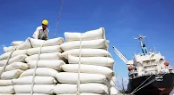
Due to this, Ghana relies heavily on rice imports, which make up 70 percent of domestic consumption. The country spends hundreds of millions of dollars importing from countries like Vietnam, Thailand and India.
However, if the 700,000 metric tonnes of excess paddy rice is milled, about 350,000 metric tonnes could land on the dining tables of Ghanaians.
Prof. Mumuni, therefore, admonished government to implement a quota system to regulate the quantity of rice that can be imported into this country to encourage local consumption.
“It should not just be one side. The local producers too should be encouraged to add quality to what they produce, so that it will encourage consumers to buy more,” he added.
Ghanaian farmers continue to face post harvest challenges due to inefficient milling and inadequate processing equipment in the country, which impact the final quality of the local rice. The appetite for cheaper imported rice has also led to a market imbalance, leaving thousands of local farmers with huge volumes of unsold paddy rice.
Dr. Nyaaba emphasised that government’s excess grain mop up has yet to achieve any tangible results on the ground. “As we speak, many farmers hold more than 50 percent of what they harvested and cannot sell,” he confirmed.
Even worse, he said the President’s directive that all schools should procure food from local farmers has been largely ignored, stating that he has secured evidence of imported rice in the stores of Shai Osudoku District in the Greater Accra Region and Nabisco, a senior high school in the Northern Region.
A former Dean of the University of Ghana Business School (UGBS), Professor Joshua Yindenaba Abor, has warned that without urgent policy intervention, the distress being felt by farmers will metamorphose quickly into rural poverty, noting a significant percentage of households rely on agriculture.
“If the glut we’re experiencing is without off-taking, then what it means is that they will suffer some financial losses. And that will impede the ability to also afford some basic needs,” Prof. Abor explained.
The situation is not confined to rice alone. Maize farmers also raised similar concerns. Some reported that buyers from the National Food Buffer Stock Company (NAFCO) offered to buy their produce, but the prices were unattractive and the quantities they wanted were insignificant relative to the quantum of the glut.
Prof. Abor, therefore, urged government to empower agriculture supply chain actors like the NAFCO and Ghana Commodity Exchange (GCX) to aggressively mop up the excess grain and mandate state institutions to source their food locally. “When government directs, we expect agencies to act. So I think that Ministry of Agriculture should be up and doing to ensure that when directives are given, they are complied with,” he asserted.
Prof. Abor advocated strategic investments in agro-processing factories in the northern belt to absorb excess supply and process farm produce for local consumption and export.
He further urged government to protect local production from unfair competition from cheaper imports. The Ministry of Agriculture, he said, must be “very firm on border operations” to curb the smuggling of cheap produce that undercuts local farmers.
https://thebftonline.com/2026/06/18/rice-farmers-abandon-farms-over-700000-tonne-unsold-rice/Published Date: June 18, 2026


 READ
READ