Downloads
 Login
Login
 Register


Tags
Rice exports to Iran, Arabian penisnsula countries may take a big hit
Iran among the largest importers of aromatic long-grain rice from India.
Written by Sandip Das.
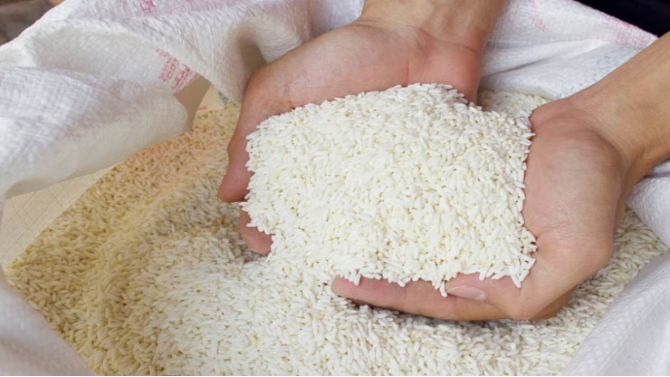
The volatile situation in West Asia threatens India’s robust rice exports to Iran and countries in the Arabian peninsula, exporters said. “The escalating Iran-Israel conflict has sent ripples through India’s rice exports, particularly for key varieties like basmati, gobindo bhog, and sona masoori.
Iran has been among the largest importers of the aromatic long-grain rice for several years from India, along with Saudi Arabia, Iraq and the United Arab Emirates.
With Middle East countries accounting for over 70% of India’s rice exports, the crisis could have a huge impact on the industry,” Suraj Agarwal, CEO at Ricevilla Group, told FE.
Agarwal said if the conflict expands to other Middle East countries, the impact could be even more severe, given the region’s significance in India’s rice export portfolio.
Trade sources said that the war broke out after Iran’s state trading body – Government Trading Corporation of Iran – reportedly placed an order of around 0.6 million tonne (MT) of basmati with Indian exporters last month.
Shipping Risks
The Indian Rice Exporters Federation in an advisory, stated that as movements through the Strait of Hormuz could be restricted, members are advised against undertaking new CIF (cost, insurance and freight) commitments for these destinations and to conclude sales on FOB (free on board) terms so that freight, insurance, and related risks remain with the international buyer.
Iran has been among the largest importers of the aromatic long-grain rice for several years from India, along with Saudi Arabia, Iraq and the United Arab Emirates.
India has been the world’s biggest rice exporter in the last decade, with a market share of around 35% to 40% in grain trade.
In FY25, India’s rice exports were valued at a record $12.95 billion, while during the April-January period of FY26, India shipped rice valued at $9.33 billion, a 7.5% decline year-on-year.
Ranjit Singh Jossan, vice president of the Basmati Rice Millers and Exporters Association, Punjab, said the conflict threatens to disrupt the wider Middle East market, a key destination for Indian aromatic long-grain rice, as banking channels, international transactions and payment settlements face delays and compliance risks.
Currency Volatility
The conflict has impacted the shipping lanes in the Red Sea and the Strait of Hormuz raising fears of freight escalation and insurance premiums, potentially inflating export costs, Jossan said.
Jossan said currency volatility remains a major concern for exporters recalling the sharp devaluation of the Iranian toman during earlier sanctions and war-like conditions, as uncertainty over exchange rates could again trap thousands of crores in pending payments owed to Indian exporters.
Exporters said that in recent months, amid rising tensions and ongoing US–Iran hostilities, direct shipments from India to Iran have slowed significantly, with exporters relying on the older transshipment route via Jebel Ali Port.
According to the commerce ministry, India’s Basmati rice exports to Iran during April-November 2025–26 was at $ 468.10 million, with volumes reaching around 0.6 MT. In FY22, Iran’s share of India’s exports of basmati rice was valued at $0.81 billion or close to 23% of total shipments valued at $ 3.54 billion.
In FY25, Iran’s share declined to 12% at $ 0.75 billion of the total exports of a record $5.94 billion as payments were delayed because of US sanctions. Saudi Arabia (20.25%), Iraq (14.3%), Iran (12.67%), United Arab Emirates (6.13%) and Yemen (6.03%) accounted for 60% of India’s total basmati exports in 2024-25.
Export blockages could temporarily soften domestic rice prices due to supply build-up.
https://www.financialexpress.com/policy/economy/rice-exports-to-iran-arabian-penisnsula-countries-may-take-a-big-hit/4159142/Published Date: March 2, 2026


 READ
READ