Downloads
 Login
Login
 Register


Tags
Rice Exports: Iran, Gulf Risks Amid West Asia Conflict
By Rediff Money Desk, Kolkata
Rice exporters warned against CIF contracts to Iran, Gulf due to West Asia conflict. Potential disruptions, rising costs, and market impact.
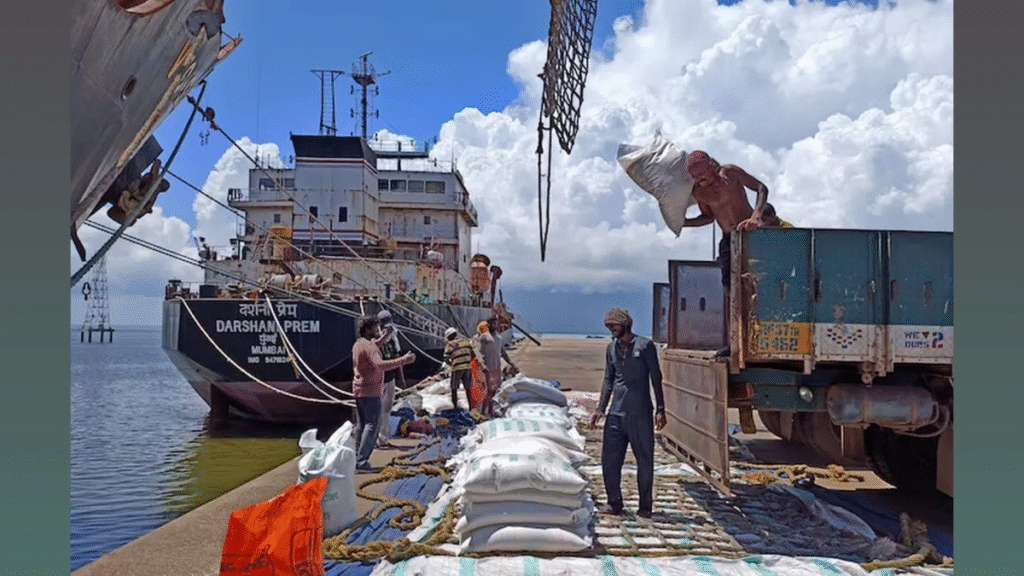
Kolkata, Mar 1 (PTI) An association of Indian rice exporters on Sunday advised its members to avoid entering into new ‘cost, insurance and freight’ (CIF) commitments to Iran and Gulf destinations amid escalating tensions in West Asia, warning that the situation could disrupt shipments and sharply increase freight and insurance costs.
The advisory by the Indian Rice Exporters Federation (IREF) came after the United States and Israel launched a major attack on Iran on February 28, triggering fears of wider regional instability and possible restrictions on shipping through the Strait of Hormuz.
Under CIF agreements, sellers bear the costs, insurance and freight for cargo transported via waterways until it reaches the buyer’s port.
The federation advised exporters to conclude sales on ‘free-on-board’ (FOB) terms wherever feasible so that freight, insurance and related risks remain with international buyers.
It warned that developments in Iran and the United Arab Emirates could immediately impact bunker fuel prices and disrupt the availability of container and bulk vessels.
“In such circumstances, container and bulk freight could increase sharply at short notice, exposing exporters to losses on fixed delivered-price contracts,” the federation said.
It also cautioned that insurance premiums could rise steeply if the geopolitical situation worsens and urged exporters to exercise restraint while concluding new orders and avoid open-ended, unhedged positions.
Industry players said the crisis could also affect demand for key Indian rice varieties in West Asia.
Suraj Agarwal, CEO of RiceVilla Group, said the escalating Iran-Israel conflict is already sending ripples through India’s rice export market, particularly for popular varieties such as Basmati, Gobindo Bhog and Sona Masoori.
“With West Asian countries accounting for over 70 per cent of India’s rice exports, the crisis could have a huge impact on the industry,” he said.
“These varieties saw a surge in demand from the region this year, driving prices up. However, the ongoing tensions may disrupt trade, affecting shipments and payments,” Agarwal added.
He warned that any prolonged disruption could lead to a surplus of these varieties in the domestic market, potentially pushing prices lower.
“If the conflict expands to other West Asian countries, the impact could be even more severe, given the region’s significance in India’s rice export portfolio,” he said.
During the April-December period of 2025, shipments to West Asia stood at about 3.90 million tonnes, while exports to Africa were around 7.16 million tonnes.
The federation noted that five of the leading Basmati destinations — Saudi Arabia, Iran, Iraq, the United Arab Emirates and Yemen — are located in West Asia and together account for around 50 per cent of India’s Basmati exports.
With Basmati wholesale prices already rising by 10-15 per cent over the past month and Iran being a key market, the federation expects heightened volatility in prices in the coming days.
IREF said it is closely monitoring developments and is in touch with exporters whose consignments are currently in transit or awaiting clearance at destination ports.
Source: PTI By Rediff Money Desk, Kolkata
https://money.rediff.com/news/market/rice-exports-iran-gulf-risks-amid-west-asia-conflict/42889920260301Published Date: March 2, 2026


 READ
READ