Downloads
 Login
Login
 Register


Tags
Rice export sales surge as beef drifts to a marketing year low
By John Perkins

The USDA is reporting a strong week for U.S. rice export sales. During the week ending March 12th, Japan picked up more than half of the weekly rice sales total as it tries to meet domestic demand while filling import quotas. Soybean meal and pork sales were both up on the week, but below average, while beef fell to a marketing year low after the previous week’s marketing year high. Export business is influenced by several factors, including geopolitics, the relative value of the dollar, and seasonal changes in supply and demand. The USDA’s next round of supply and demand estimates is out April 9th.
Physical shipments of corn and soybeans were above what’s needed to meet projections for the current marketing year. The 2025/26 marketing year got underway June 1st for wheat, August 1st for cotton and rice, September 1st for beans, corn, and sorghum, and October 1st for soybean products. The marketing year for beef and pork is the calendar year.
Wheat came out at 189,900 tons (7 million bushels), down 58% from the week ending March 5th and 36% from the four-week average. Mexico purchased 153,100 tons and the Philippines bought 47,600 tons, while unknown destinations canceled on 70,400 tons. In the final quarter of the 2025/26 marketing year, wheat exports are 870.4 million bushels, compared to 764.2 million in 2024/25. Sales of 212,100 tons (7.8 million bushels) for 2026/27 delivery were mainly to the Philippines (100,000 tons) and Mexico (54,700 tons).
Corn was reported at 1,171,800 tons (46.1 million bushel), 22% lower than the previous week and 18% below the four-week average. Mexico picked up 287,200 tons and Japan purchased 194,900 tons. At this point in the marketing year, corn exports are 2.664 billion bushels, compared to 2.048 billion this time last year. Sales of 12,000 tons (500,000 bushels) for 2026/27 delivery were to Japan.
Sorghum sales of 12,500 tons (500,000 bushels), dropping 87% from the week before and 74% from the four-week average. China bought 142,100 tons and Mexico picked up 2,400 tons, but unknown destinations canceled on 132,000 tons. Sorghum exports are 163.4 million bushels, compared to 50.8 million a year ago.
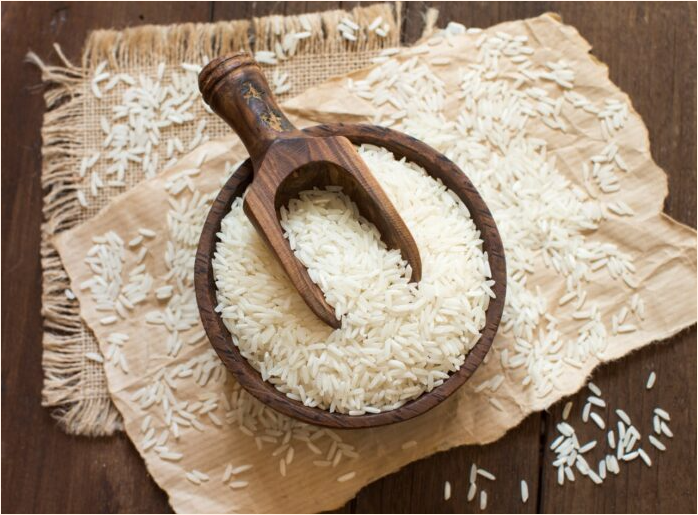
Rice sales of 114,900 tons were up sharply from the prior week and 72% from the four-week average. Japan purchased 65,000 tons and Honduras bought 23,200 tons. Rice exports are 2,067,200 tons, compared to 2,491,300 last year.
Soybeans were pegged at 298,200 tons (11 million bushels), a decrease of 35% on the week and 42% from the four-week average. China picked up 79,900 tons and Mexico purchased 74,000 tons. So far, this marketing year, soybean exports are 1.352 billion bushels, compared to 1.662 billion a year ago. Sales of 6,600 tons (200,000 bushels) for 2026/27 delivery were to Japan (6,000 tons) and South Korea (600 tons).
Soybean meal came out at 220,900 tons, rising 33% from the previous week, but falling 25% from the four-week average. The Philippines bought 58,100 tons and Mexico picked up 57,300 tons, while unknown destinations canceled on 47,500 tons. Approaching the second half of the marketing year, soybean meal exports are 12,394,100 tons, compared to 11,176,800 last year. Sales of 1,400 tons for 2026/27 delivery were to Mexico.
Soybean oil was reported at 5,200 tons. Canada purchased 7,000 tons and Guatemala bought 2,000 tons. Cumulative soybean oil exports are 361,200 tons, compared to 866,600 a year ago.
Upland cotton was pegged at 196,700 bales, a decline of 22% from the week before and 30% from the four-week average. Vietnam picked up 75,700 bales and Turkey purchased 27,800 bales. 2025/26 upland cotton exports are 9,354,000 tons, compared to 10,224,600 in 2024/25. Sales of 122,200 bales for 2026/27 delivery were primarily to China (48,600 bales) and Pakistan (22,000 bales).
Net beef sales totaled 3,200 tons, down 87% from the prior week and 80% from the four-week average. The reported buyers were Japan (3,800 tons), Hong Kong (1,600 tons), Taiwan (800 tons), Canada (400 tons), and Indonesia (200 tons), with net reductions by South Korea (3,600 tons), Guatemala (300 tons), the Philippines (300 tons), Mexico (100 tons), and Peru (100 tons). Physical shipments of 13,600 tons were an increase of 19% on the week and 2% from the four-week average, mostly to South Korea (4,400 tons), Japan (4,100 tons), Hong Kong (1,300 tons), Mexico (1,300 tons), and Taiwan (1,100 tons).
Net pork sales totaled 28,300 tons, 19% more than the previous week, but 13% less than the four-week average. The listed purchasers were Mexico (7,500 tons), South Korea (5,700 tons), China (3,500 tons), Japan (2,800 tons), and Colombia (2,500 tons), with a net reduction by the Philippines (100 tons). Physical shipments of 35,700 tons were a dip of 8% from the week before and 7% from the four-week average, mainly to Mexico (15,200 tons), Japan (4,500 tons), South Korea (4,100 tons), China (3,300 tons), and Colombia (2,000 tons).
Published Date: March 19, 2026



 READ
READ