Downloads
 Login
Login
 Register

Tags
Rethinking staple food crops at the intersection of human nutrition, climate, and sustainability
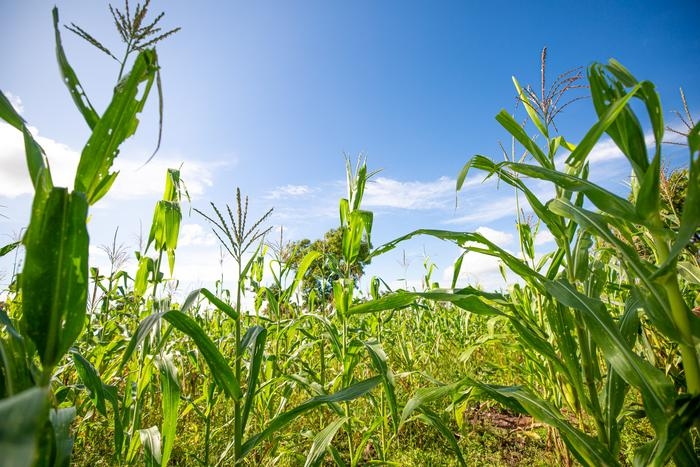
Research into how staples like rice, wheat and maize can accumulate and balance protein, which directly benefits populations that rely heavily on these staple crops for daily nourishment.
Staples like rice, wheat and maize sustain caloric requirements of billions of people worldwide. However, their refined grains lack essential nutrients, driving widespread protein malnutrition and lack of essential amino acids.
Peer-Reviewed Publication – CGIAR
Latest statistics show that at least 14.77 million people around the globe suffer in protein-energy malnutrition.
To revitalize traditional staples, scientists propose biofortifying cereals, as replacing just 5% of refined carbohydrates with protein significantly reduces the risk of non-communicable diseases.
This proposal is part of the review that the International Rice Research Institute (IRRI) along with its global research partners published in Nature Plants recently. The paper examines how staples like rice, wheat and maize accumulate and balance protein can directly benefit populations that rely heavily on these staple crops for daily nourishment.
“Rice feeds more than half of the world’s population, yet it is naturally low in protein (6%) and lack key essential amino acids that our bodies need for growth, immunity, and overall health. Improving the nutritional quality of rice, therefore, represents one of the most powerful ways to combat hidden hunger, particularly in Asia and Africa, where rice is a staple food. By increasing the protein and essential amino acid content of rice and cereal grains, we can help millions of people to obtain better nutrition without changing their diets or food habits,” said Dr. Nese Sreenivasalu, a Principal Scientist and Head of Consumer-driven Grain Quality and Nutrition Center at IRRI.
From people’s nutrition to planet health
A plant-based solution that combines cereals with protein-rich legumes can also reduce global greenhouse gas emissions by up to 32%, since animal sources produce very high emissions. Ensuring that cereal protein biofortification aligns with climate-mitigation goals therefore requires pairing nutritional improvements with agronomic and breeding interventions that lower the environmental footprint of cereal production.
A team of scientists at IRRI, led by Dr. Sreenivasulu, developed high-protein rice, with elevated essential amino acids such as lysine, and exhibiting ultra-low glycemic index (low-GI) that not only improves dietary protein intake but may also help manage blood sugar levels. But the benefits go beyond human nutrition. These nutritious varieties are also high-yielding, and the crop can be harvested within 100-110 days, shorter than common rice varieties. These genetic mechanisms can be extended to other cereal crops.
Biofortification under One Health
Dr. Sreenivasulu and Dr. Rhowell Tiozon from IRRI collaborated with Dr. Alisdair Fernie from Max Planck Institute of Molecular Plant Physiology in Germany and Dr. Jianbing Yan the National Laboratory of Crop Genetic Improvement at Huazhong Agricultural University in China, and outlined a unifying conceptual model, “High-Protein Cereal Biofortification: A One Health Framework,” that illustrates the gene–metabolism–phenotype–agronomy continuum and clarifies conceptual framework that illustrates future engineering trajectories that enable partial decoupling of protein, essential amino acids, and starch through coordinated regulation of nitrogen allocation and endosperm buffering capacity helps to enrich protein and essential amino acids in staple cereals.
Dr. Sreenivasulu and his collaborators outlined overcoming trade-offs of yield–protein relationships through a systems-biology lens, explicitly discussing carbon–nitrogen resource partitioning, nitrogen flux, and endosperm sink regulation with increased grain protein content.
In the paper, the researchers also articulated more clearly why cereal protein enhancement has historically been challenging, how recent molecular and genomic insights are beginning to overcome these barriers, and what future directions will define the next decade of nutritional genomics and sustainable protein improvement.
“Because we now understand these genetic mechanisms, these traits can be efficiently incorporated into modern rice breeding programs and eventually extended to other staple crops. This breakthrough opens the door to a new generation of staple foods that are healthier, climate-smart, and capable of nourishing a growing global population,” said Dr. Sreenivasulu.
https://www.eurekalert.org/news-releases/1126141Published Date: April 29, 2026


 READ
READ