Downloads
 Login
 Register


Tags
Rain deficit, reduced fertiliser use due to West Asia conflict drive up price of rice
Experts and traders expect yields to be lower this season, although the extent of the production loss is not clear yet
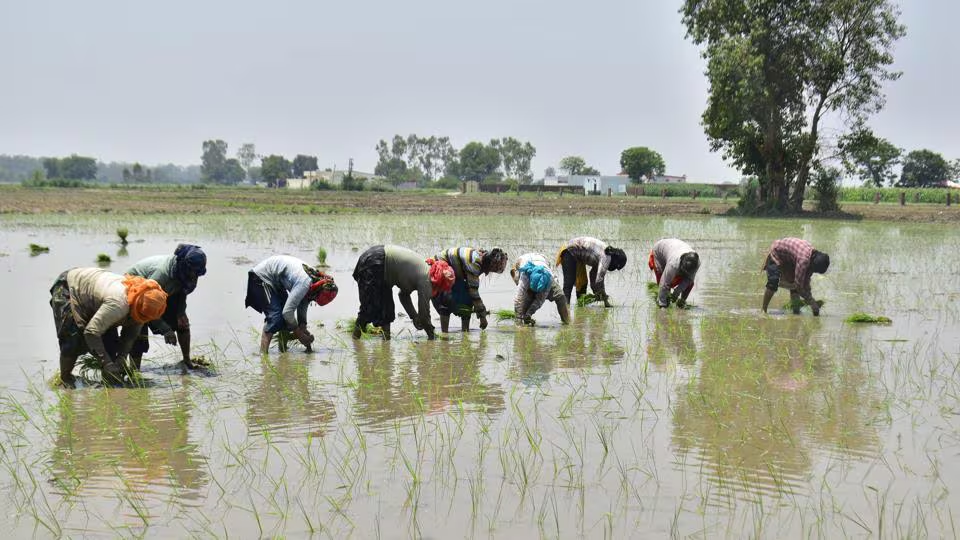
Rice prices are facing pressure from both weather-related supply concerns and rising demand for broken rice from the ethanol and poultry-feed industries. Lower rainfall and expectations of reduced yields have raised concerns over supplies from the paddy crop currently being harvested, while competition for broken rice is adding to costs for feed manufacturers.
The government last year changed its rice procurement norms to make more broken rice available for industrial use, including ethanol production. From the 2025-26 kharif marketing season, the Food Corporation of India (FCI), on a pilot basis in five states — Punjab, Haryana, Chhattisgarh, Odisha and Andhra Pradesh — lowered the permissible share of broken grains in rice procured for the central pool from 25% to 10%. The remaining 15% was to be retained by rice mills and auctioned at the mill level for use by ethanol manufacturers and the animal-feed industry.
“Maize prices have risen significantly, touching ₹32-33 per kg. So, whatever grain is available — be it bajra, broken rice or damaged grains — the feed industry is buying it, adding to the price of even broken rice,” said Ricky Thaper, joint secretary of the Poultry Federation of India. “Availability is so low that prices have become a secondary issue. We need to feed our birds.”
Paddy prices in Kota, Rajasthan, have risen to ₹4,500-4,700 per quintal (100 kg) from ₹3,200-3,400 a year ago, according to mandi trader Aniket Mehta. He attributed the higher prices to depleted carry-forward stocks and lower expected yields from the ongoing harvest. He said inadequate rainfall had left farmers with insufficient water for the crop and restricted fertiliser application. Higher fertiliser prices amid the West Asia conflict had added to farmers’ costs, further affecting their ability to use inputs, Mehta added.
The increase is also visible in retail markets.
The average all-India retail price of rice stood at ₹49 per kg on November 10, nearly 14% higher than ₹42.96 per kg a year ago and 7% above ₹45.81 per kg a month ago, according to department of consumer affairs data. Broken rice prices averaged ₹34.87 per kg, against ₹32.63 per kg a year ago and ₹34.67 per kg a month ago.
Market experts and traders expect yields to be lower this season, although the extent of the production loss is not yet clear. The government has also not released its first advance estimates of kharif crop production for 2026-27, which are usually issued in October, after the sowing.
The production concerns come as harvesting of the 2026-27 kharif paddy crop is under way. Uneven rainfall during the growing season has raised concerns over yields, while intensifying El Niño conditions could further influence rainfall patterns. El Niño is the periodic warming of sea surface temperatures in the central and eastern equatorial Pacific Ocean, which is associated with drought or a weak monsoon in India.
In a November 6 report, S&P Global Energy said its analytics arm, CERA, estimates India’s paddy production in the 2026-27 marketing year (October-September) will decline by 8 million tonnes year-on-year to 146 million tonnes.
Private weather forecaster Skymet Weather has said El Niño in the central and eastern equatorial Pacific continues to intensify, with its peak yet to arrive. Citing the US Climate Prediction Centre, it put the probability of the phenomenon reaching its peak during October-December at 83%. The weather pattern could also affect winter crops, which require lower temperatures and intermittent rainfall. The pressure on rice prices is not limited to India. The Food and Agriculture Organization’s (FAO) All Rice Price Index averaged 112.3 points in October, up 1.6% from September. The UN agency attributed the increase to harvest delays in some exporting countries, adverse weather conditions and rising costs.
Exports under scrutiny
Higher domestic prices and increased demand from ethanol manufacturers and poultry-feed producers have also raised concerns over the availability of broken rice for exports. Indian exporters have flagged the possibility of restrictions on exports of 100% broken white rice, S&P Global Energy reported on November 6, citing industry sources.
While no fresh export restrictions have been officially announced, the expectation is that the government will follow its old playbook. India had prohibited broken rice exports in September 2022 amid concerns over domestic availability and rising prices. The restrictions remained in place until March 2025, when exports were restored.
The possibility of renewed curbs comes as rice exports have increased. India exported 10.68 million tonnes of rice, including basmati and non-basmati varieties, during April-September 2026, against 10.19 million tonnes in the corresponding period last year, an increase of 4.8%. Non-basmati rice shipments rose to 7.63 million tonnes from 7.02 million tonnes, while basmati exports declined marginally to 3.05 million tonnes from 3.17 million tonnes.
Centre intensifies efforts
The government has, meanwhile, stepped up efforts to increase domestic supplies. On November 6, it doubled the quantity of rice offered for sale through electronic auctions under the Open Market Sale Scheme (Domestic) for 2026-27 to 5 million tonnes from 2.5 million tonnes.
The government had already sold 2.5 million tonnes of rice under the scheme to private parties by the end of October, against 1.1 million tonnes during the corresponding period of the previous financial year, according to a November 6 food ministry release.
It has also directed traders, wholesalers, retailers, large chain retailers, processors and millers to declare their rice and paddy stocks every Friday on the Food Stock Portal. The disclosure covers basmati, non-basmati premium, non-basmati, parboiled and broken rice, as well as paddy.
The government has conveyed its concurrence to states to impose stock limits on rice and paddy. These limits will remain in force until January 31, 2027.
Published Date: November 12, 2026


 READ